Sealer coverage is given in square metres per litre and it is always a range rather than a single figure - 5-10 m²/l, for instance. That is not the manufacturer hedging; it is a fact about the material: absorbent, worn paving will drink twice what dense, fresh paving does.
From which follows a simple rule: work from the bottom of the range. If the sheet says 5-10 m²/l, use 5. You will buy more than the minimum, but you will not run out halfway across the drive - and that is a worse position to be in than having some left over.
In short
Coverage is a range, not a figure.
The low end for absorbent material, the high end for dense.
Work from the low end.
Running out mid-job costs more than having spare.
Multiply by the number of coats.
The number of coats is in the sheet and is sometimes more than one.
Add one pack of spare.
Topping up later means a different batch - with colouring products that can show.
The arithmetic, step by step
Area divided by coverage, times the number of coats. For a 100 m² drive and a preparation rated 5-10 m²/l in one coat: 100 ÷ 5 = 20 litres assuming an absorbent substrate, or 10 litres if it is dense. The difference is twofold, which is why judging absorbency matters.
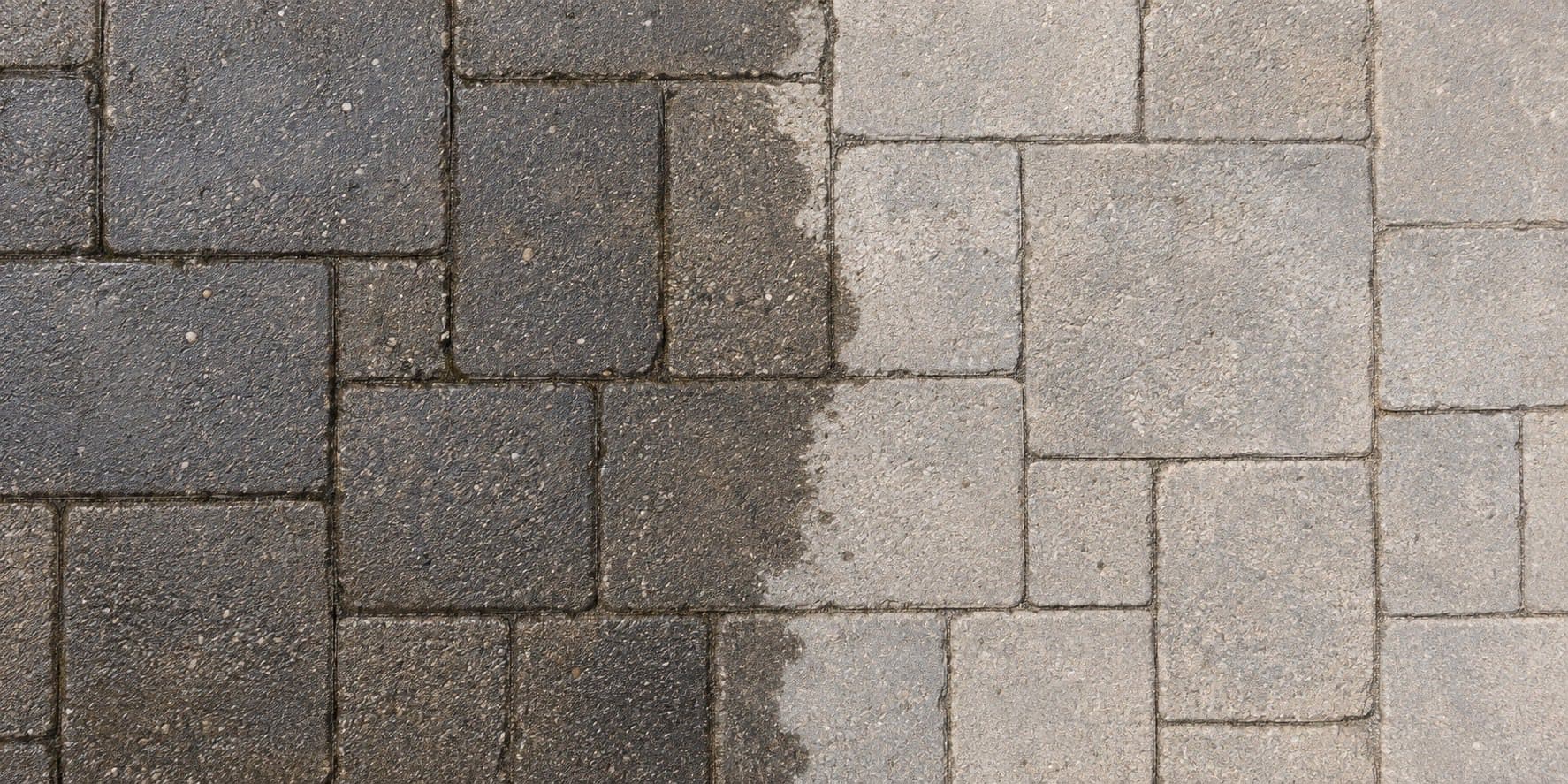
How to judge absorbency without instruments: pour a glass of water onto a cleaned patch. If it soaks in within fifteen seconds or so, the substrate is absorbent - work from the low end. If it sits there for a minute or more, it is dense and the high end is realistic.
Some typical areas
| What | Typical area | At 5 m²/l, one coat |
|---|---|---|
| Terrace | 20-30 m² | 4-6 l |
| Single-car drive | 40-60 m² | 8-12 l |
| Drive with turning space | 80-120 m² | 16-24 l |
| Two-car garage floor | 35-45 m² | 7-9 l |
| Ground floor facade | 60-90 m² | 12-18 l |
Cost per m², the figure that actually settles it
The price of a pack says little until you know how many metres it covers. A preparation that costs more per litre but goes further can work out cheaper per metre - and that is the comparison that makes sense over larger areas.
Which is why every product shows, beside the price, the price per litre and, where the manufacturer stated coverage, the approximate cost per square metre. Both are worked out from the manufacturer's data and attributed to it. It is also the axis on which preparations can honestly be compared - unlike "strength of protection", which nobody measures.
See coverage on the products
Price per litre and cost per m² on every product, worked out from manufacturer data.
- Premium
Solvent-based block paving sealer, wet look SK-2 CTS Chemistry
60,27 zł
54,12 zł/L≈ 7,22 zł/m²
- Standard
Oil stain remover for concrete and paving OL-1 CTS Chemistry
55,20 zł
55,20 zł/L
- Standard
Block paving sealer, wet look HK-2 CTS Chemistry
43,70 zł
36,00 zł/L
- Standard
Block paving sealer, invisible finish HK-1 CTS Chemistry
31,89 zł
25,80 zł/L
- Standard
Concrete patio slab sealer, wet look HBP-2 CTS Chemistry
50,29 zł
45,76 zł/L
- Standard
Concrete patio slab sealer, invisible finish HBP-1 CTS Chemistry
48,50 zł
38,60 zł/L
Common questions
Why is coverage given as a range?
Because it depends on the substrate. The same formulation goes deeper and is used up faster on absorbent, worn paving than on dense paving. The manufacturer states the range typical cases fall into.
Does a second coat use as much as the first?
Usually less, because the first filled some of the pores - but we do not state by how much, because it depends on the material. When allowing for spare, it is safer to assume the same.
How much spare should I allow?
One pack. It is less about the quantity and more about the fact that topping up two weeks later means a different batch - with colouring preparations the difference in shade between batches can show.
Can unused preparation be kept?
Storage conditions and shelf life are stated by the manufacturer in the data sheet. An opened pack usually keeps for less time than a sealed one - check the sheet for the preparation you are working with.