Choosing a sealer for block paving comes down to three questions: should the paving change appearance, should the product be water- or solvent-based, and what state is the surface in today. Answering those three narrows the catalogue from twenty-eight products to two or three.
What this guide will not do: tell you the paving will look new for five years. Durability depends on the substrate, the preparation, the traffic and the weather, and we state only what the manufacturer put in the data sheet - and say which sheet it came from.
Which block paving sealer is the best
The answer we can stand behind: there is not one. There is a best one for your paving, your finish and your budget - and those are three separate questions answered in turn, not one question with a single product name for an answer.
What can be ranked is everything measurable and written into the data sheets: price per litre, the coverage the manufacturer states, and from those two, the cost per square metre. That last figure is what actually settles it on a hundred-square-metre drive, and it is the one you rarely see on a shelf. We work it out for every product in the catalogue and show it beside the price.
What we will not rank: durability, "strength of protection", or which preparation "lasts longer". We have no comparative data that would justify it, and inventing a ranking out of nothing is precisely what this shop is meant not to do. Manufacturers describe the properties of their own preparations in their sheets, and those descriptions are on the product pages under their names.
In short
The finish decides how it looks, not how it protects.
Invisible leaves the colour alone. A wet look deepens it permanently - that is not reversible without stripping the layer.
The base decides how you work, not how good the product is.
Water-based is easier to handle and smells less. Solvent-based needs a dry substrate and ventilation.
The state of the paving decides the order of work.
Efflorescence and stains have to go first - a sealer fixes whatever it finds.
New paving has to wait.
Manufacturers state a substrate curing period in their sheets; for some products it is 28 days.
First decision: invisible or wet look
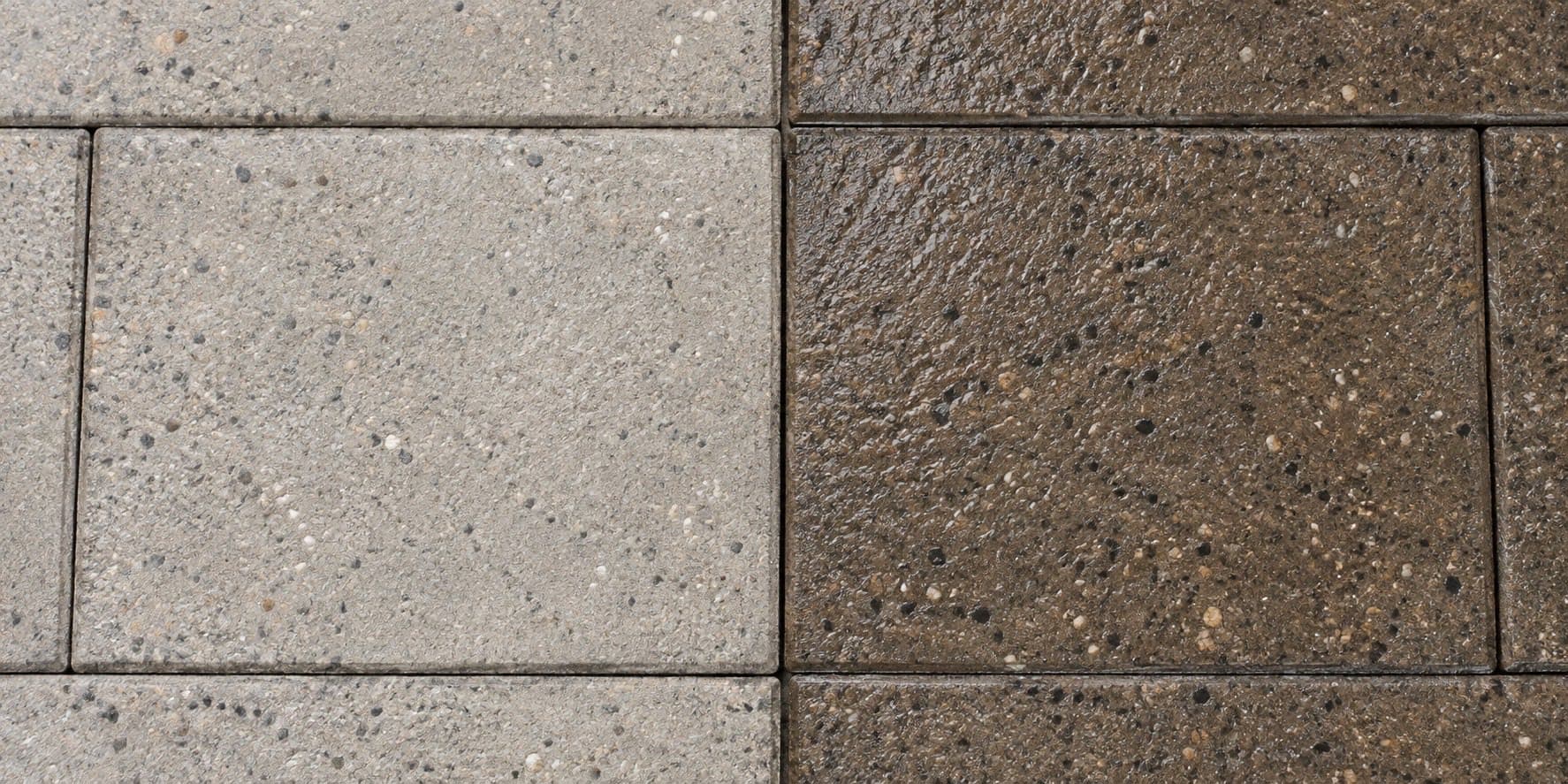
This is the only one of the three you can see from the end of the drive. An invisible sealer is meant not to change the colour - once dry, the paving looks as it did. A wet-look sealer deepens the colour the way rain does, except it stays. It is not a setting you can turn back.
If you are torn between them, settle it on a patch behind the house rather than on the drive facing the street. Most manufacturers in our catalogue run both versions of the same preparation - HK-1 and HK-2 from CTS Chemistry, for instance - so the comparison is fair: the finish differs, the formulation does not.
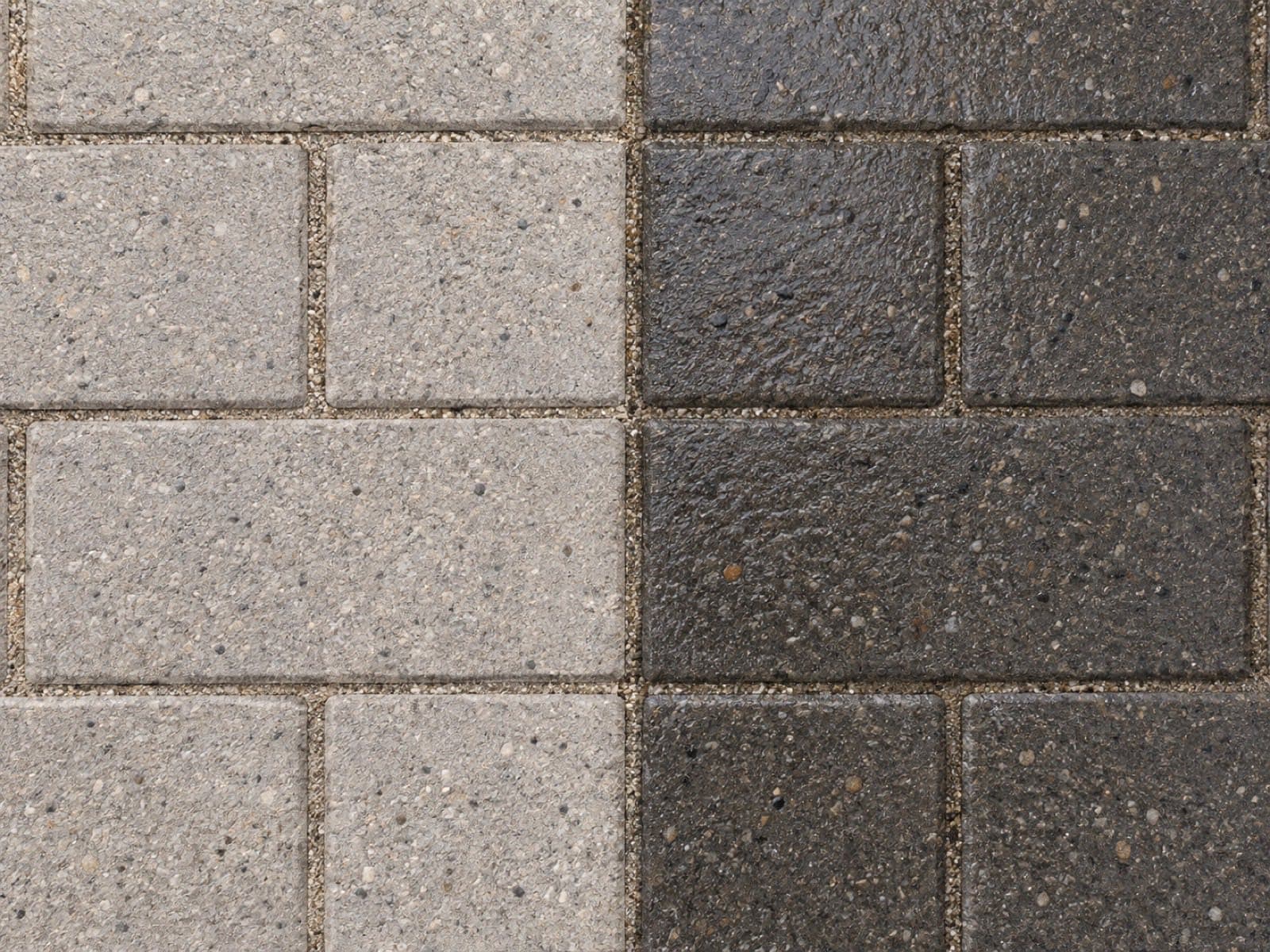
Finish: what to pick and when
| Finish | How the paving looks | When it makes sense |
|---|---|---|
| Invisible | No change of colour or sheen | New paving whose colour you like; anything visible from the street |
| Wet look | Colour deepened, as after rain | Paving faded by sun; evening out the shade after repairs |
| Colouring | Colour changed, covering uneven shade | Older paving with colour patches that washing did not lift |
Second decision: water- or solvent-based
This difference is mostly about the work, not the class of product. Water-based preparations smell less and go on more easily - usually the choice for someone doing the drive themselves over a weekend. Solvent-based ones need a dry substrate and airflow, and manufacturers more often state a narrower temperature window for them.
The catalogue has both under the base filter: water-based and solvent-based. On every product the Technical data tab states the application temperature, the drying time and the substrate curing period exactly as the manufacturer wrote them.
Block paving sealers
The whole block paving shelf - with price per litre and the coverage the manufacturer states.
- Premium
Solvent-based block paving sealer, wet look SK-2 CTS Chemistry
60,27 zł
54,12 zł/L≈ 7,22 zł/m²
- Standard
Oil stain remover for concrete and paving OL-1 CTS Chemistry
55,20 zł
55,20 zł/L
- Standard
Block paving sealer, wet look HK-2 CTS Chemistry
43,70 zł
36,00 zł/L
- Standard
Block paving sealer, invisible finish HK-1 CTS Chemistry
31,89 zł
25,80 zł/L
- Standard
Concrete patio slab sealer, wet look HBP-2 CTS Chemistry
50,29 zł
45,76 zł/L
- Standard
Concrete patio slab sealer, invisible finish HBP-1 CTS Chemistry
48,50 zł
38,60 zł/L
- Standard
Lime efflorescence remover D-2W CTS Chemistry
35,67 zł
30,50 zł/L≈ 7,63 zł/m²
- Standard
Post-construction residue cleaner D-2B CTS Chemistry
49,20 zł
40,59 zł/L≈ 10,15 zł/m²
Third decision: what state the paving is in
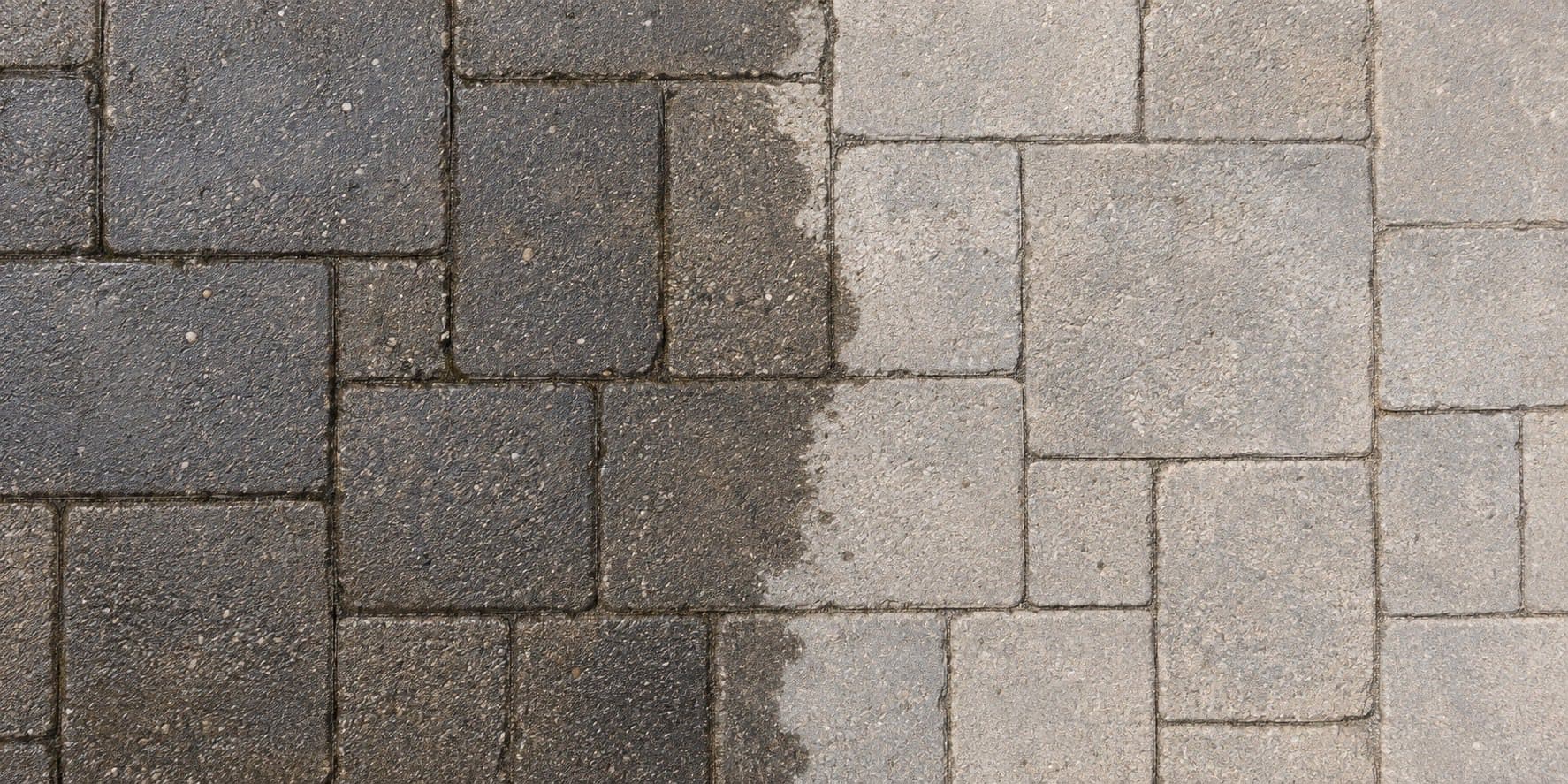
Paving straight after a build almost always carries cement laitance, and paving a few seasons old carries efflorescence, green growth or oil stains. Each of those has its own preparation and its own order of work; they are gathered under cleaning and restoration.
New surfaces are a separate matter. Concrete and paving have to season first - manufacturers state this as a substrate curing period and for some preparations it is 28 days. That figure is in every product's data tab, together with the name of the manufacturer it came from.
How much to buy
Coverage is given in square metres per litre and it is always a range rather than a figure: absorbent paving drinks more than dense paving. Every product page carries a calculator - you enter the area and how absorbent the substrate is, and it works out litres and packs from the manufacturer's stated coverage.
A practical note: buy one pack more than the sum says. Topping up two weeks later means a different batch, and with colouring preparations the difference in shade between batches can show.
Common questions
Does block paving have to be sealed?
There is no obligation, and unsealed paving does not stop working. Sealing is a decision about how much the surface absorbs and how easily dirt comes off it - manufacturers describe that as the main use of this group of preparations. The result depends on the substrate and the preparation, so we state no guaranteed protection periods.
How long after laying can new paving be sealed?
You have to wait out the substrate curing period the manufacturer states in the data sheet - for some preparations in our catalogue that is 28 days. The figure for a specific product is in its technical data tab.
Does an invisible sealer really change nothing?
It does not change the colour - that is what it is for. On very absorbent, matt paving it can deepen the shade slightly simply by filling the pores. Which is why it is worth trying on a patch before it goes on the whole drive.
Water- or solvent-based - which is better?
Neither is better as a rule; they differ in working conditions. Water-based is more convenient, solvent-based needs a dry substrate and ventilation. The choice starts with the conditions you will be working in and what you will apply it with.
Will a sealer protect paving against frost or salt?
Resistance to salt and freeze-thaw cycles is something a manufacturer tests and describes in the data sheet for their preparation - some sheets in our catalogue even name the standard it was tested to. Those statements are on the product page, in the data tab, under the manufacturer's name. What you will not see there is our own opinion on it: we run no comparative testing, so the sheet settles it, not us.