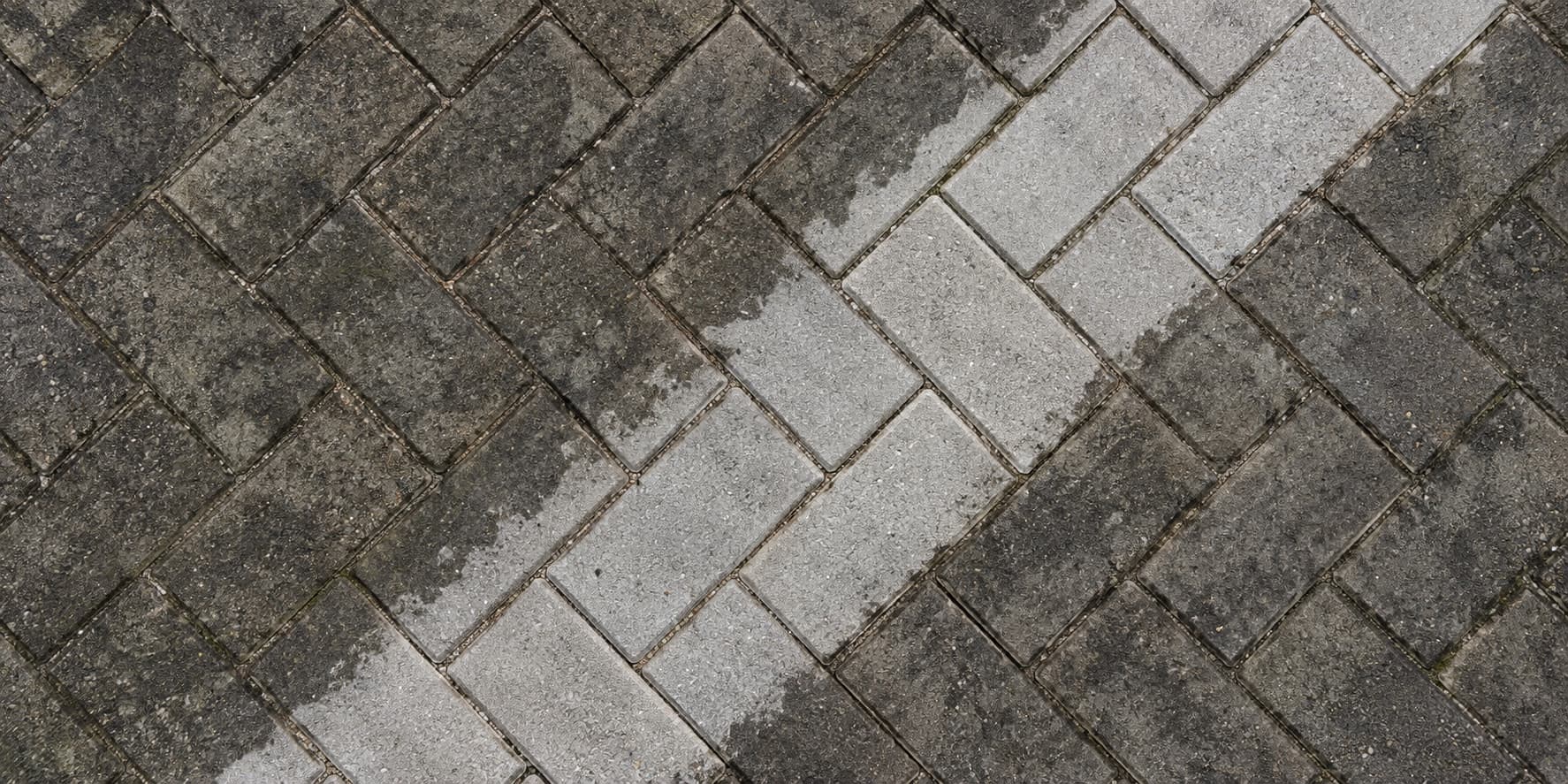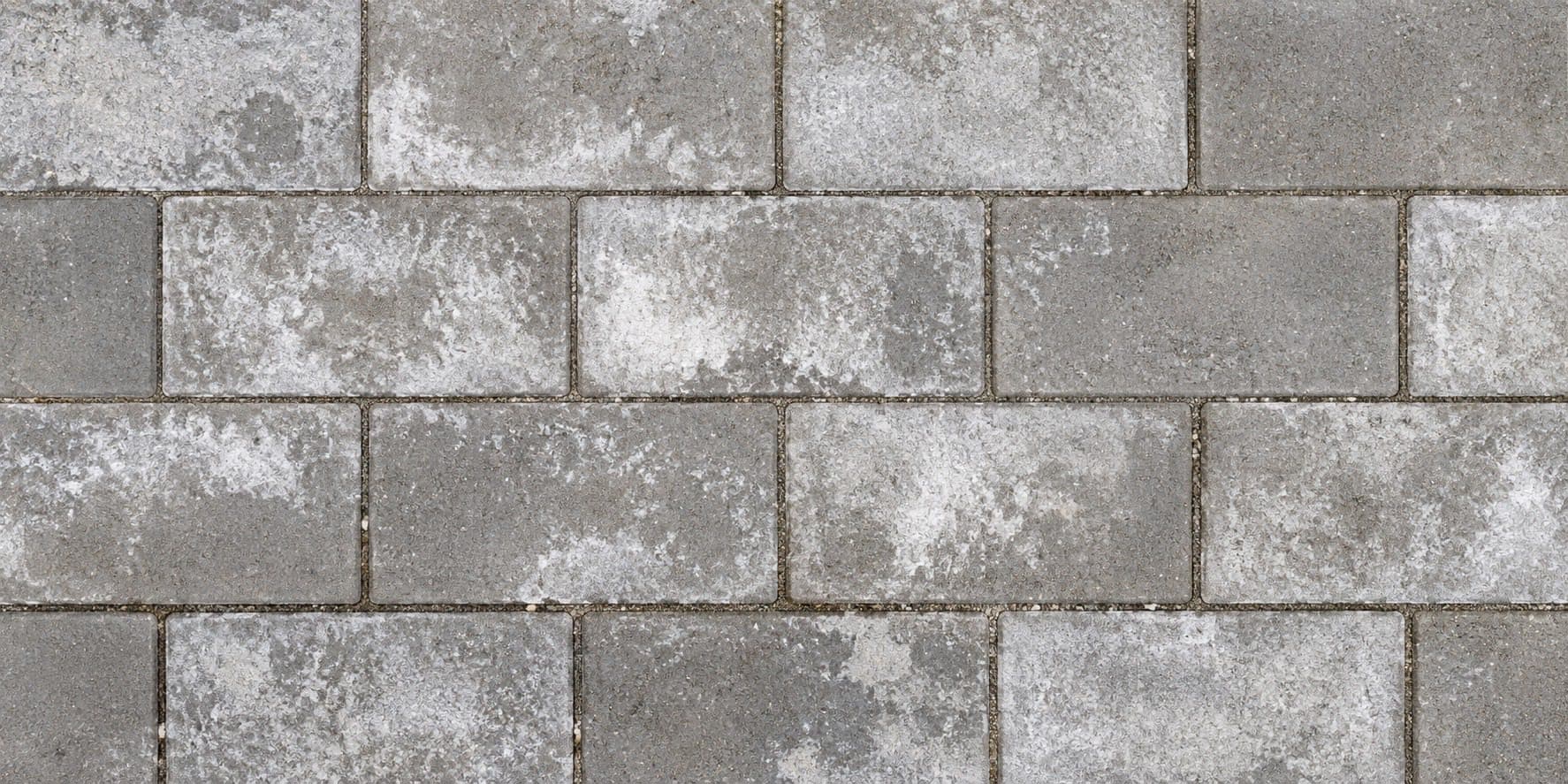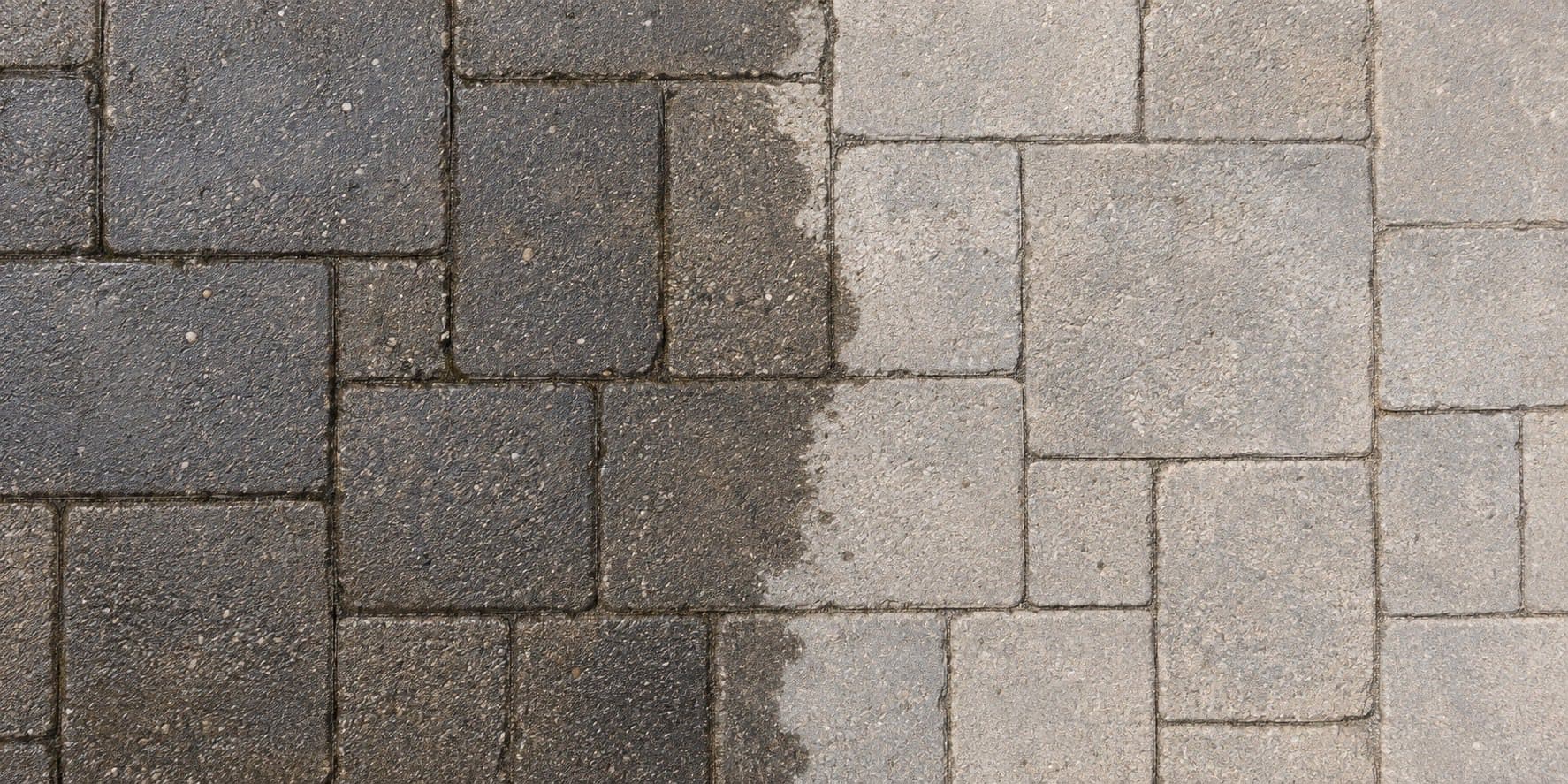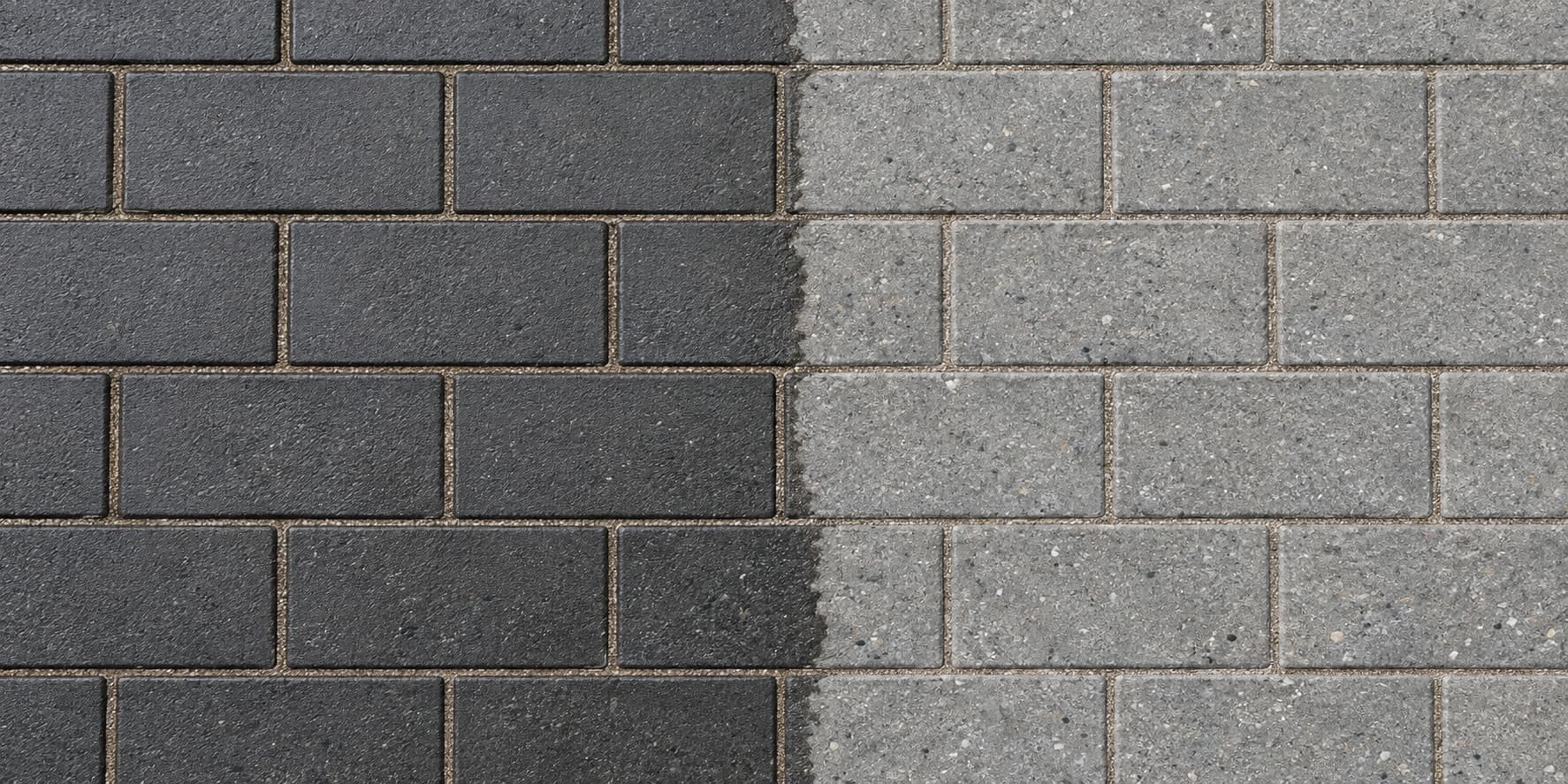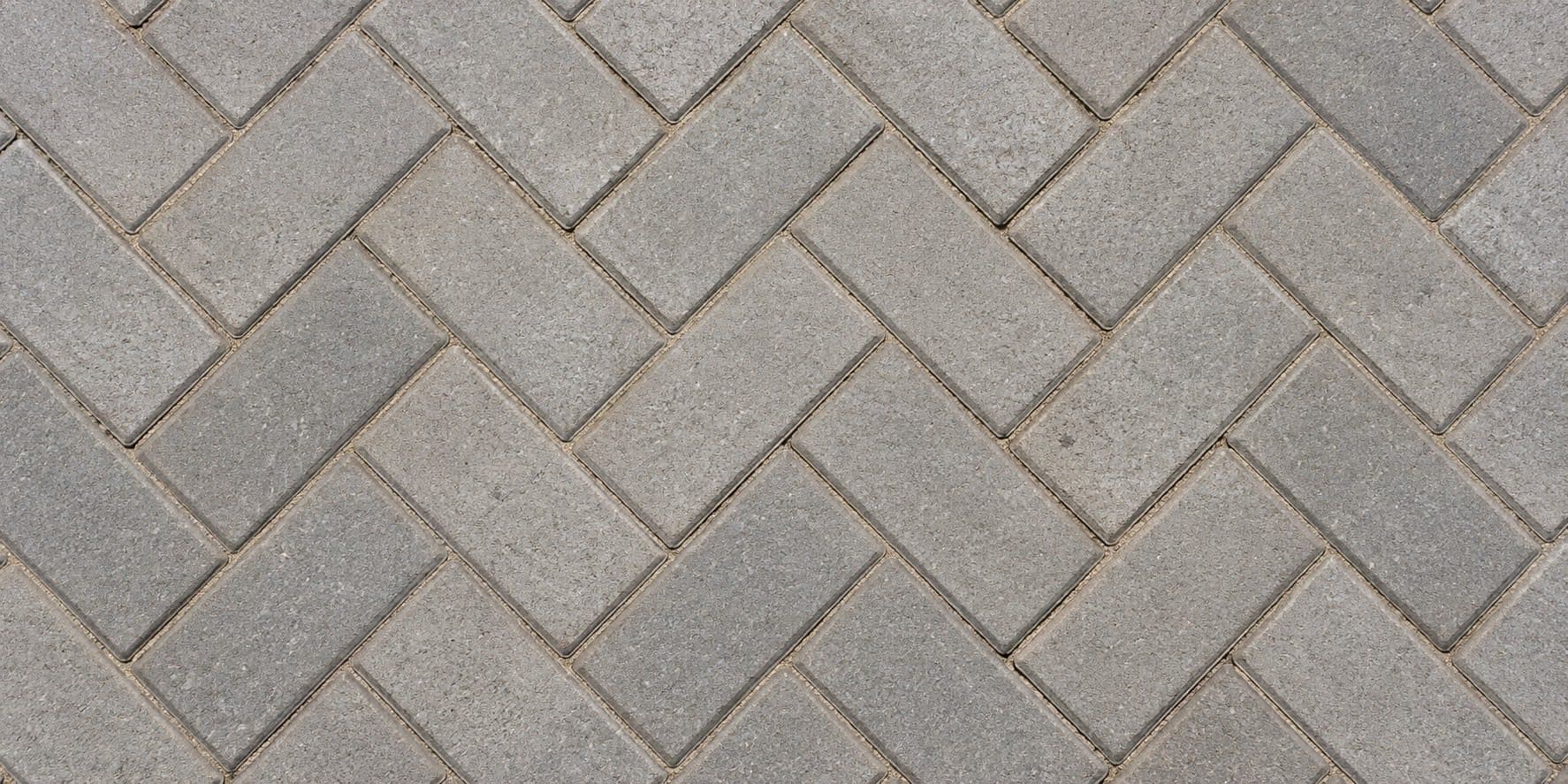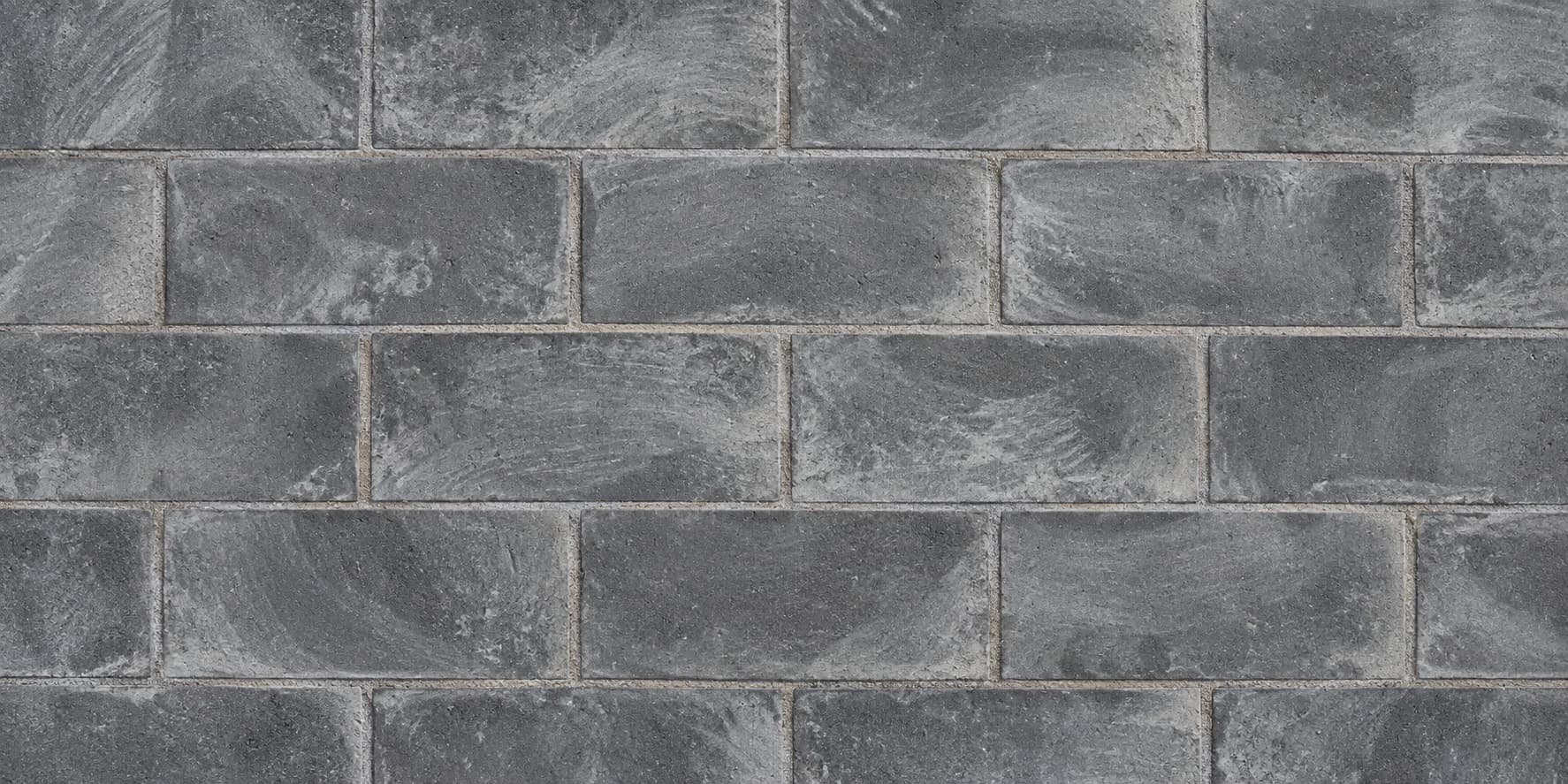
Cement laitance is the greyish-white, cloudy residue left on paving, slabs, clinker brick and tiles after work with mortar, after cutting or after grouting. You remove it with a post-construction cleaner: apply it, scrub once the deposit starts to dissolve, and rinse with plenty of water before the cleaner dries.
Before you start, settle two things. First, whether it really is laitance and not lime efflorescence - they look alike but come from different places. Second, what the surface is made of: concrete paving, slabs and clinker are cleaned with post-construction cleaners, while marble, travertine and limestone must never be treated with acid.
In short
It is residue from the build, not from inside the paving.
It appears right after laying, cutting or grouting - wherever mortar was being used.
A post-construction cleaner removes it.
An ordinary detergent will not dissolve dried cement residue.
The cleaner must not dry on the surface.
Rinse it off with plenty of water in time, because once dry it leaves streaks.
Seal only a clean, dry substrate.
A sealer will not bond properly to laitance and will come away with it.
What is cement laitance and how is it different from efflorescence?
Cement laitance is water carrying fine cement particles that seeps out of mortar, runs off during grouting or forms when paving is cut wet. It spreads in a thin film across the surface and, once dry, leaves a matt, greyish-white haze, smears along the joints and runs by the cut edges.
Lime efflorescence looks similar but forms from the inside: water carries lime out of the concrete to the surface. That is why it appears later, while the surface is in use, and can keep coming back as long as water draws salts up from the sub-base. Laitance sits on top from the day of the build and does not renew itself once removed. If you suspect efflorescence, read the guide to efflorescence on block paving - it covers the causes and what to do.
The easiest way to recognise laitance is by timing and location. A haze visible as soon as the work is finished, concentrated along the joints, around cuts and where the mortar buckets stood, is almost always cement laitance. Hard lumps and patches are mortar residue - the same cleaner dissolves them, but scrape thick build-up off first.
How to remove cement laitance from block paving
For concrete paving and terrace slabs, reach for the D-2B post-construction cleaner or Guard Remover Eco. Both remove mortar residue and cement laitance left after building work; they differ in how you use them.
D-2B is an acidic cleaner with a pH of about 2. You match the strength to the job: for very heavy soiling dilute it 1:1 with water, for extremely heavy soiling use it neat. A litre covers 2-6 m².
Guard Remover Eco is applied undiluted, and a litre covers 6 m². Leave it for no more than 5 minutes, then rinse it off - and there is no need to neutralise the substrate afterwards.
1. Prepare the area. Sweep off sand and dust. Cover metal edging, painted elements, render on the plinth and plants next to the paving.
2. Do a test. On coloured paving, apply the cleaner to a patch out of sight first - an acidic preparation can draw out the colour.
3. Apply and scrub. Spread the cleaner with a sprayer or brush and scrub the surface with a stiff brush once the deposit starts to dissolve.
4. Rinse before it dries. Use plenty of water, ideally a pressure washer. Work in sections you can rinse in time.
5. Judge it once dry. If some residue remains, repeat the treatment rather than extending the dwell time.
Cement laitance on tiles, clinker brick and stone
On ceramic tiles, porcelain stoneware and floors after grouting, use the milder D-4 mineral soiling cleaner. With a pH of about 4.5 it removes heavy mineral soiling from floors and tiles. Dilute it with water between 1:5 and 1:1, most often 1:4. On glazed and polished tiles, take the ratio from the product sheet and start with a test on a hidden spot. Take care with fresh grout: acidic cleaners attack the cement binder, so check the effect on a small patch first.
Guard Remover Eco removes mortar and laitance marks from brick and clinker. Make sure it does not dry on the face of the brick, and rinse the wall with plenty of water.
Marble, travertine and limestone are sensitive to acids - a preparation with a pH of 2 will etch their surface. Do not use D-2B or any other acidic cleaner on them. Sensitive stone is cleaned with a neutral or mildly alkaline product: get in touch and we will pick the right one - we reply within 24 hours. The differences between stone types are covered in the guide on how to choose a natural stone sealer.
Laitance on a concrete mixer, moulds and tools is a separate job. That is where GTL for cement laitance on equipment comes in, designed for metal rather than paving. There is more in the guide to cleaning site equipment.
What removes cement laitance from different surfaces
| Surface | What to use | Watch out for |
|---|---|---|
| New concrete paving, terrace slabs | D-2B or Guard Remover Eco | Test coloured paving first, cover metal and render |
| Brick, clinker, low walls | Guard Remover Eco | Do not let it dry, rinse with plenty of water |
| Ceramic tiles, porcelain stoneware, floors | D-4 | On glazed and polished tiles take the ratio from the product sheet, always test first |
| Marble, travertine, limestone | No acidic cleaners | Get in touch and we will pick a product |
| White bloom that appeared weeks later | D-2W or EC-22 - it is efflorescence, not laitance | Efflorescence can return while the paving soaks up water |
| Concrete mixer, moulds, tools | GTL | Made for equipment, not for paving |
Cement laitance and post-construction cleaners
Cleaners for laitance, mortar residue and mineral deposits - match the preparation to the surface.
 Standard
Heavy-duty mineral soiling cleaner D-4 CTS Chemistry
40,16 zł
37,64 zł/L
 Standard
Post-construction residue cleaner D-2B CTS Chemistry
49,20 zł
40,59 zł/L≈ 10,15 zł/m²
 Standard
Efflorescence and staining remover EC-22 EKSIL
39,00 zł
19,43 zł/L≈ 4,32 zł/m²
-trim-01M35D90NJB4AGG7BRVVRBWK9C.png&w=3840&q=75) Premium
PremiumEfflorescence and cement laitance remover - Guard Remover Eco
53,00 zł
41,80 zł/L≈ 6,97 zł/m²
When to seal after removing laitance
Cement laitance left under a sealer comes away together with it, and a polymer layer will not bond to it properly. That is why cleaning always comes before sealing. After rinsing, let the surface dry right through - not just on top, but in the pores as well.
On new paving, remember curing time: concrete gives up its mixing water for many weeks, and some sealers require you to wait 28 days. The full list of conditions is in the guide to preparing the substrate before sealing. Cleaners for washing and refreshing surfaces are collected in the Cleaning and restoration category.
Common questions
How do I tell cement laitance from efflorescence?
By timing and location. Laitance is visible straight after the work, most often along joints, around cuts and wherever mortar was used. Efflorescence appears later, while the surface is in use, and can return as long as water draws salts up from the sub-base.
Can I use hydrochloric acid instead of a cleaner?
Better not. Hydrochloric acid dissolves the cement binder along with the deposit, washes out the joints and opens up the structure of the concrete. It is also hard to control: the concentration is arbitrary and the fumes are aggressive. A ready-made cleaner comes with a set dilution and dwell time.
Will the cleaner damage the grout?
It can, because acidic cleaners attack the cement binder. With fresh or washed-out grout, check the effect on a small patch, and use a diluted cleaner on sensitive surfaces.
Do I need to neutralise the surface after washing?
Not after Guard Remover Eco - rinsing with plenty of water is enough. With other acidic cleaners, check the instructions, and if they say nothing about neutralising, get in touch before you start.
What if the laitance did not come off the first time?
Repeat the treatment: apply the cleaner, scrub the surface with a stiff brush once the deposit dissolves, and rinse again. Do not extend the dwell time and do not let the cleaner dry. With D-2B you can also use a stronger solution, and neat product for extremely heavy soiling.