Seal block paving on a dry day with no rain in the forecast, ideally in the morning or evening when the surface is not hot. Apply the sealer undiluted to clean, dry, fully cured paving with a roller, brush or sprayer - thinly, evenly, strip by strip - then give it time before rain falls on it and people walk on it. The number of coats, the gap between them and the time before the surface can be used depend on the product, so every figure in this guide is tied to a specific sealer.
This guide picks up where buying and washing end. If you have not chosen a product yet, start with how to choose a block paving sealer. If the paving is not yet washed and dry, begin with preparing the substrate before sealing - whether the application works at all depends on it.
In short
The weather is part of the plan.
No rain and no full sun on the surface - HK-1 and HK-2 are rainproof after 5-6 hours.
Start with a test on one patch.
Judge it once dry, because wet sealer always looks like the wet-look finish.
Thin and even, no puddles.
Excess that does not soak in dries on top as a shiny patch or a run.
Take coats and times from your product's data sheet.
HK-2 goes on wet on wet, EI-15 in two coats a day apart.
When should you seal block paving?
Pick a dry day with a few hours of margin in the forecast, and a time when the sun is not heating the surface. On hot paving the sealer evaporates before it can soak in. Keep water off the fresh coat: HK-1 and HK-2 are rainproof after 5-6 hours, and EI-23 needs shielding from rain until it has dried.
Every sealer has its own temperature window, and what counts is the temperature of the paving, not the air. SK-2 is applied at 5-30 °C, EI-15 at an air and surface temperature of 5-25 °C, and EH-14 on a surface at 5-20 °C. New paving also needs to cure first - before SK-2 that means at least 28 days from manufacture.
A dry surface is a condition for almost every sealer. HK-1 tolerates light surface dampness, but wet paving is another matter. Solvent-based EH-14 needs a substrate moisture content below 5-6 %.
How to seal block paving, step by step
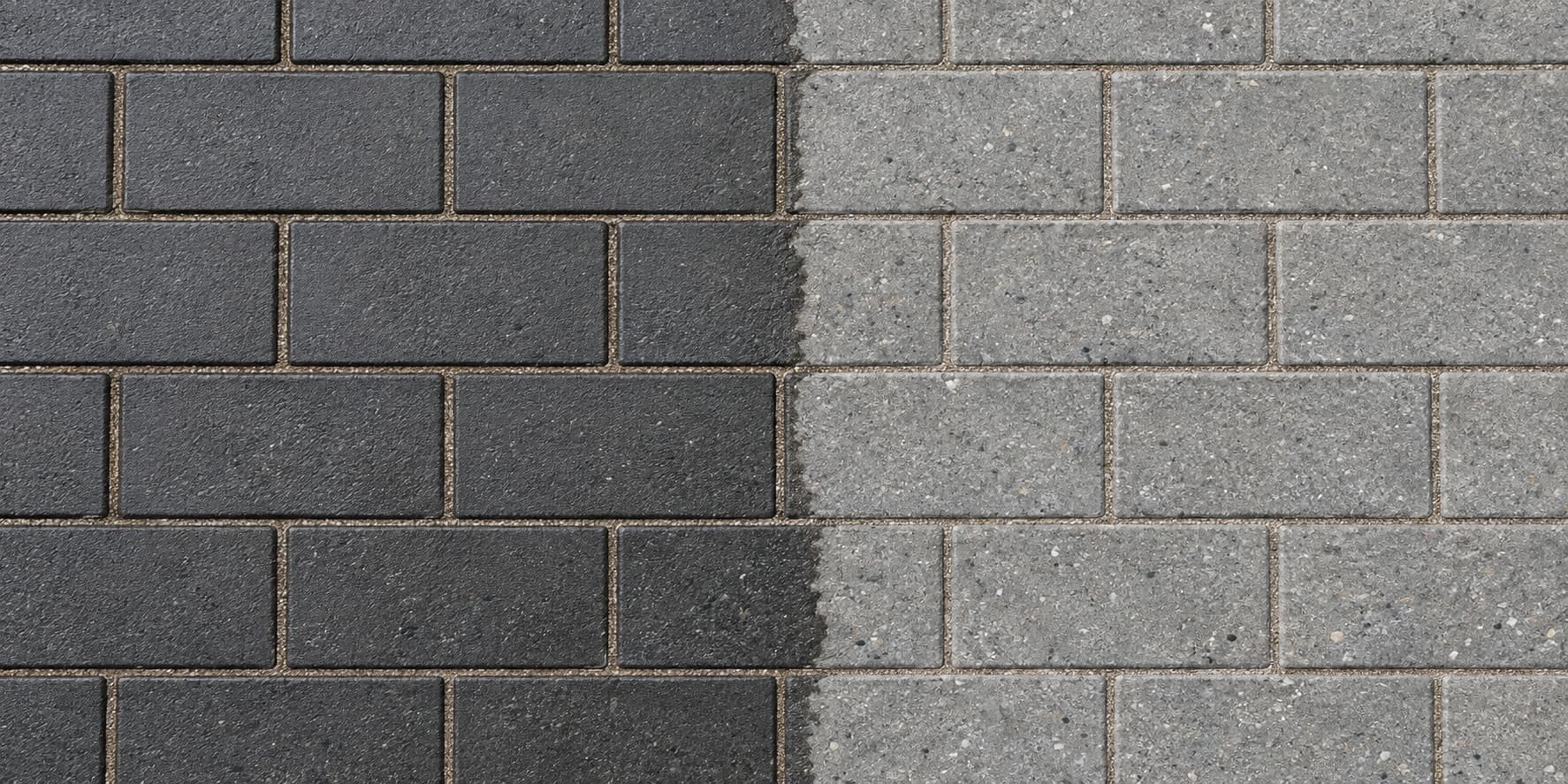
1. Test a small patch. Apply the sealer to a piece of paving that cannot be seen from the street and judge it only once fully dry. With a wet-look finish this is essential: how much the colour deepens depends on the colour of your paving, and the only way back is stripping the layer. We break that decision down in invisible sealer or wet look. The test also shows how absorbent the paving is: if HK-2 soaks in within 5-10 minutes, the paving will want another pass.
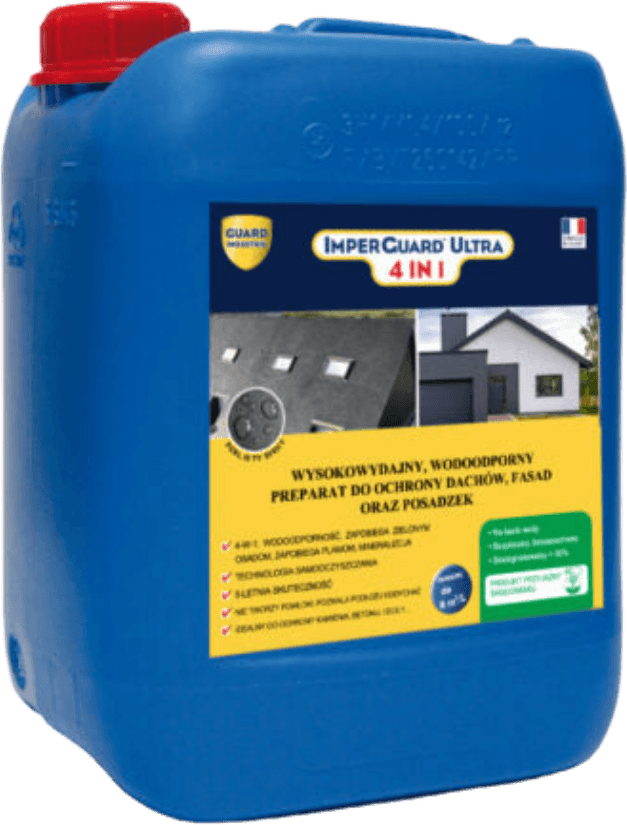
2. Get the tools ready. HK-1 and HK-2 go on with a soft roller, a brush or a sprayer. On a large driveway a low-pressure sprayer is faster - that is how you apply ImperGuard Ultra 4 in 1 - as are airless spraying and flood coating, both of which suit EI-23. Keep the brush for kerbs, edgings and corners.
3. Work in strips, from the far end. Start at the point furthest from your way out and work backwards, so you never step on the fresh coat. Work in areas you can cover evenly and join them along a wet edge. No puddles may be left in the joints or hollows.
4. Take up the excess before it dries. Sealer that sits on the surface without soaking in should be rolled out onto the neighbouring blocks. Dried excess stays on top - which is why EI-15 goes on in two thin coats, not one thick one.
5. Clean the tools and close the tin. After water-based EI-23 the tools wash out with water. With solvent-based SK-2 and EI-15, work with good ventilation and away from flames - SK-2 has a flash point of about 51 °C. Seal an opened container tightly if a second coat is still to come.
How many coats, and what "wet on wet" means
This is where sealers differ most, so follow your product's data sheet. HK-1 goes on in a single application, until the substrate is saturated. SK-2, EI-23 and EH-14 are also one coat. EI-15 needs two thin coats at least 24 hours apart: the first has to release its solvent and bond with the concrete, because a second coat applied too early dissolves it instead of building on it. Colouring EI-26 also goes on twice, about a day apart, for more even coverage.
HK-2 works differently - wet on wet. If the sealer soaks in within 5-10 minutes, you apply it again before the first coat dries, and the two merge into one. On absorbent paving that usually means 2-3 passes. If the first coat has already dried, the second partly stays on the surface and leaves an uneven sheen.
The number of coats translates directly into what you buy - work out the litres for your area with how much sealer you need. All products with their application data are in the block paving sealers category.
Applying block paving sealers at a glance
| Product | How you apply it | Coats | Rain and traffic |
|---|---|---|---|
| HK-1 (water-based, invisible) | Soft roller, brush, spray | One, to saturation | Rainproof after 5-6 h |
| HK-2 (water-based, wet look) | Soft roller, brush, spray | Wet on wet, 2-3 passes on absorbent paving | Rainproof after 5-6 h |
| SK-2 (solvent-based, wet look) | Roller, brush, spray; 5-30 °C | One | Dries in 2-3 h, foot traffic after 1 day |
| EI-15 (solvent-based, wet look) | Roller, brush, spray; 5-25 °C | Two thin coats, at least 24 h apart | Fully cured after 1 day |
| EI-23 (water-based, wet look) | Roller, brush, airless spray, flood coat | One | Keep off rain until dry |
| EH-14 (solvent-based, invisible) | Roller, brush, spray; surface 5-20 °C | One | Dries in 1-2 h at 20 °C |
| EI-26 (solvent-based, colouring) | Roller, brush, spray; 5-30 °C | Two, about 24 h apart | Fully cured after 1 day |
After sealing: rain, feet and the car
Until the coat is rainproof, keep water and direct sun off the surface - HK-1 and HK-2 need 5-6 hours for that. SK-2 dries in 2-3 hours depending on temperature and humidity, but you can walk on it only a day after finishing the job. EH-14 dries in 1-2 hours at 20 °C, and EI-15 and EI-26 are fully cured a day after the last coat.
Let the car on no earlier than when the sealer is fully cured, and block the entrance until then. Judge the finish once dry, not while you work - freshly applied sealer looks like a wet surface whatever effect it is meant to give.
Block paving sealers
Water-based and solvent-based, invisible, wet look and colouring - each product's technical data lists its application conditions.
 Premium
Solvent-based block paving sealer, wet look SK-2 CTS Chemistry
60,27 zł
54,12 zł/L≈ 7,22 zł/m²
 Standard
Block paving sealer, wet look HK-2 CTS Chemistry
43,70 zł
36,00 zł/L
 Standard
Block paving sealer, invisible finish HK-1 CTS Chemistry
31,89 zł
25,80 zł/L
 Standard
Solvent-based water-repellent sealer for block paving EH-14 EKSIL
56,99 zł
33,30 zł/L
 Premium
Block paving sealer, strong wet look EI-15 EKSIL
97,19 zł
61,25 zł/L≈ 6,81 zł/m²
 Premium
Solvent-based colour sealer for block paving EI-26 EKSIL
269,00 zł
53,80 zł/L≈ 5,98 zł/m²
 Entry
EntryBlock paving sealer, wet look EI-23 EKSIL
109,47 zł
26,45 zł/L≈ 3,78 zł/m²
 Entry
EntryWater-repellent sealer for facades, roofs and paving - ImperGuard Ultra 4 in 1
269,00 zł
53,80 zł/L≈ 6,73 zł/m²
When to reseal block paving
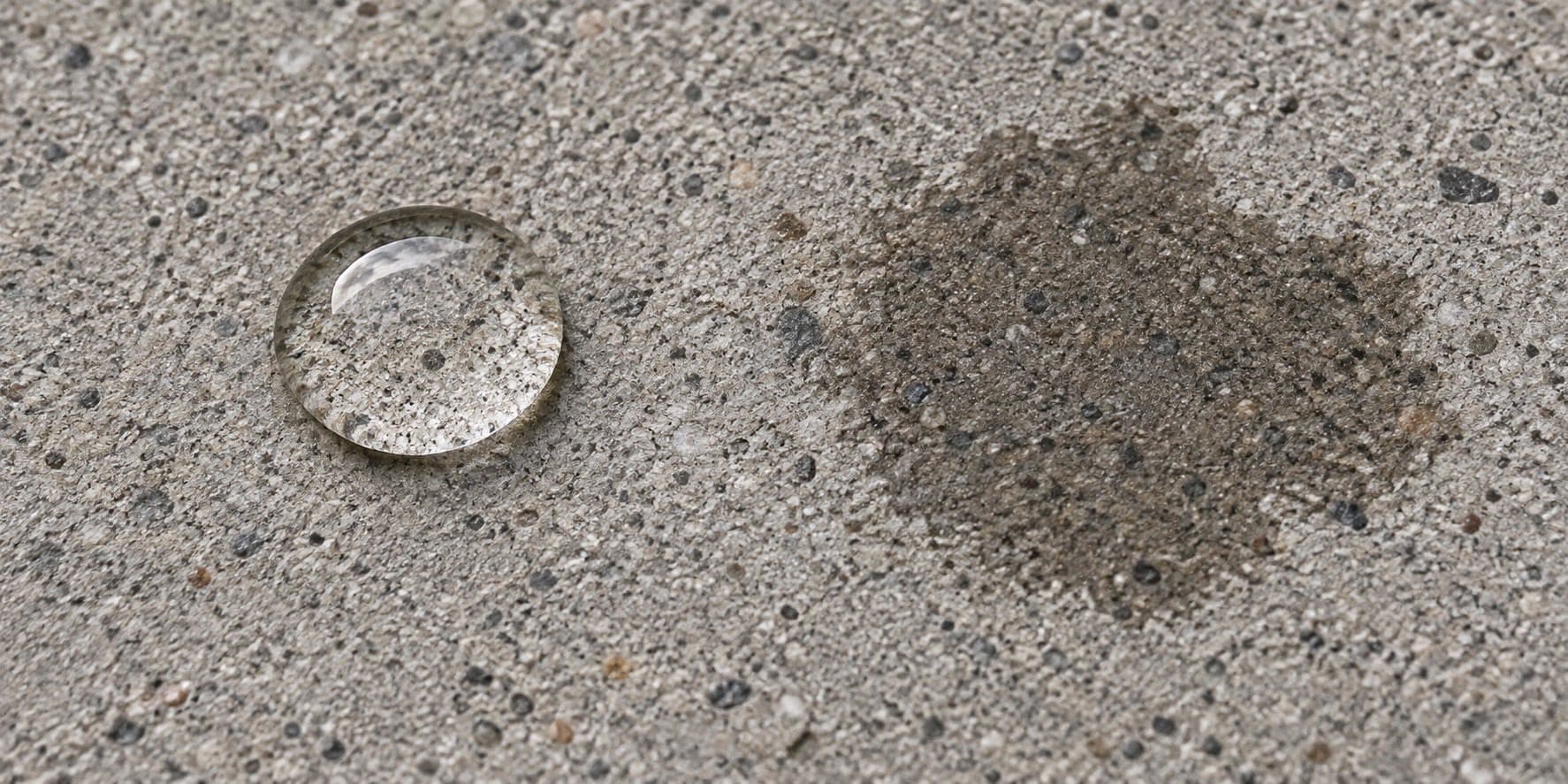
Not by the calendar, but by how water behaves. As long as droplets bead on the surface, the layer is working. When water starts to soak in and dark patches come back after rain, the protection is worn and it is time for another treatment.
Before resealing, wash and dry the surface just as you did the first time. The simplest route is to stay with the same product. If you want to change the base or the finish, write to us with the name of the previous sealer - the difference between bases is explained in water-based or solvent-based sealer.
Common questions
Can I seal paving in hot weather?
Better not. On hot paving the sealer evaporates before it can soak in. Work in the morning or evening and keep below the upper temperature limit: 25 °C for EI-15, 30 °C for SK-2. Keep freshly sealed HK-1 and HK-2 out of direct sun for 5-6 hours.
Can sealer go on damp paving?
Not on wet paving. Water fills the pores the sealer needs to get into and stays trapped beneath it, which can leave a milky haze. HK-1 tolerates light surface dampness, while solvent-based EH-14 needs a substrate moisture content below 5-6 %.
How soon can I drive on sealed paving?
No earlier than when the sealer is fully cured. EI-15 and EI-26 cure a day after the last coat, and SK-2 takes foot traffic a day after the job is finished. If you are unsure about your product, write to us - we reply within 24 hours.
What is the fastest way to seal a large driveway?
Spraying. ImperGuard Ultra 4 in 1 goes on with a low-pressure sprayer, and one 5-litre can covers about 40 m². EI-23 can be applied by airless spraying or flood coating. Finish the edges and kerbs with a brush.
Does block paving sealer need diluting?
No. HK-1, HK-2, SK-2, EI-15 and EI-23 are ready to use - you apply them straight from the container.