 Standard
Lime efflorescence remover D-2W CTS Chemistry
35,67 zł
30,50 zł/L≈ 7,63 zł/m²
The white, matt bloom on paving, usually in its first year after laying, is lime carried out of the concrete by moisture. You dissolve it with an acid-based remover, and seal only clean, dry paving.
StandardLime efflorescence remover D-2W CTS Chemistry
35,67 zł
30,50 zł/L≈ 7,63 zł/m²
 Standard
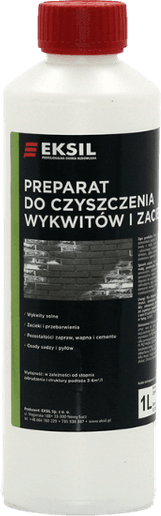
Efflorescence and staining remover EC-22 EKSIL
39,00 zł
19,43 zł/L≈ 4,32 zł/m²
 Premium
Efflorescence and cement laitance remover - Guard Remover Eco
53,00 zł
41,80 zł/L≈ 6,97 zł/m²
 Premium
Środek do czyszczenia elewacji i fasad Guard Industry
329,00 zł
62,45 zł/L
 Standard
Grout and cement joint cleaner C-12F CTS Chemistry
38,99 zł
51,99 zł/L
 Standard
Heavy-duty mineral soiling cleaner D-4 CTS Chemistry
40,16 zł
37,64 zł/L
 Standard
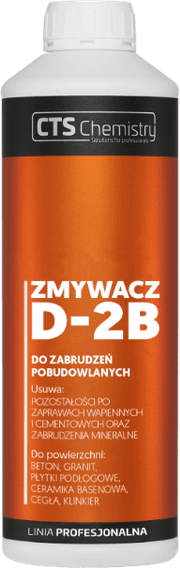
Post-construction residue cleaner D-2B CTS Chemistry
49,20 zł
40,59 zł/L≈ 10,15 zł/m²
 Standard
Acidic floor cleaner for frequent use C-2 CTS Chemistry
23,37 zł
14,76 zł/L
 Standard
Block paving sealer, wet look HK-2 CTS Chemistry
43,70 zł
36,00 zł/L
 Standard
Block paving sealer, invisible finish HK-1 CTS Chemistry
31,89 zł
25,80 zł/L
 Entry
Block paving sealer, wet look EI-23 EKSIL
109,47 zł
26,45 zł/L≈ 3,78 zł/m²
 Entry
Colour sealer for block paving and concrete EI-19 EKSIL
104,00 zł
20,80 zł/L≈ 4,16 zł/m²
 Standard
Sandstone wall and facade sealer VP-1 CTS Chemistry
45,40 zł
36,18 zł/L
 Standard
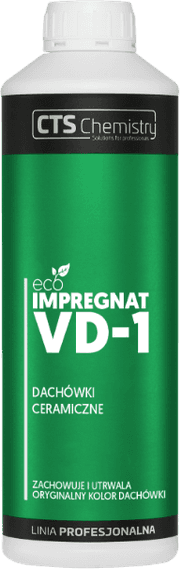
Clay and concrete roof tile sealer VD-1 CTS Chemistry
45,51 zł
39,36 zł/L
 Standard
Brick and engineering brick sealer VC-1 CTS Chemistry
42,50 zł
33,90 zł/L
 Standard
Split-face concrete block sealer VBe-1 CTS Chemistry
42,71 zł
30,00 zł/L≈ 3,75 zł/m²
 Standard
Concrete wall sealer, wet look VB-2 CTS Chemistry
45,01 zł
35,90 zł/L
 Standard
Concrete wall sealer, invisible finish VB-1 CTS Chemistry
31,89 zł
25,80 zł/L
 Standard
Sandstone sealer, invisible finish HP-1 CTS Chemistry
42,80 zł
33,94 zł/L
 Standard
Concrete patio slab sealer, wet look HBP-2 CTS Chemistry
50,29 zł
45,76 zł/L
 Standard
Concrete patio slab sealer, invisible finish HBP-1 CTS Chemistry
48,50 zł
38,60 zł/L
 Premium
Water-based sealer for natural stone and facades EH-21 EKSIL
109,00 zł
32,50 zł/L
 Standard
Decorative glitter sealer, clear EI-12 EKSIL
121,77 zł
46,49 zł/L≈ 9,30 zł/m²
 Standard
Silane facade sealer that deepens colour EH-16 EKSIL
145,00 zł
25,75 zł/L
The white, matt bloom on new paving is lime that came out of the concrete with the water. It does not sit on the surface, it grows out of it, which is why a brush and water leave it alone and ordinary detergent does not dissolve lime compounds.
You remove it with an acid-based product matched to the deposit: efflorescence, cement residue after building work, or run-off stains below a kerb or wall. Use it as the product instructions say and rinse thoroughly.
Plan sealing only once the bloom is gone and the paving is dry. A sealer locks in whatever it finds, so applied over efflorescence it would seal it in.
Read the full guide: Efflorescence on block paving - where it comes from and how to remove it →
An acid-based efflorescence remover: D-2W, EC-22 or Guard Remover Eco, which also removes cement residue. A brush and water will not shift the bloom, and detergent does not dissolve calcium carbonate.
Sometimes: on some surfaces it fades over a few seasons as the concrete gives up its mixing water. Whether and when depends on the sub-base, drainage and the weather.
No. It is the natural reaction of fresh concrete to water and well known to paving manufacturers. It does not point to a poor batch or a laying error.
Once the bloom is gone and the rinsed paving is dry right through the pores, not just to the eye. Check the maximum substrate moisture and application temperature in the sealer's technical data.