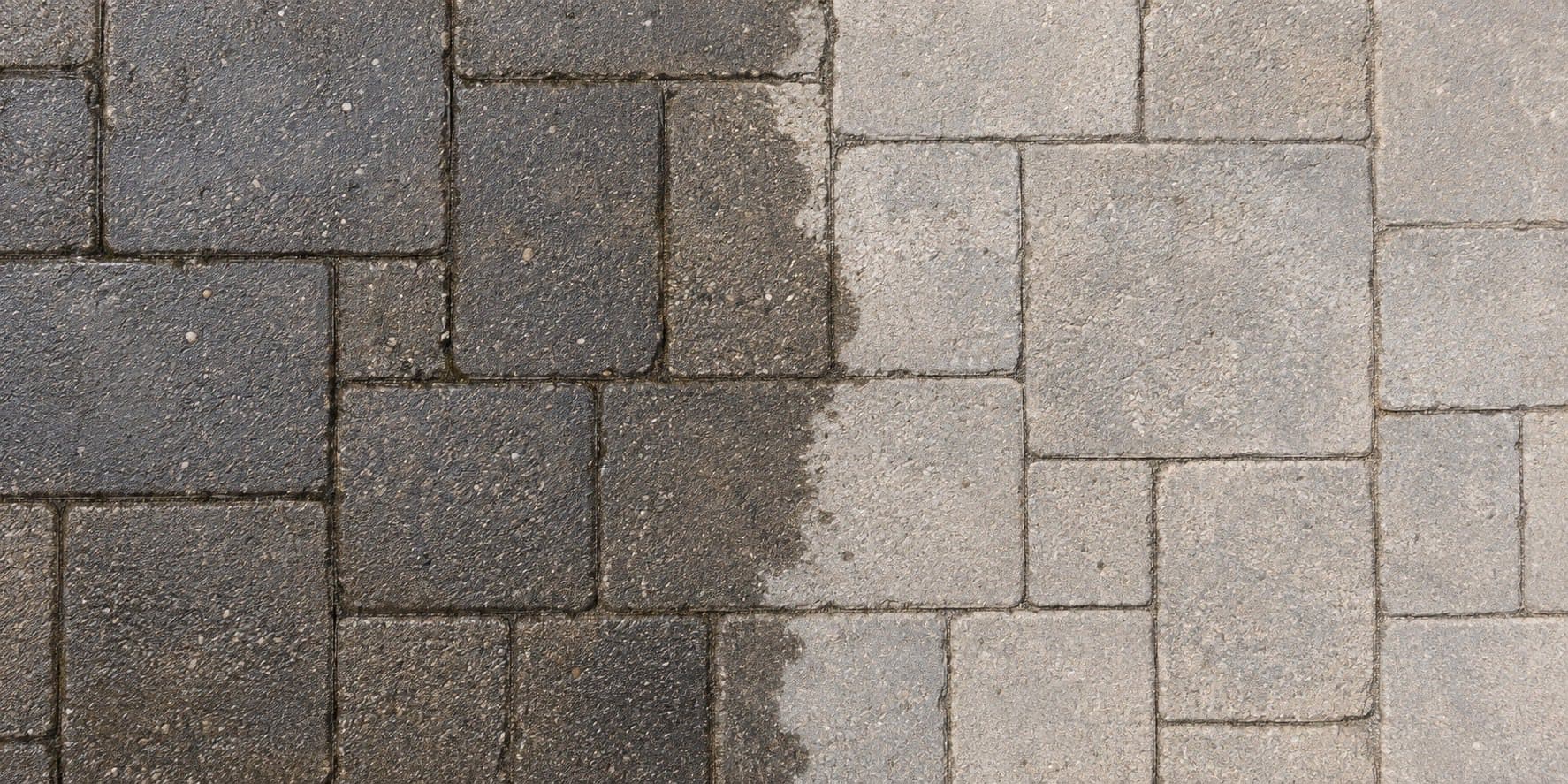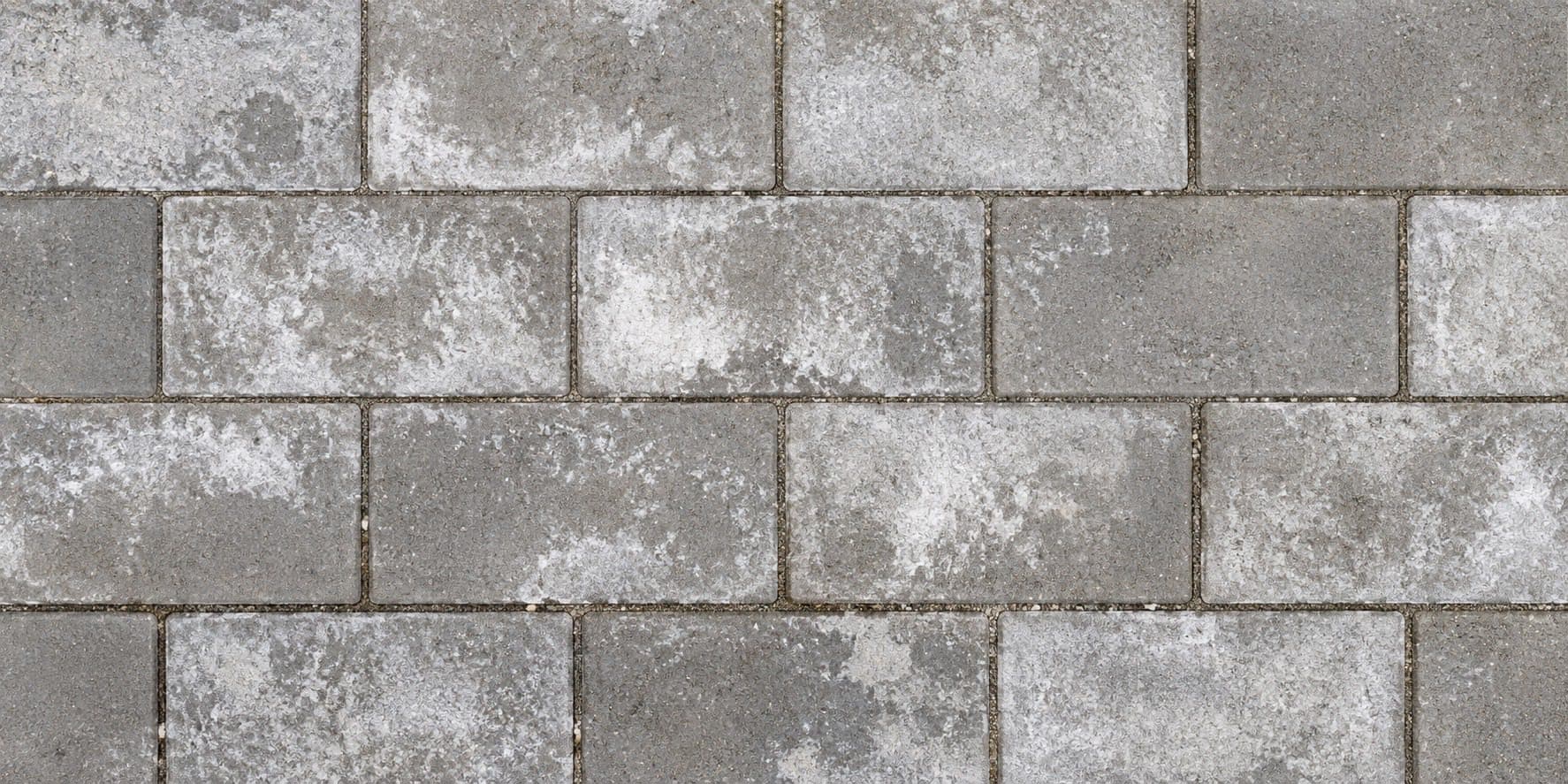
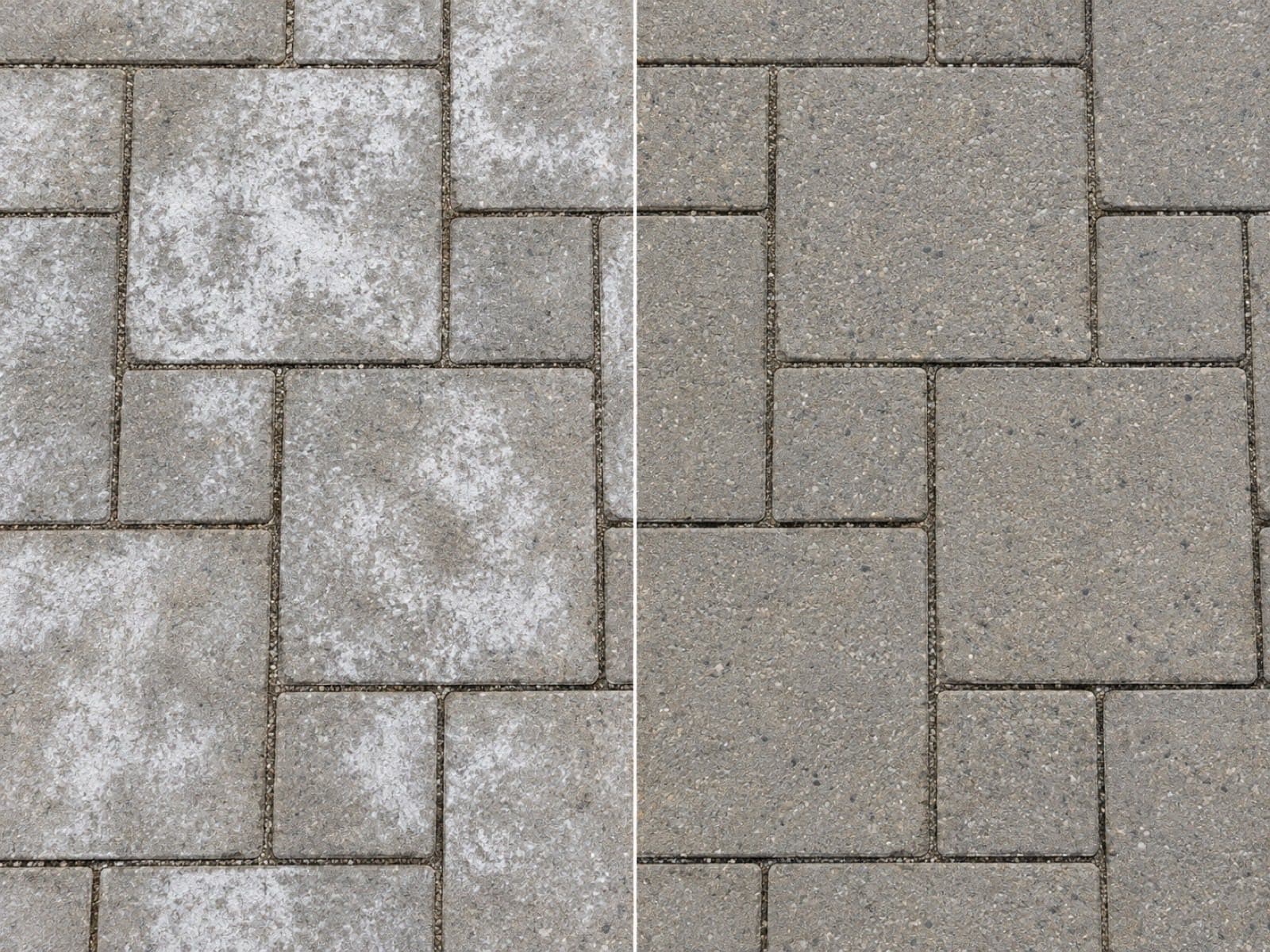
The white, matt bloom on freshly laid paving is lime efflorescence. It forms when water passes through concrete, dissolves calcium compounds on the way and evaporates at the surface, leaving them on top. It is not dirt carried in from outside, and not a bad batch - it is how fresh concrete behaves.
Which is why a brush and water usually achieve nothing: the bloom is not lying on the paving, it came out of it. It is removed with a preparation that dissolves calcium compounds, not with a detergent.
In short
It is lime from the concrete, not dirt.
It forms from the inside, so washing with water does not shift it.
It appears most often on new paving.
The first months after laying are when concrete gives up the most moisture.
An acidic preparation removes it.
Detergents and brushes do not dissolve calcium compounds.
Seal only after removal and drying.
A sealer fixes whatever it finds - the bloom included.
Where efflorescence comes from
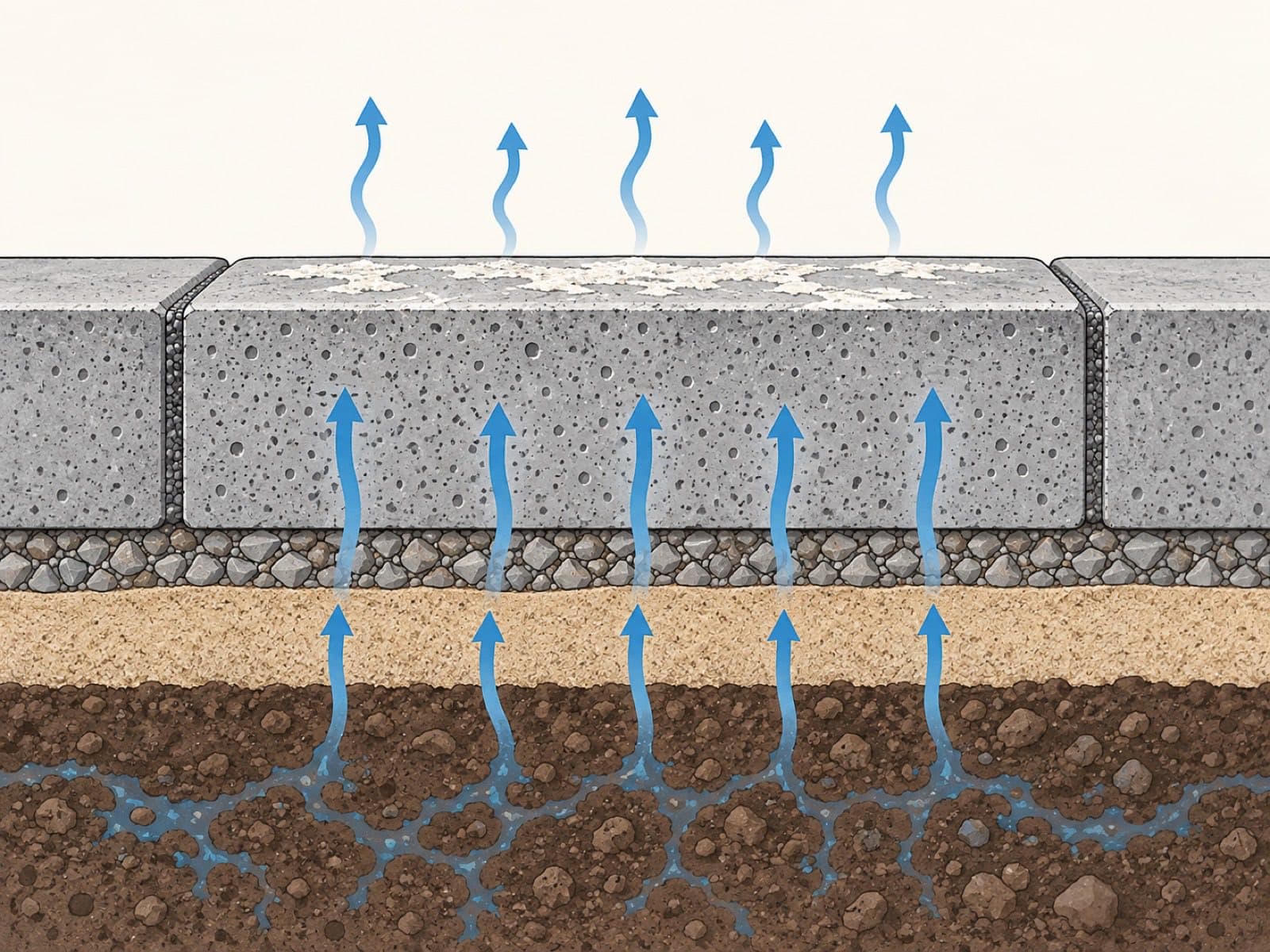
For many weeks after laying, concrete paving gives up its mixing water. The water travels through the pores towards the surface, dissolving calcium hydroxide on the way, and evaporates at the top. The lime stays, reacts with carbon dioxide from the air and turns into calcium carbonate - the white, hard bloom.
Two practical conclusions follow. First: the more water passes through the paving, the more likely the bloom, so the sub-base and the drainage have more say in this than any preparation does. Second: efflorescence on a new surface is transient, and on some surfaces it clears on its own after a few seasons.
The bloom against other white marks
| What you see | Likely cause | Where to look |
|---|---|---|
| White matt bloom across the surface | Lime efflorescence from the concrete | Efflorescence removers |
| White haze right after the build | Cement laitance from mortar and cutting | Post-construction cleaners |
| White runs under a kerb or low wall | Washing out of the mortar above | Efflorescence and run removers |
| White deposit only in the joints | Cement joint giving up lime | Grout and joint cleaners |
What removes it
Efflorescence removers work acidically - they dissolve the calcium carbonate a detergent cannot touch. The catalogue carries three for this problem: D-2W CTS Chemistry, EC-22 EKSIL and Guard Remover Eco, which its manufacturer also describes as a cement laitance remover.
If the bloom appeared right after the build and comes with mortar residue, start with a post-construction cleaner. The dilution, the dwell time and how to rinse are stated by the manufacturer in the data sheet - you will find them on every product page under the data tab.
Efflorescence and post-construction cleaners
The cleaning and restoration shelf - every product with its manufacturer's data sheet.
- Standard
Sandstone wall and facade sealer VP-1 CTS Chemistry
45,40 zł
36,18 zł/L
- Standard
Clay and concrete roof tile sealer VD-1 CTS Chemistry
45,51 zł
39,36 zł/L
- Standard
Brick and engineering brick sealer VC-1 CTS Chemistry
42,50 zł
33,90 zł/L
- Standard
Split-face concrete block sealer VBe-1 CTS Chemistry
42,71 zł
30,00 zł/L≈ 3,75 zł/m²
- Standard
Concrete wall sealer, wet look VB-2 CTS Chemistry
45,01 zł
35,90 zł/L
- Standard
Concrete wall sealer, invisible finish VB-1 CTS Chemistry
31,89 zł
25,80 zł/L
When to come back to sealing
After washing, the surface has to dry - not "dry to the touch", but dry through the pores as well. Manufacturers state a maximum substrate humidity and an application temperature for their sealers; both figures are in the data sheet and in the data tab on the product page.
If you are sealing for the first time, read the guide to preparing the substrate as well - efflorescence is only one of several reasons sealing fails.
Common questions
Is efflorescence a fault in the paving?
No. It is how fresh concrete reacts to water, and paving manufacturers describe it as a natural phenomenon. It does not indicate a bad batch or a laying error.
Will efflorescence disappear on its own?
On some surfaces it clears after a few seasons, as the concrete gives up its mixing water. Whether and when cannot be said in advance - it depends on the sub-base, the drainage and the weather.
Can vinegar remove efflorescence?
Household acids sometimes work on small patches, but they are hard to control: the concentration is arbitrary, and overdoing it can dull the surface of the paving. Catalogue preparations come with a dilution and a dwell time stated by the manufacturer, which gives you the control vinegar does not.
Does the surface have to be sealed straight after the bloom is removed?
It does not - that is a separate decision. But if you intend to seal, the moment just after washing and drying is the convenient one, because the substrate is clean and you avoid doing the same job twice.