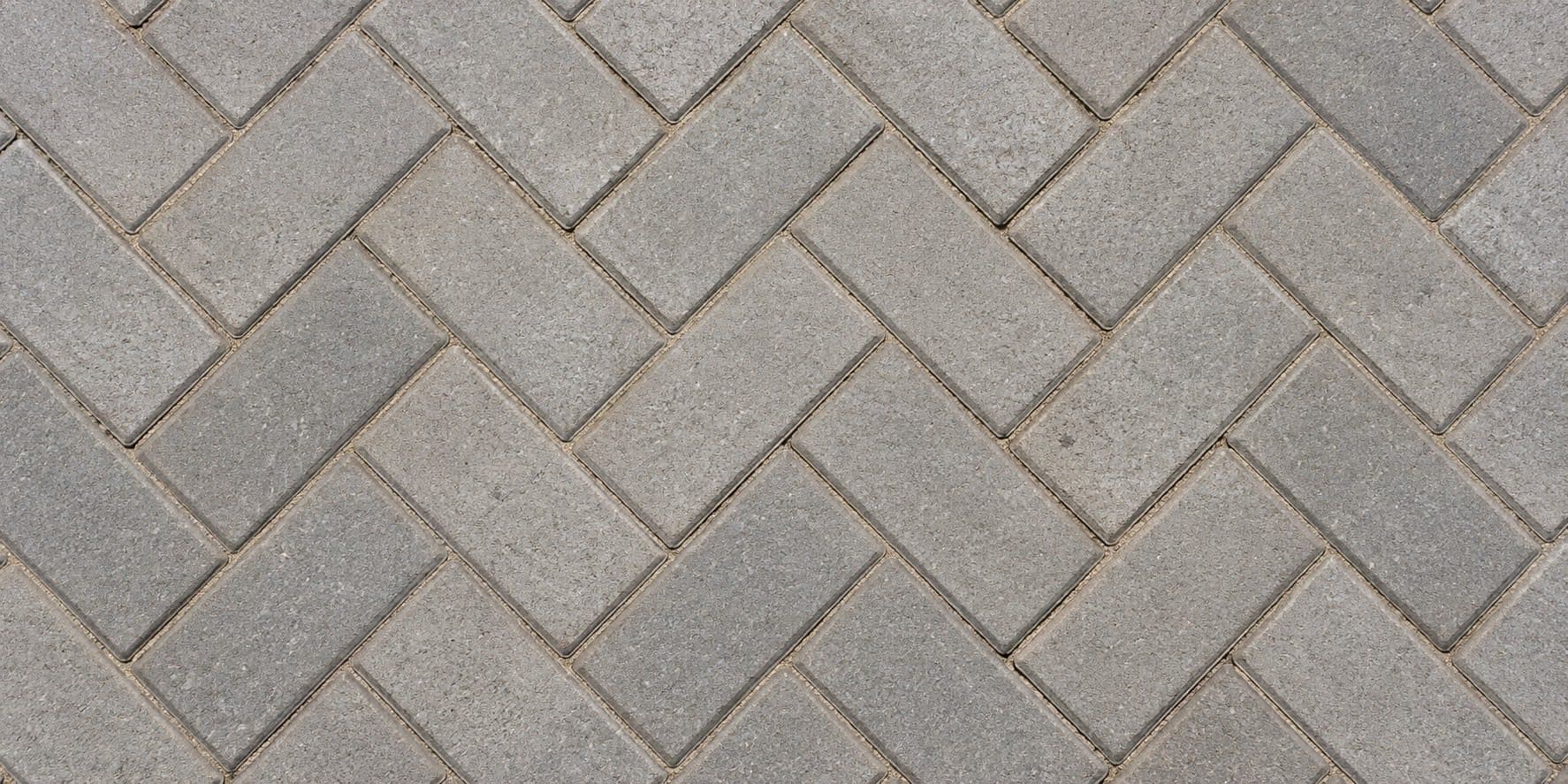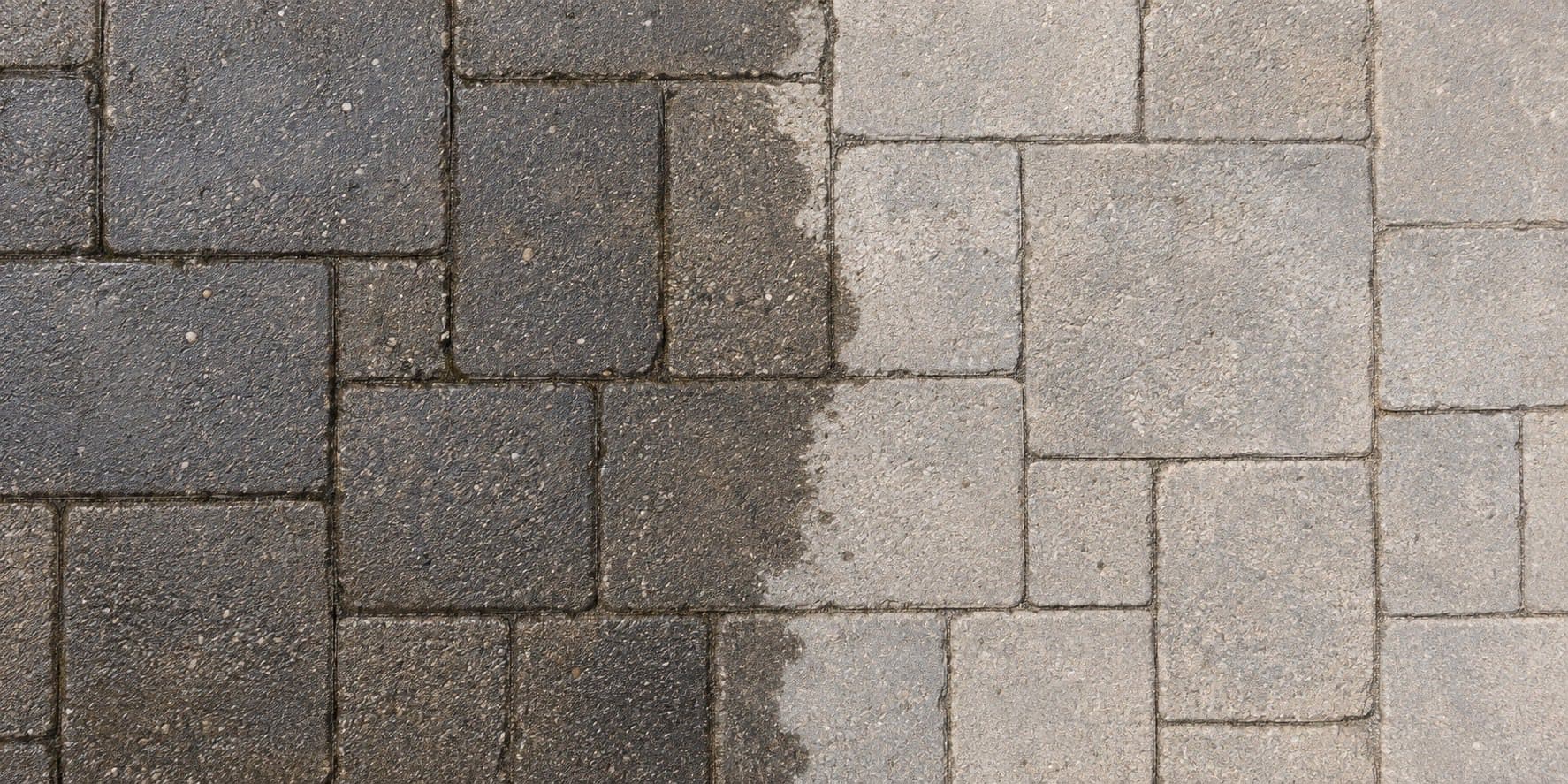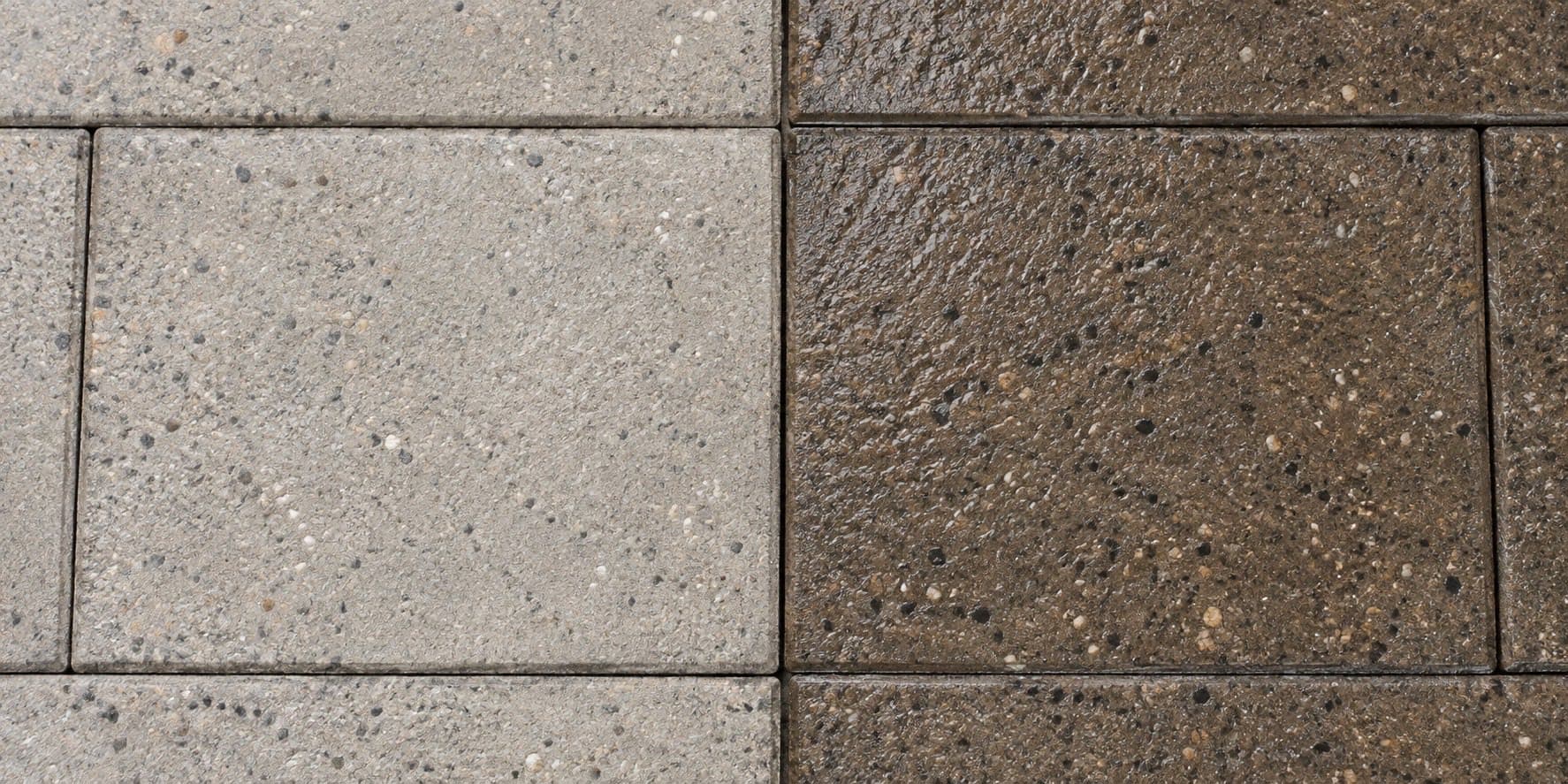
Manufacturers usually run two versions of the same sealer: invisible, and wet look. What separates them is what stays visible once it dries - and nothing else. The decision is more serious than it looks, because a wet look cannot be undone except by stripping the layer.
In short
Invisible is meant to leave the colour alone.
On very absorbent, matt material it can still deepen the shade slightly, simply by filling the pores.
A wet look deepens the colour permanently.
It looks like a surface after rain, except it never dries out.
Colouring changes the colour and covers.
The choice for a surface with colour patches that washing did not lift.
Test on a patch, not on the whole thing.
Behind the house, and once dry - a wet surface always looks different.
What a wet look actually does
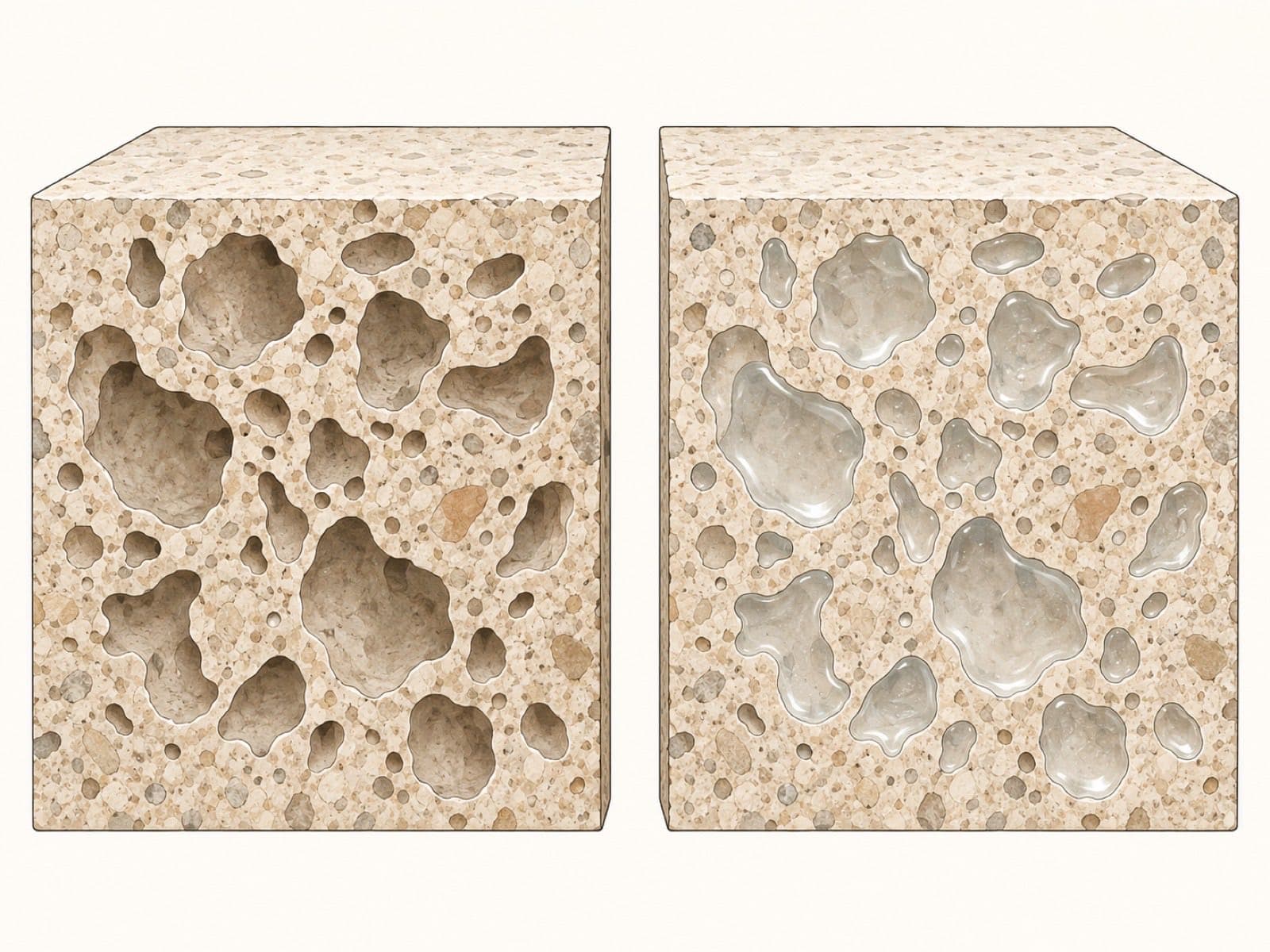
When it rains, water fills the pores of stone and paving, light stops scattering off them, and the colour reads as deeper. A wet-look sealer does the same thing, except it fills the pores with resin that does not evaporate. Hence the name, and hence the permanence.
In practice that means pale sandstone turns noticeably warmer and grey paving turns graphite. On material that is already dark the difference is often smaller than people expect. Which is why a test patch matters more here than for any other decision.
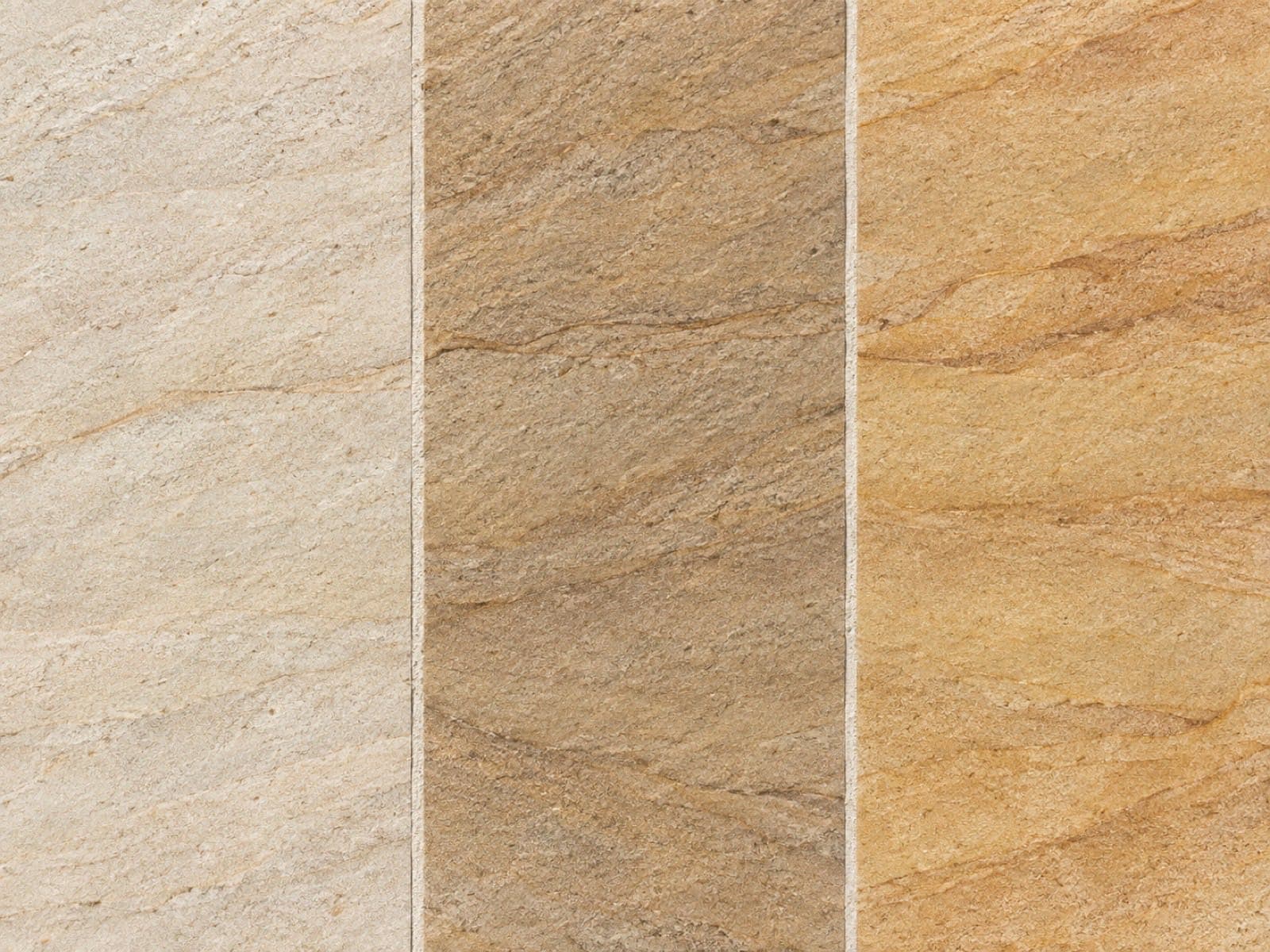
Three finishes side by side
| Finish | What it does to the colour | Reversible? | Typical choice |
|---|---|---|---|
| Invisible | Leaves it as it is | In practice, nothing to reverse | New paving, pale stone, render |
| Wet look / satin | Deepens it, as after rain | No - not without stripping | Faded paving, patios, decorative stone |
| Colouring | Changes it and covers unevenness | No | Older paving with colour patches |
Pairs that differ only in finish
The fairest comparison is the same preparation in two versions. The catalogue carries several such pairs: HK-1 and HK-2 for paving, SG-1 and SG-2 for polished granite, SM-1 and SM-2 for marble.
If you want the wet look without the sheen, note that some manufacturers split matt from satin - Guard Industry runs ProtectGuard WL Mat alongside ProtectGuard WL.
Invisible sealers
Preparations meant to leave the colour of the substrate alone.
- Standard
Sandstone wall and facade sealer VP-1 CTS Chemistry
45,40 zł
36,18 zł/L
- Standard
Clay and concrete roof tile sealer VD-1 CTS Chemistry
45,51 zł
39,36 zł/L
- Standard
Brick and engineering brick sealer VC-1 CTS Chemistry
42,50 zł
33,90 zł/L
- Standard
Split-face concrete block sealer VBe-1 CTS Chemistry
42,71 zł
30,00 zł/L≈ 3,75 zł/m²
- Standard
Concrete wall sealer, invisible finish VB-1 CTS Chemistry
31,89 zł
25,80 zł/L
- Premium
Travertine sealer, invisible finish ST-1 CTS Chemistry
61,40 zł
61,40 zł/L≈ 3,07 zł/m²
Wet-look sealers
Preparations that deepen the colour of the substrate permanently.
- Standard
Concrete wall sealer, wet look VB-2 CTS Chemistry
45,01 zł
35,90 zł/L
- Premium
Travertine sealer, wet look ST-2 CTS Chemistry
121,70 zł
121,70 zł/L≈ 6,09 zł/m²
- Premium
Marble sealer, wet look SM-2 CTS Chemistry
121,70 zł
121,70 zł/L≈ 6,09 zł/m²
- Premium
Solvent-based block paving sealer, wet look SK-2 CTS Chemistry
60,27 zł
54,12 zł/L≈ 7,22 zł/m²
- Premium
Polished granite sealer, wet look SG-2 CTS Chemistry
121,70 zł
121,70 zł/L≈ 6,09 zł/m²
- Standard
Block paving sealer, wet look HK-2 CTS Chemistry
43,70 zł
36,00 zł/L
Common questions
Can a wet look be removed?
Not in any way you would call simple. The resin sits in the pores of the material, so removing the effect means taking off the surface layer. Treat the decision as permanent.
Does an invisible sealer change the sheen?
That is not what it is for. On very absorbent, matt material it can deepen the shade marginally, because it fills the pores - but that is not sheen. If you want sheen, look for a preparation that describes itself that way.
Can invisible and wet look be combined on one surface?
They can, but the border between them will show, because appearance is exactly what separates them. If you are splitting a surface, run the border along an existing division - a kerb, an expansion joint - rather than through the middle of a continuous plane.
Which finish stands up to sun better?
We publish no durability comparisons, because we have no data for them. Manufacturers describe the resistance of their own preparations in their data sheets, and what they wrote is on the product page under their name.