The base is the second decision when choosing a sealer - after the finish and before the state of the substrate. Contrary to how it is often presented, this is not a split between "weaker" and "stronger". It is a split between two ways of working, each with its own boundary conditions.
In short
Water-based: less odour, simpler work.
Usually the choice for doing it yourself, indoors, and anywhere airflow is hard to arrange.
Solvent-based: needs a dry substrate and ventilation.
Manufacturers more often state a narrower temperature window for it.
The base does not decide the finish.
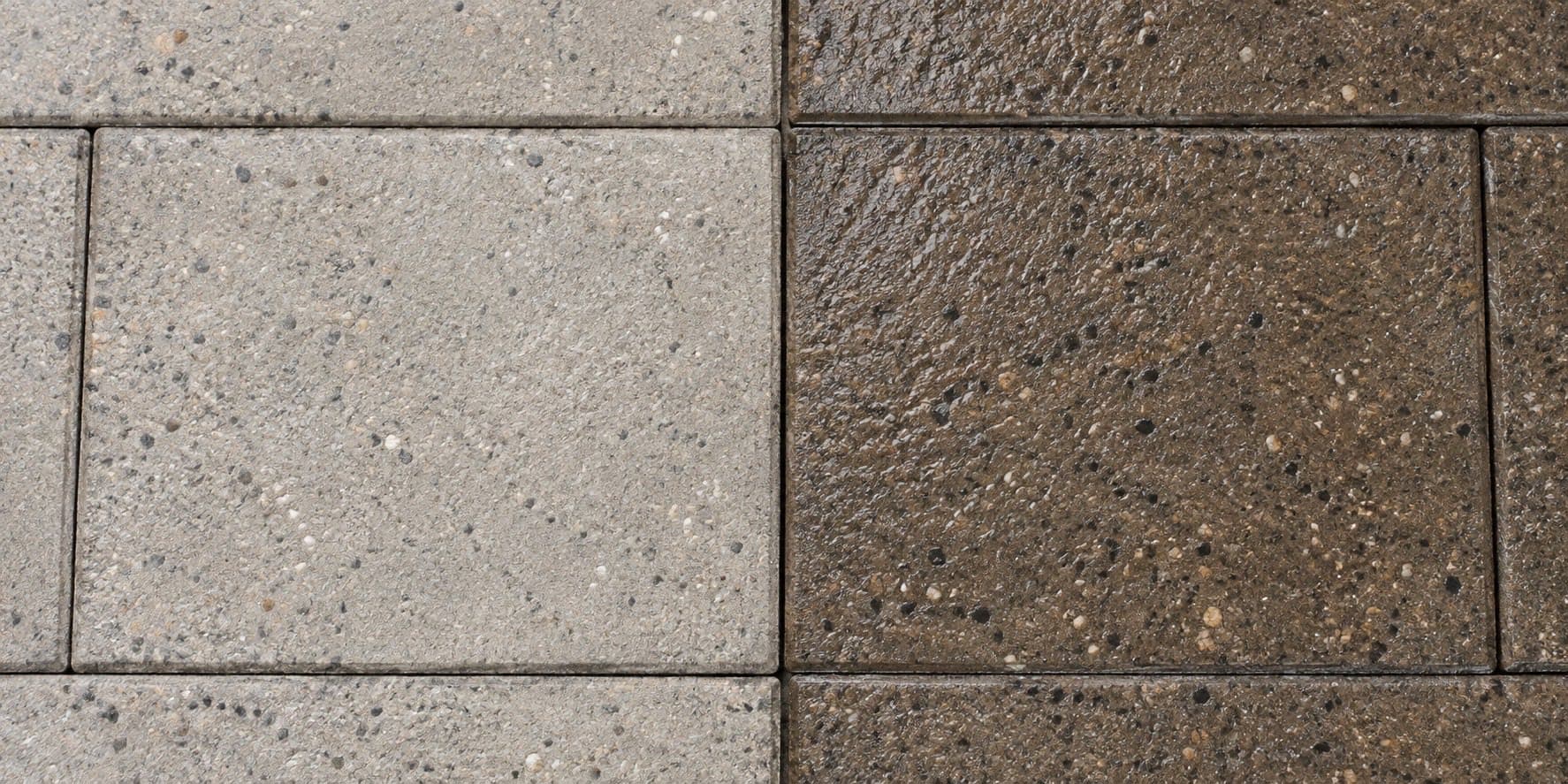
Invisible and wet look exist in both.
Tools and clean-up differ.
Water after a water-based product; after a solvent-based one, the solvent its manufacturer names.
What actually changes on the job
The biggest difference is organisational rather than chemical. A solvent-based preparation needs airflow and an unconditionally dry substrate - which means the weather stops being background and becomes part of the plan. A water-based one forgives more here, but it still comes with a stated maximum substrate humidity.
The second difference is odour. In a garage, on an enclosed patio, and anywhere air exchange is poor, that can be the deciding argument - regardless of what the data sheet says about the preparation itself.
The two bases side by side
| Criterion | Water-based | Solvent-based |
|---|---|---|
| Odour while working | Milder | Pronounced - airflow needed |
| What it asks of the substrate | Dry surface, humidity per the sheet | Substrate unconditionally dry |
| Temperature window | Usually wider | Usually narrower - check the sheet |
| Cleaning tools | Usually water | The solvent the manufacturer names |
| Finishes available | Invisible, wet look, colouring | Invisible, wet look, colouring |
Water-based sealers
Water-based preparations - each with its manufacturer's technical data.
- Standard
Sandstone wall and facade sealer VP-1 CTS Chemistry
45,40 zł
36,18 zł/L
- Standard
Clay and concrete roof tile sealer VD-1 CTS Chemistry
45,51 zł
39,36 zł/L
- Standard
Brick and engineering brick sealer VC-1 CTS Chemistry
42,50 zł
33,90 zł/L
- Standard
Split-face concrete block sealer VBe-1 CTS Chemistry
42,71 zł
30,00 zł/L≈ 3,75 zł/m²
- Standard
Concrete wall sealer, wet look VB-2 CTS Chemistry
45,01 zł
35,90 zł/L
- Standard
Concrete wall sealer, invisible finish VB-1 CTS Chemistry
31,89 zł
25,80 zł/L
Solvent-based sealers
Solvent-based preparations - check the temperature window in the sheet.
- Premium
Travertine sealer, wet look ST-2 CTS Chemistry
121,70 zł
121,70 zł/L≈ 6,09 zł/m²
- Premium
Travertine sealer, invisible finish ST-1 CTS Chemistry
61,40 zł
61,40 zł/L≈ 3,07 zł/m²
- Premium
Marble sealer, wet look SM-2 CTS Chemistry
121,70 zł
121,70 zł/L≈ 6,09 zł/m²
- Premium
Marble sealer, invisible finish SM-1 CTS Chemistry
61,40 zł
61,40 zł/L≈ 3,07 zł/m²
- Premium
Solvent-based block paving sealer, wet look SK-2 CTS Chemistry
60,27 zł
54,12 zł/L≈ 7,22 zł/m²
- Premium
Polished granite sealer, wet look SG-2 CTS Chemistry
121,70 zł
121,70 zł/L≈ 6,09 zł/m²
How it looks in the catalogue
Several manufacturers run both bases in the same role, so the comparison is sometimes direct. For block paving Eksil has the solvent-based EH-14, and for stone and facades the water-based EH-21. Guard Industry runs a water-based version for low-absorbency stone, ProtectGuard MG Eco.
In the shop the base filter narrows the list in one click: water-based and solvent-based. On every product the data tab states the application temperature and the drying time as the manufacturer wrote them.
Common questions
Is a water-based sealer weaker?
The question has a misleading premise: "strength" is not a parameter anyone states. What can be compared is penetration depth, the number of coats and coverage - and those figures are in the data sheets for both bases, on every product in the data tab. They are worth comparing directly, because the differences between individual preparations are often larger than between the bases.
Can one be applied over the other?
Do not assume so. Compatibility with an earlier layer is something the manufacturer states, and where they do not state it there is no basis to assume it. If the surface has been sealed before, write to us with the name of the previous preparation.
Which is better in a garage?
In an enclosed space the first criterion is ventilation, not the properties of the preparation. Where airflow is poor a water-based product is usually more comfortable, but check the manufacturer's ventilation requirements in their sheet.
Does the base affect how it looks once dry?
Appearance depends on the declared finish - invisible, wet look or colouring - not on the base. Both bases come in all three.