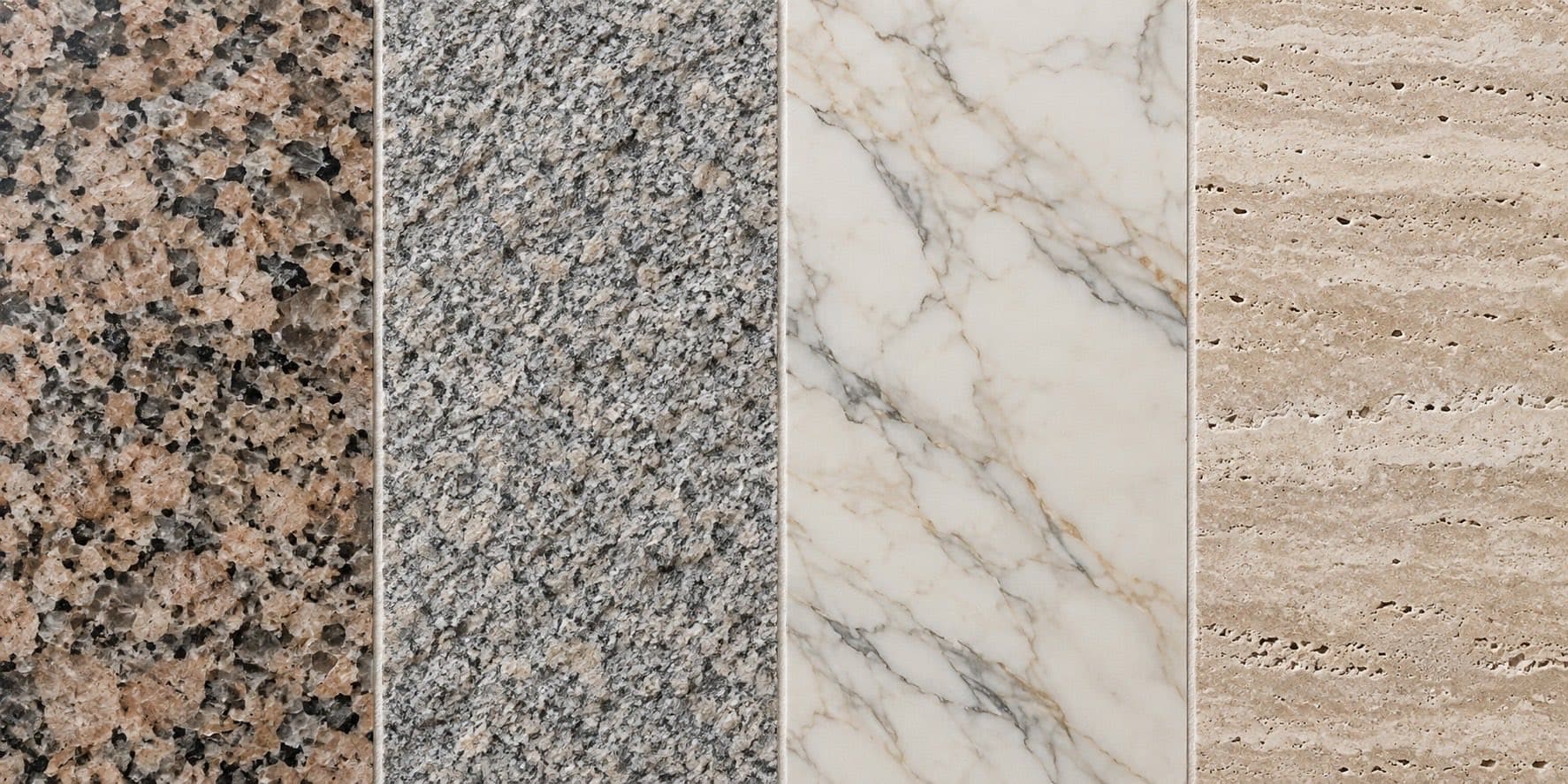
"Natural stone" is not one substrate. Polished granite barely absorbs anything, travertine has open pores, and sandstone can drink several times more preparation than either. That is why the catalogue carries a separate product for each - and why "which sealer for stone" has no single answer.
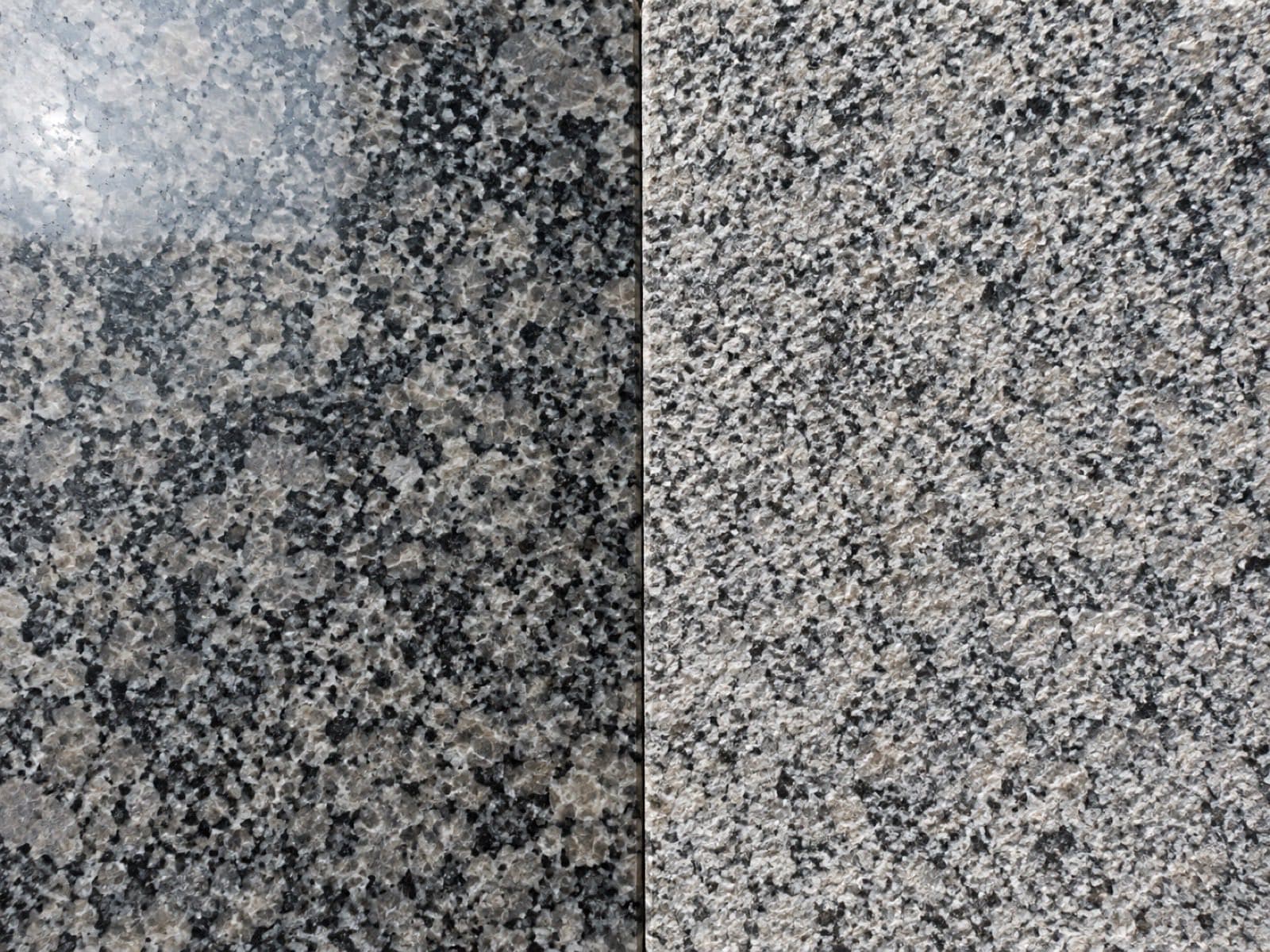
The difference is made not only by the stone but by how its surface was worked. The same granite behaves differently polished and flamed, because flaming opens the structure. CTS Chemistry runs two different preparations for them for exactly that reason.
In short
Stone first, then the surface finish.
Polished and flamed granite are two substrates despite the same name.
Absorbency decides the coverage.
Travertine and sandstone drink more than polished granite - you see it in square metres per litre.
Marble is sensitive to acids.
Choose cleaning preparations carefully; an acidic cleaner can dull a polished surface.
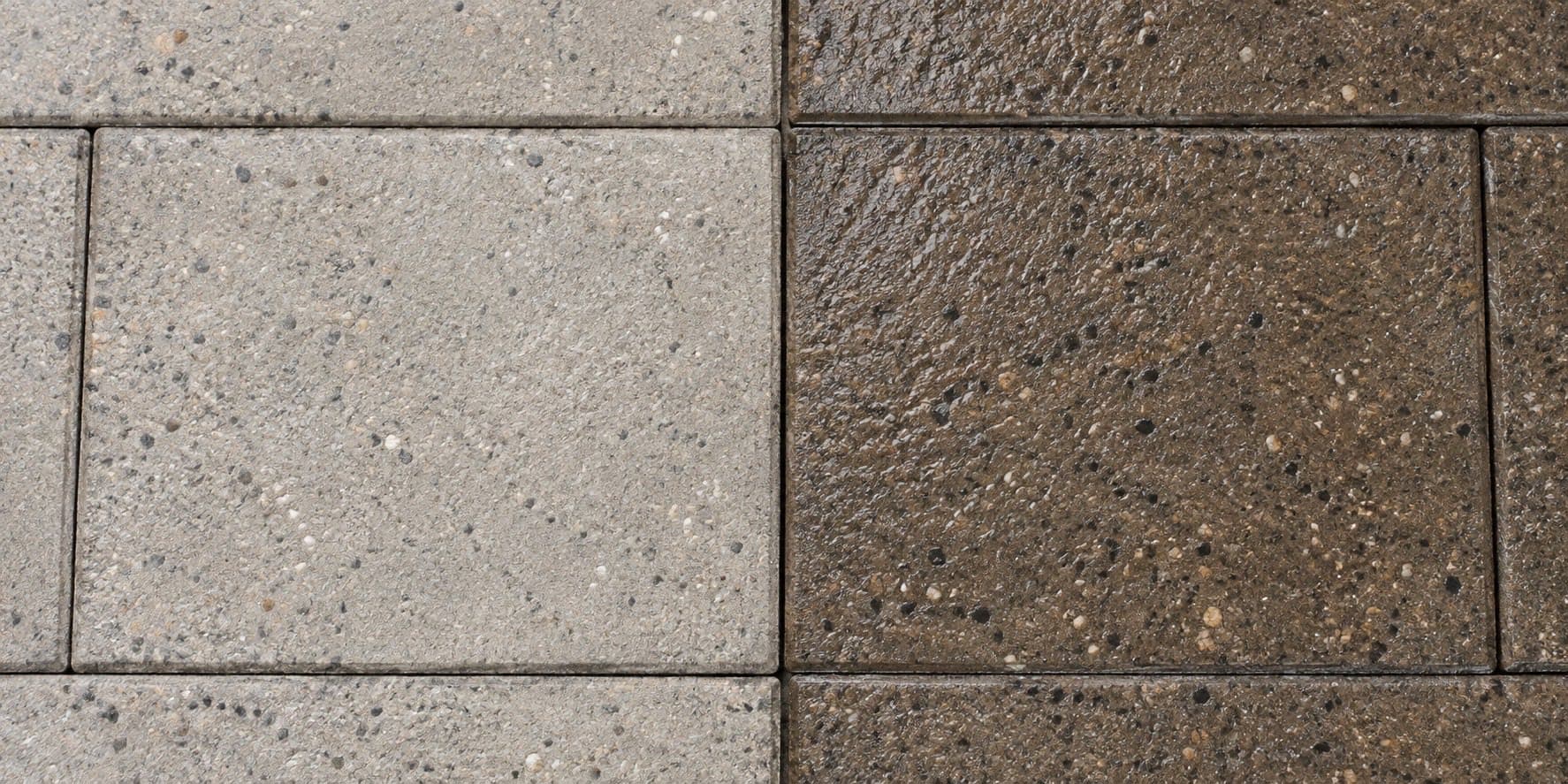
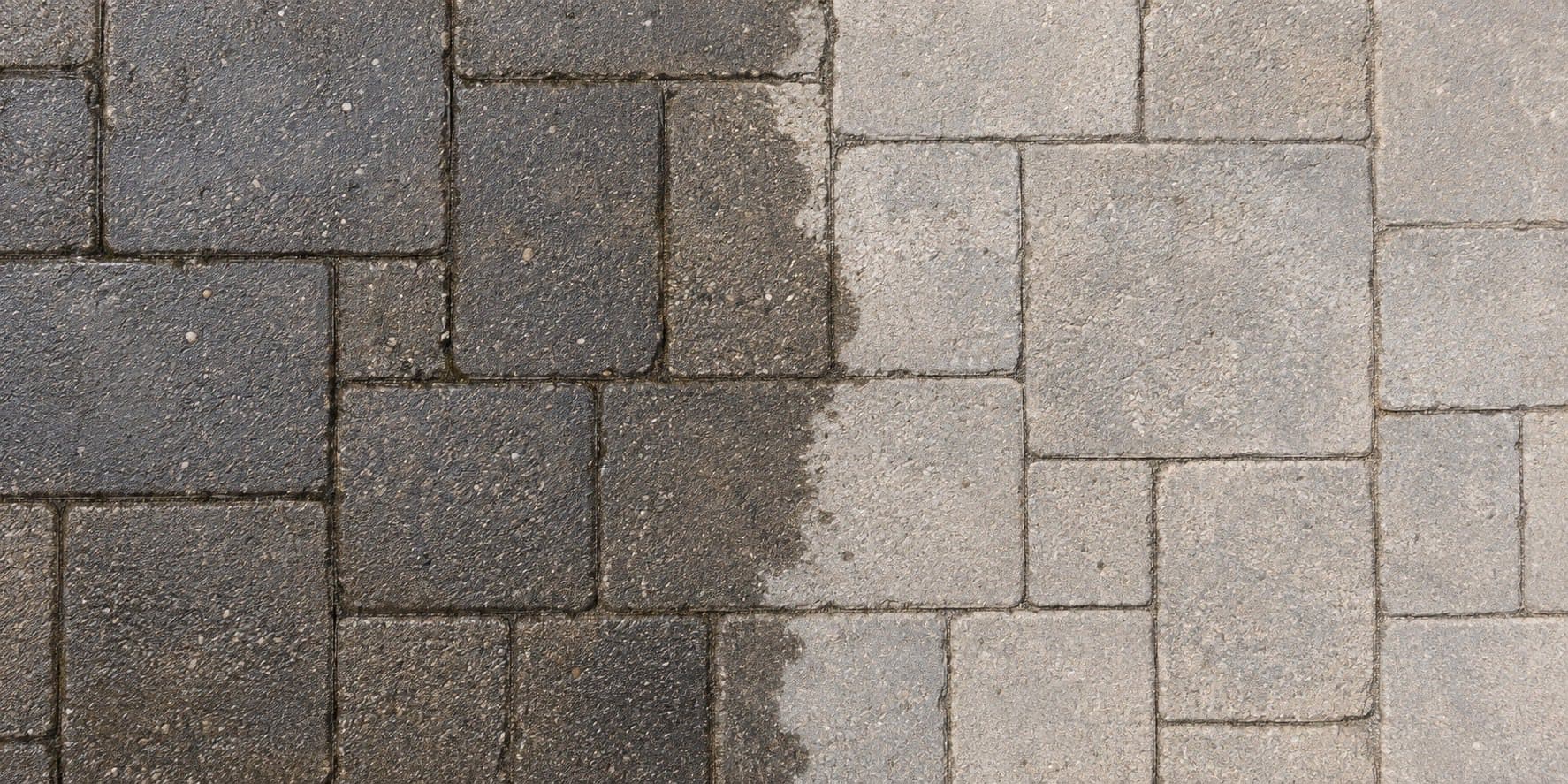
A wet look deepens the veining.
On stone with a strong pattern the difference is greater than on concrete paving.
Five substrates and their preparations
| Stone | What sets it apart | Products in the catalogue |
|---|---|---|
| Polished granite | Very low absorbency, smooth surface | SG-1 invisible, SG-2 wet look |
| Flamed granite | Open structure after thermal working | HG-1 invisible, HG-2 wet look |
| Marble | Acid-sensitive, polished surface | SM-1 invisible, SM-2 wet look |
| Travertine | Open pores and cavities | ST-1 invisible, ST-2 wet look |
| Sandstone | High absorbency, soft structure | HP-1 invisible, VP-1 for walls |
Why the finish changes as much as the stone
Polishing closes the pores; flaming opens them. The same block of granite worked two different ways will take a different amount of preparation and spread it differently. Hence SG-1 for polished and HG-1 for flamed - not a marketing variant, a different substrate.
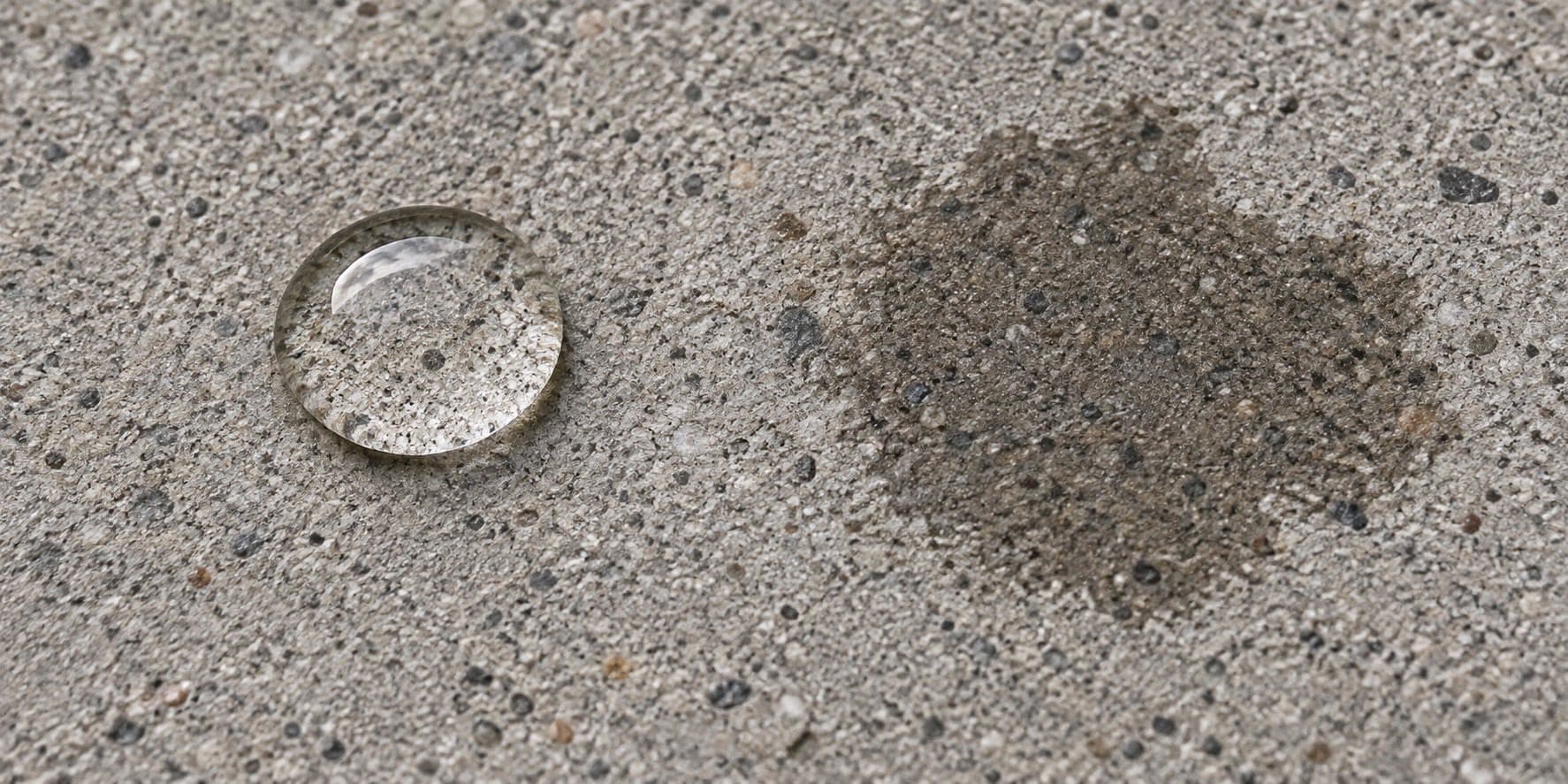
If you are not sure which finish you have, test it with a hand and some water: a polished surface is smooth and a drop sits on it for a while, a flamed one is rough and pulls water in faster. The same test also tells you how much preparation the stone will drink.
Natural stone sealers
The whole stone shelf - each with coverage and the manufacturer's technical data.
- Standard
Sandstone wall and facade sealer VP-1 CTS Chemistry
45,40 zł
36,18 zł/L
- Standard
Brick and engineering brick sealer VC-1 CTS Chemistry
42,50 zł
33,90 zł/L
- Premium
Travertine sealer, wet look ST-2 CTS Chemistry
121,70 zł
121,70 zł/L≈ 6,09 zł/m²
- Premium
Travertine sealer, invisible finish ST-1 CTS Chemistry
61,40 zł
61,40 zł/L≈ 3,07 zł/m²
- Premium
Marble sealer, wet look SM-2 CTS Chemistry
121,70 zł
121,70 zł/L≈ 6,09 zł/m²
- Premium
Marble sealer, invisible finish SM-1 CTS Chemistry
61,40 zł
61,40 zł/L≈ 3,07 zł/m²
- Premium
Polished granite sealer, wet look SG-2 CTS Chemistry
121,70 zł
121,70 zł/L≈ 6,09 zł/m²
- Premium
Polished granite sealer, invisible finish SG-1 CTS Chemistry
61,40 zł
61,40 zł/L≈ 3,07 zł/m²
Anti-graffiti and stone facades
Stone facades bring a separate question: how easily spray paint comes off. Guard Industry runs ProtectGuard MG for marble and granite in that role, plus a water-based version, ProtectGuard MG Eco, for low-absorbency stone.
What those preparations do and under what conditions is described by the manufacturer in their own sheets - we carry them on the product pages under their name and add no conclusions. Stone on an external wall also sits under facades and roofs.
Common questions
Will one sealer do for a terrace of mixed stone?
If the substrates differ in absorbency, the same preparation will behave differently on them - and most likely look different too. On mixed surfaces a test patch on each material is all the more worthwhile.
Will a granite sealer work on marble?
Manufacturers run separate products for them, and that is the best hint. The scope of use is stated in the data sheet of the specific preparation - if marble is not listed there, do not assume it is covered.
How much will sandstone drink?
More than granite - but how much exactly depends on the particular stone. The coverage a manufacturer states is always a range; the calculator on the product page works out litres from it once you give the area and the absorbency.
Does a wet look on stone look the same as on paving?
It is usually more pronounced, because stone has a pattern of its own - veining and colour variation get deeper. On strongly patterned material that is an argument for a test patch, because the effect cannot be undone.