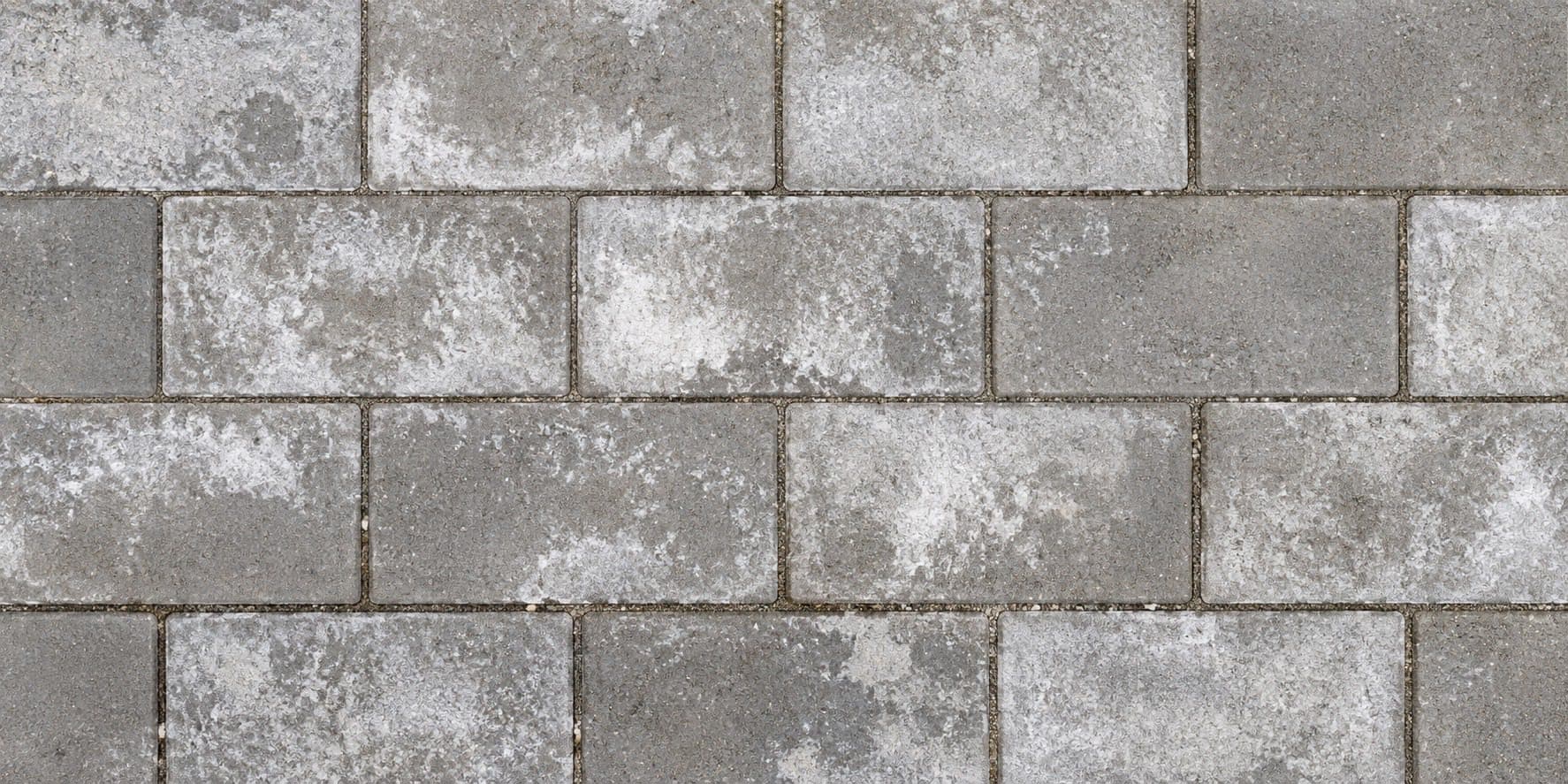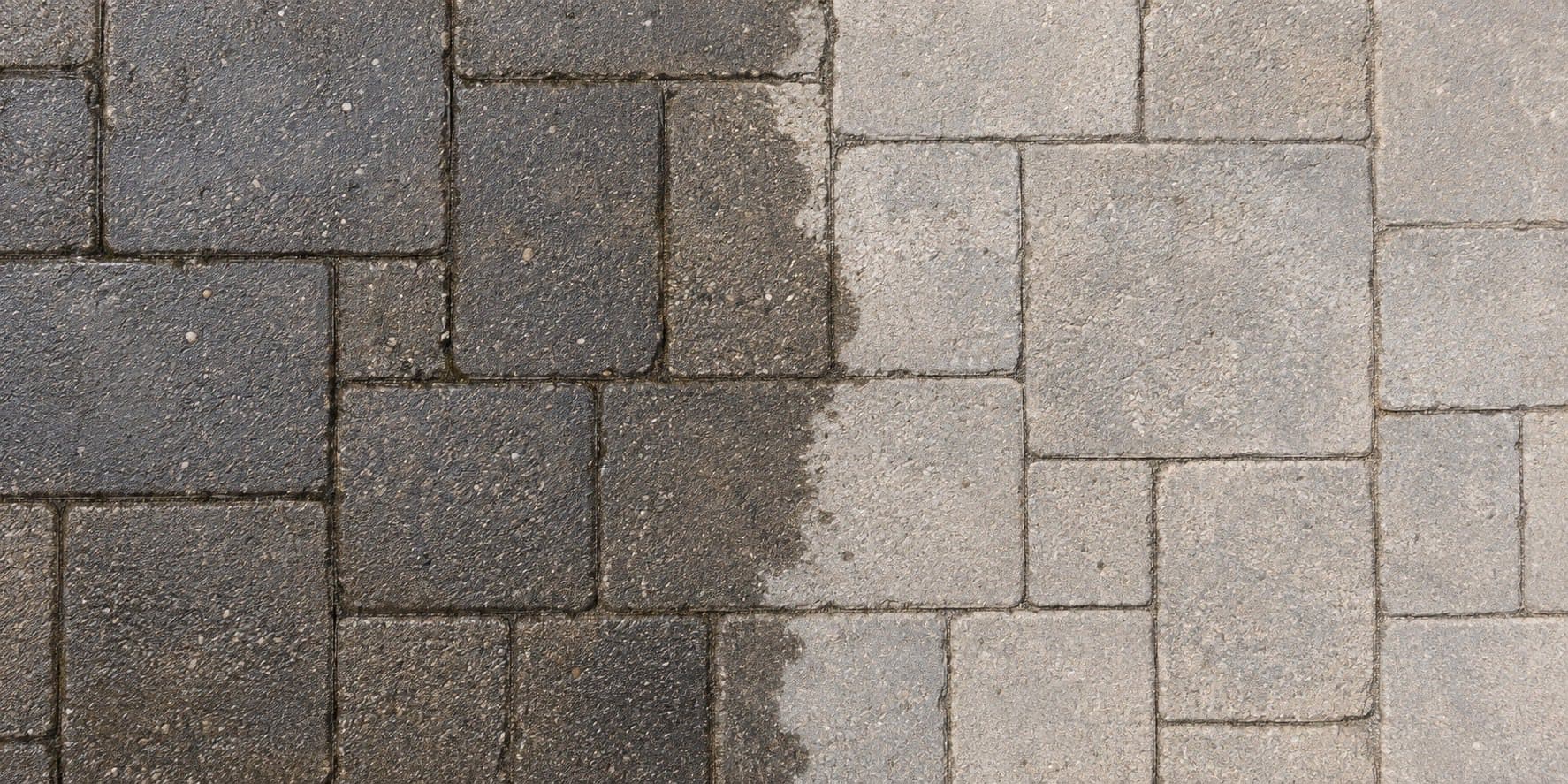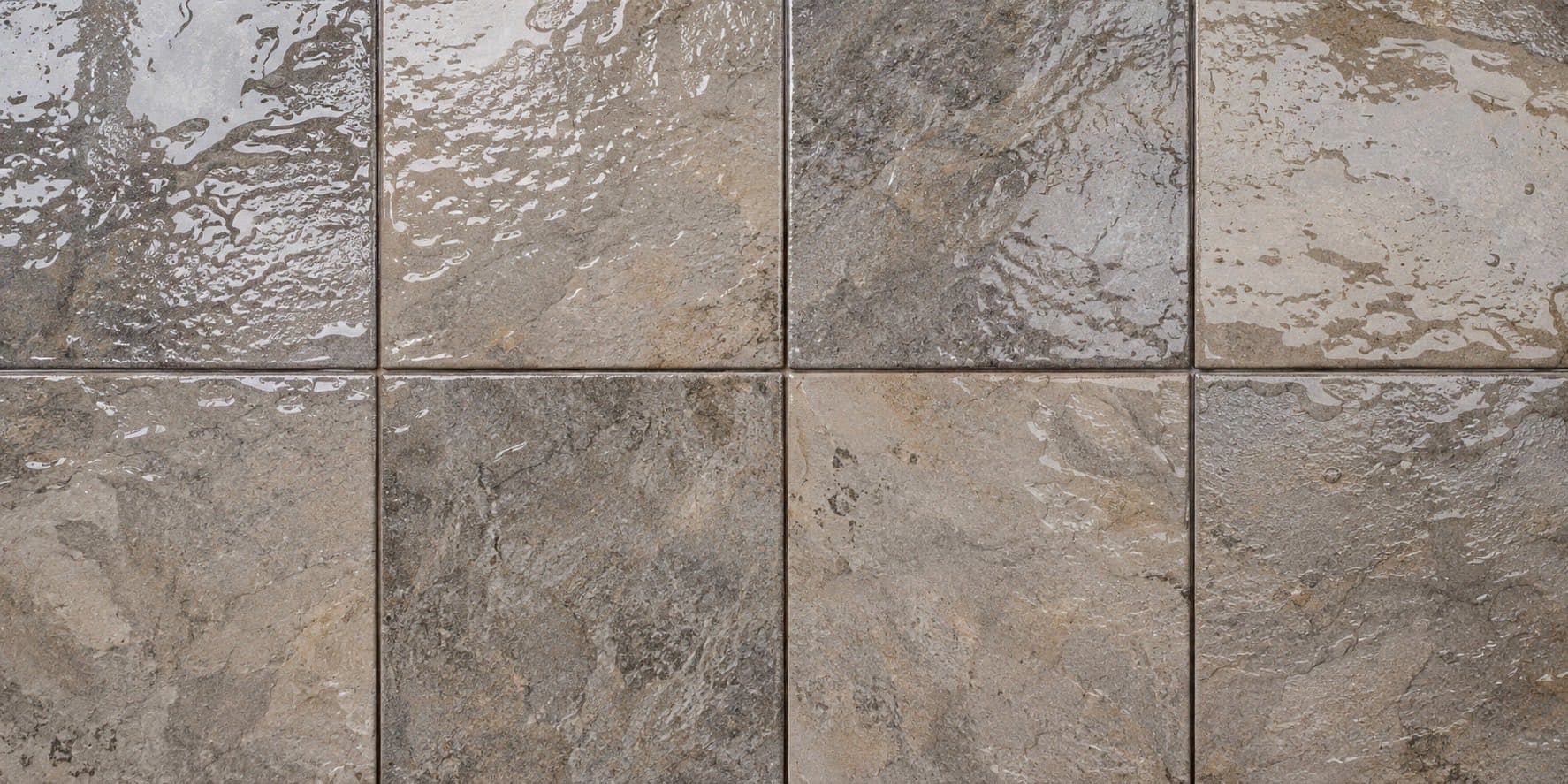
A slippery surface is a problem where it is easy to buy the wrong thing, because there is one symptom and three causes. Before reaching for an anti-slip treatment, check that it is really what you need - because if algae are to blame, cleaning is enough.
Three causes, three responses
Green growth, algae, moss.
The commonest and the easiest. The slipperiness goes with the growth - you need a cleaner, not an anti-slip treatment.
A smooth finish on the material.
Polished granite, glazed tile. The material is smooth in itself and stops gripping when wet.
A layer applied earlier.
Wax, a coating or a gloss sealer can change how a surface grips.
First check whether it is algae
A simple test: wipe the wet surface with a finger where it is most slippery. If it leaves a greenish or black mark, that is biofilm rather than the material. The right move then is a green growth remover, not changing the properties of the surface.
Shaded areas and places water does not drain from are the worst affected. If the algae come back every season, the cause is often the drainage rather than the absence of a preparation - and no chemistry fixes that permanently.
How to tell what you are dealing with
| Symptom | Likely cause | What to do |
|---|---|---|
| Slippery only after rain, in shade | Algae and biofilm | Green growth remover |
| A greenish mark when wiped | Biofilm | Clean it, then reassess |
| Always slippery when wet, surface clean | Smooth material finish | Anti-slip treatment |
| Became slippery after sealing or waxing | The applied layer | Check that preparation's sheet |
Anti-slip treatments in the catalogue
For smooth surfaces CTS Chemistry runs R-9C for ceramic tiles and R-9G for granite and gneiss. Guard Industry describes Guard Slip Resistant as a treatment for tiles, stone and concrete.
Polish'Guard is a separate case - its manufacturer describes it as an anti-slip floor wax, that is a wearing layer rather than a penetrating preparation. That difference matters when planning maintenance.
Anti-slip treatments
Four products in the catalogue - each with the use its manufacturer states.
- Standard
Anti-slip treatment for granite and gneiss tiles R-9G CTS Chemistry
59,90 zł
59,90 zł/L≈ 9,22 zł/m²
- Standard
Anti-slip treatment for ceramic and porcelain tiles R-9C CTS Chemistry
59,90 zł
59,90 zł/L≈ 11,98 zł/m²
- Premium
Anti-slip floor wax - Polish’Guard
899,00 zł
179,80 zł/L
- Premium
Anti-slip treatment for tiles, stone and concrete - Guard Slip Resistant
199,00 zł
259,80 zł/L≈ 25,98 zł/m²
Common questions
Will an anti-slip treatment change how the tiles look?
Manufacturers describe this in their data sheets and it differs between products - some work by micro-etching the surface, which can change the sheen. Test on a patch before using it on anything visible.
Does it work on block paving?
Concrete paving is usually rough and rarely slippery when dry - the problem is most often biofilm. The substrates each preparation covers are listed in its sheet; check whether paving is among them.
How long does it last?
The conditions for renewal are described by the manufacturer in the sheet. With layered products such as wax, maintenance is part of using the surface rather than a one-off job.
Can a sealer make a surface more slippery?
Gloss-forming preparations change the surface, and the effect on grip is something a manufacturer either describes or does not. If the surface is somewhere slipperiness matters, check the sheet before buying, not after.