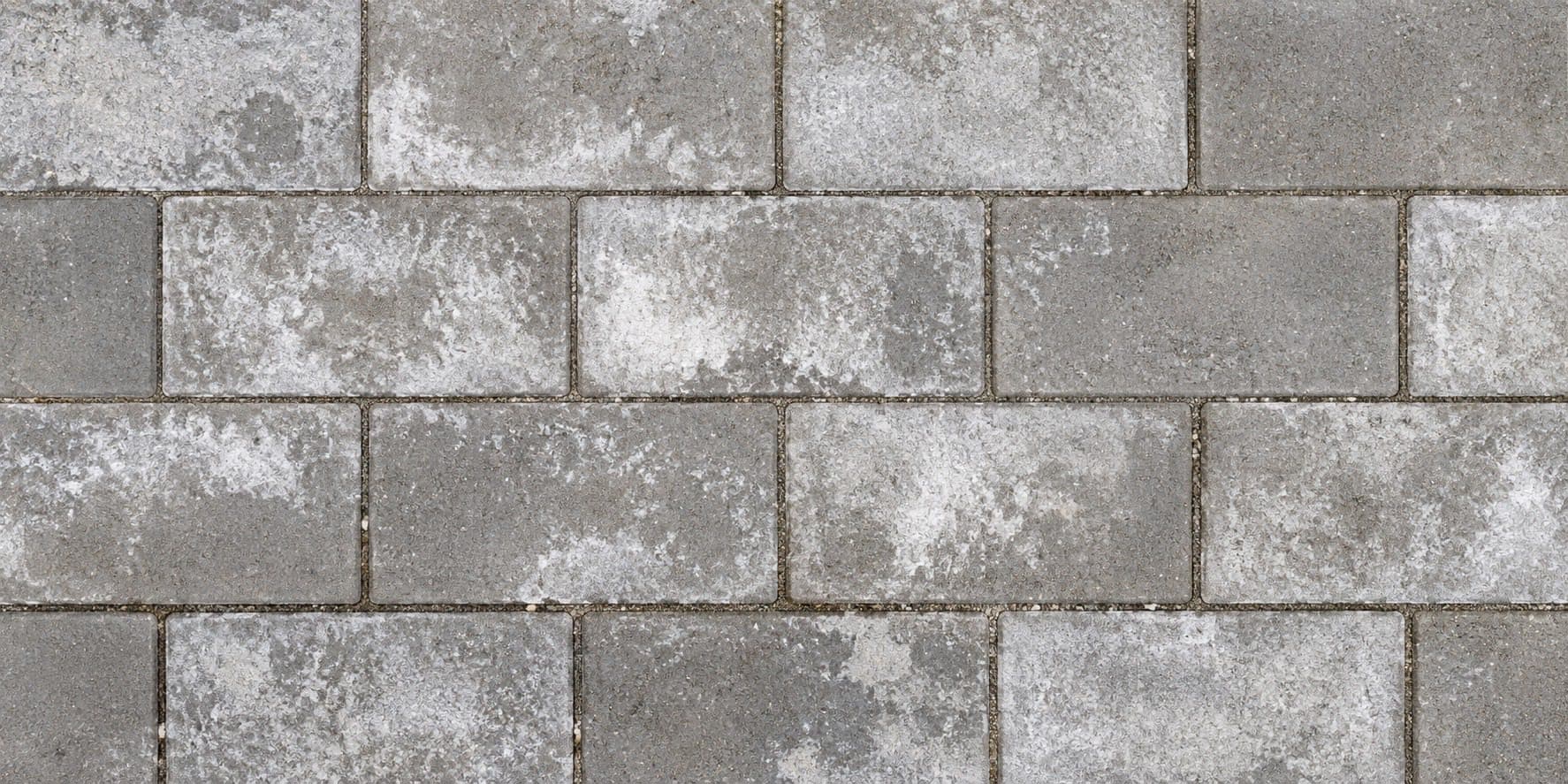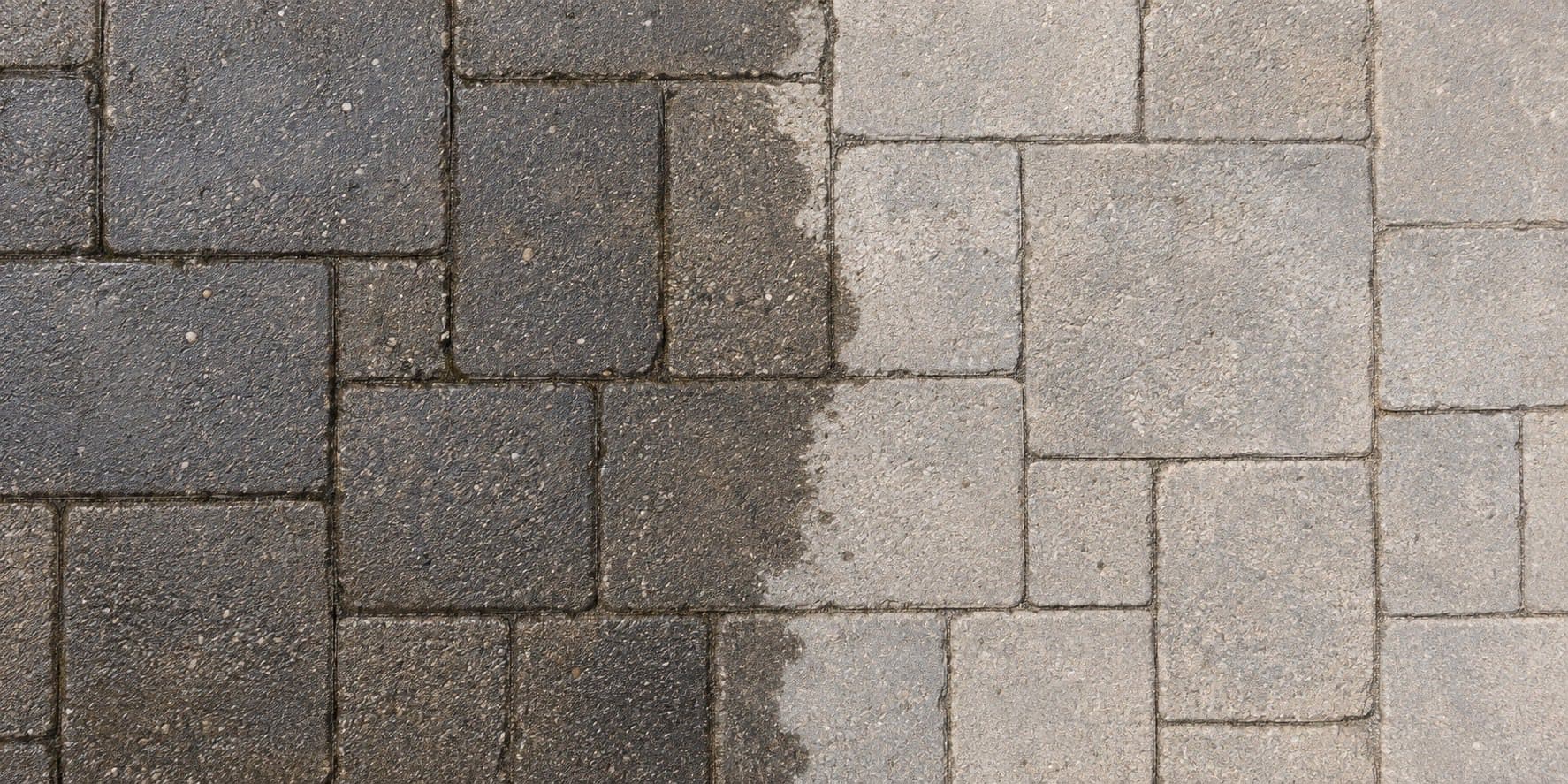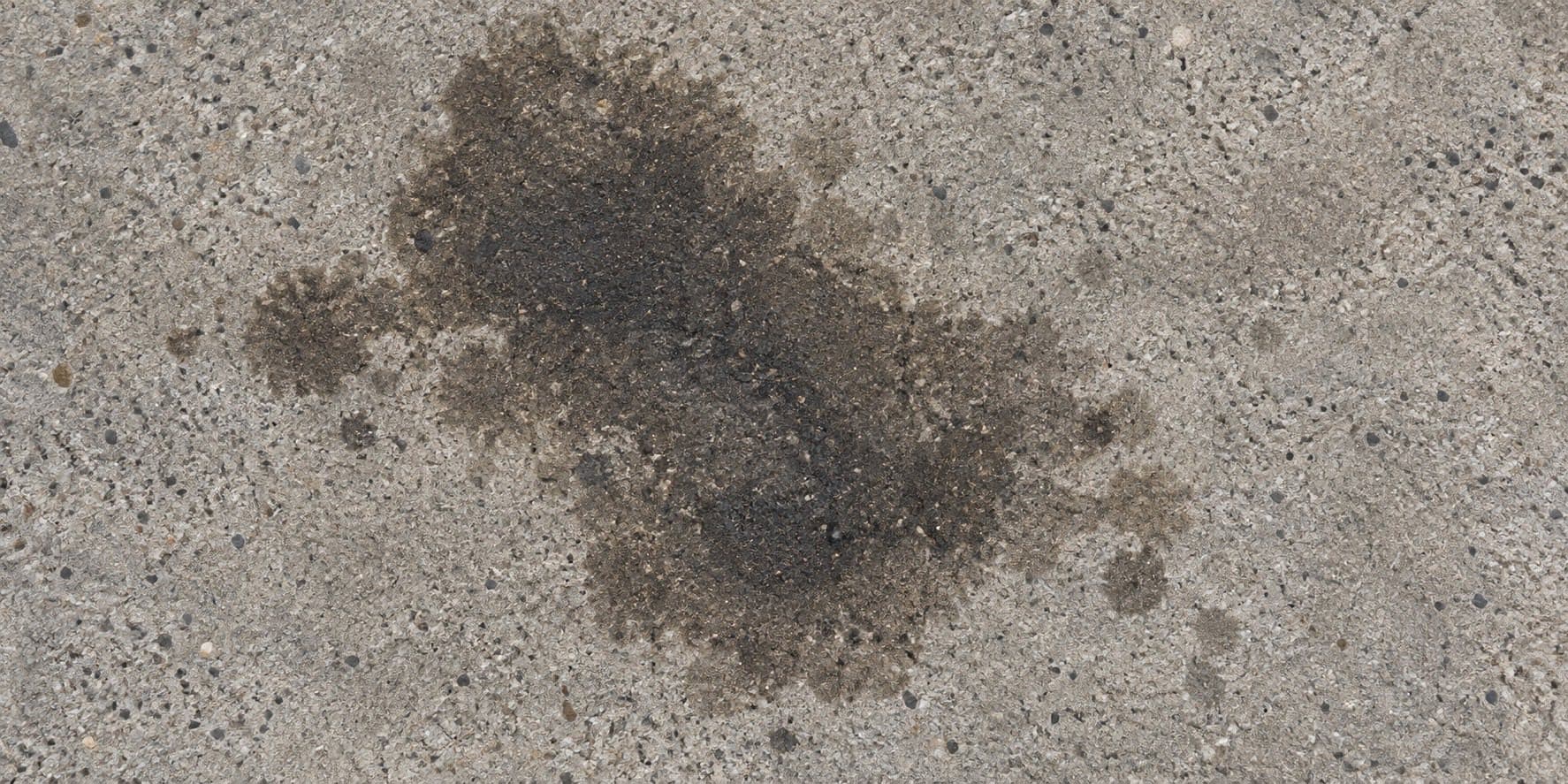
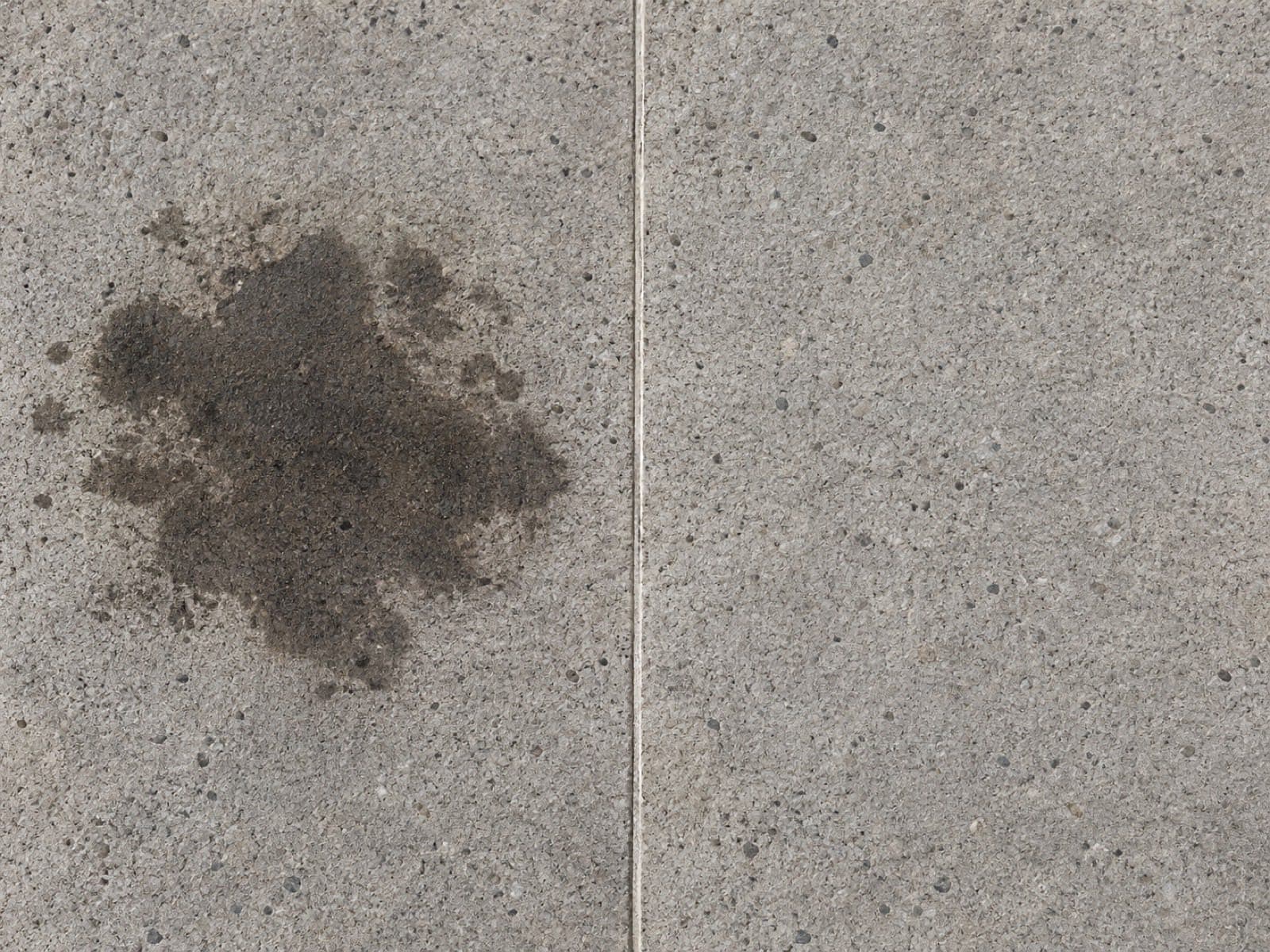
An engine oil stain differs from most soiling in that it does not stay on the surface. Concrete and concrete paving are porous, the oil goes into those pores, and after a few days it sits several millimetres down. Washing what you can see then only takes off the top of the stain.
Two things are worth knowing before you start. First: time is against you - a fresh stain is incomparably easier. Second: you need a preparation that pulls the oil out of the pores, not one that dissolves it and spreads it wider.
In short
Oil soaks in, it does not lie on top.
Which is why a pressure washer on its own is usually not enough.
A fresh stain is blotted first.
Sand, sawdust or cat litter pull up what has not yet gone deep.
Then a degreasing preparation.
The dwell time and dilution are stated by the manufacturer in the data sheet.
A mark may remain.
An old, deep stain can leave a shadow - and we do not promise it will go.
Three situations, three responses
| When | What to do first | What to expect |
|---|---|---|
| Fresh stain, still glossy | Cover with an absorbent, sweep up, then degrease | Usually can be brought back to no visible mark |
| A few days old | Degreaser per the data sheet, repeat if needed | Usually a clear improvement, sometimes a faint shadow |
| Old, washed many times | Degreaser, then judge whether to go further | A mark may remain; at worst, replacing the unit |
What to use
The catalogue carries three products for greasy soiling, each for a different case: OL-1 CTS Chemistry, written specifically for oil stains on concrete and paving; D-12 CTS Chemistry for very heavy organic soiling; and Net'Guard Ultra, which its manufacturer describes as a degreaser and cleaner for terraces and drives.
The dilution, the dwell time and how to rinse differ between them, and all of those figures are in the data sheets - on every product page you will find them in the data tab, under the manufacturer's name.
Preparations for greasy soiling
Degreasers and organic stain removers, with their manufacturers' data sheets.
- Premium
Travertine sealer, wet look ST-2 CTS Chemistry
121,70 zł
121,70 zł/L≈ 6,09 zł/m²
- Premium
Travertine sealer, invisible finish ST-1 CTS Chemistry
61,40 zł
61,40 zł/L≈ 3,07 zł/m²
- Premium
Marble sealer, wet look SM-2 CTS Chemistry
121,70 zł
121,70 zł/L≈ 6,09 zł/m²
- Premium
Marble sealer, invisible finish SM-1 CTS Chemistry
61,40 zł
61,40 zł/L≈ 3,07 zł/m²
- Premium
Polished granite sealer, wet look SG-2 CTS Chemistry
121,70 zł
121,70 zł/L≈ 6,09 zł/m²
- Premium
Polished granite sealer, invisible finish SG-1 CTS Chemistry
61,40 zł
61,40 zł/L≈ 3,07 zł/m²
What comes next
Once the stain is gone and the surface has dried, sealing becomes a reasonable question - not because it promises anything, but because a less absorbent substrate gives you more time to react to the next spill. Manufacturers describe limiting water uptake as the main use of this group of preparations; the details for a specific product are in its sheet.
If you are moving on to sealing, start with preparing the substrate - degreaser left in the pores is one of the reasons a sealer comes out patchy.
Common questions
Can an oil stain be removed completely?
With a fresh stain, usually yes. With an old one that has soaked in deep and been washed many times, a shadow can remain - and we do not promise it will go. It depends on how porous the substrate is and how long the oil sat in it.
Will baking soda or washing-up liquid do?
On a fresh, shallow stain they sometimes help. For oil that has entered the pores you need a preparation made for that use - with a dilution and a dwell time the manufacturer states.
Will a degreaser damage the paving?
The scope of use and the substrates it may be used on are stated by the manufacturer in the data sheet. Be particularly careful with limestone and marble - if the sheet does not list your substrate, do not assume it is covered.
Will sealing prevent oil stains?
Some preparations are described by their manufacturers as oleophobic - the catalogue has them under a filter of their own - and that is a property they state in their data sheets. The practical difference worth knowing: a less absorbent surface buys you more time to lift a fresh spill, and with oil, time is what settles it. The details for a specific preparation are always in its sheet.