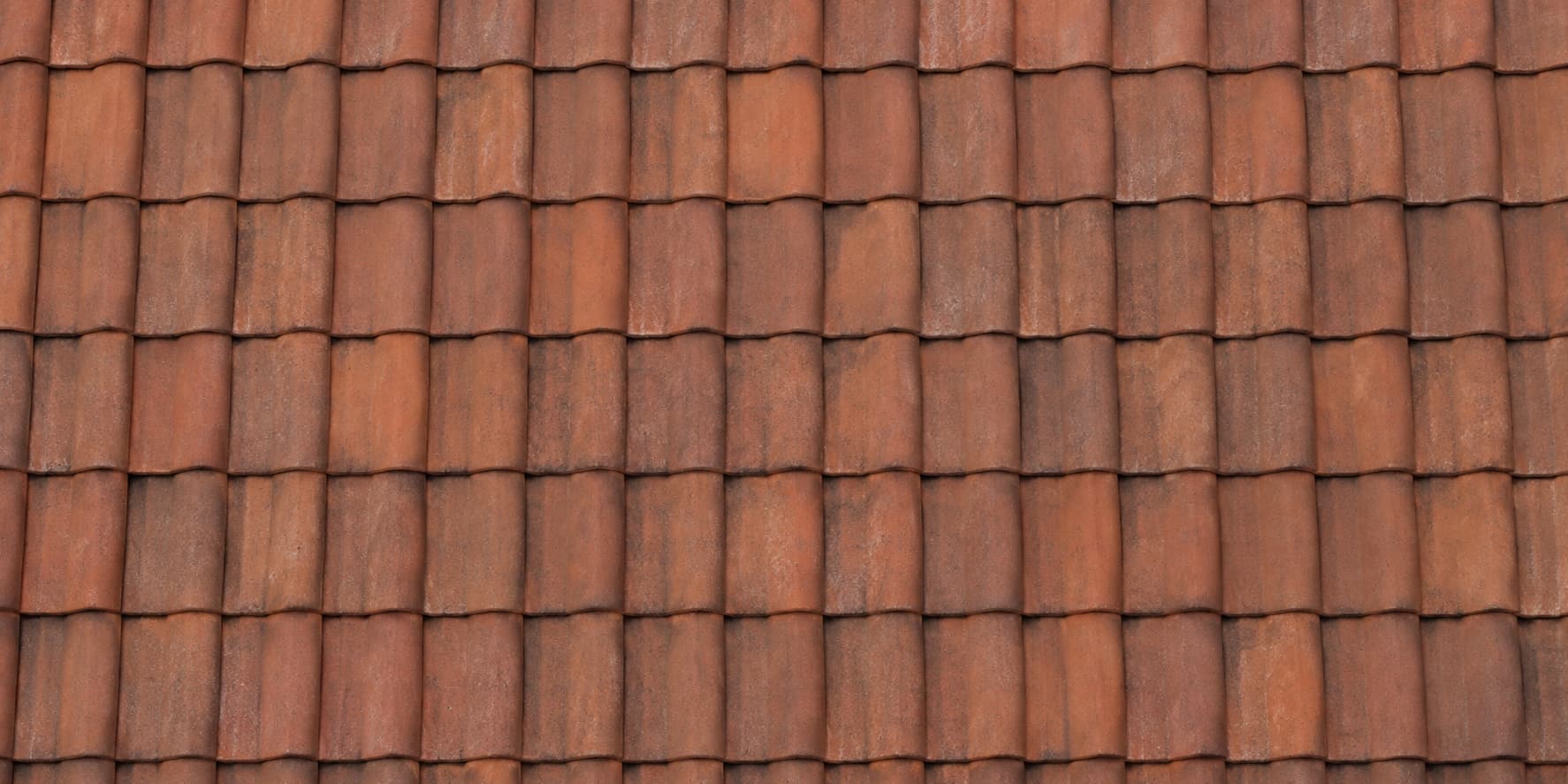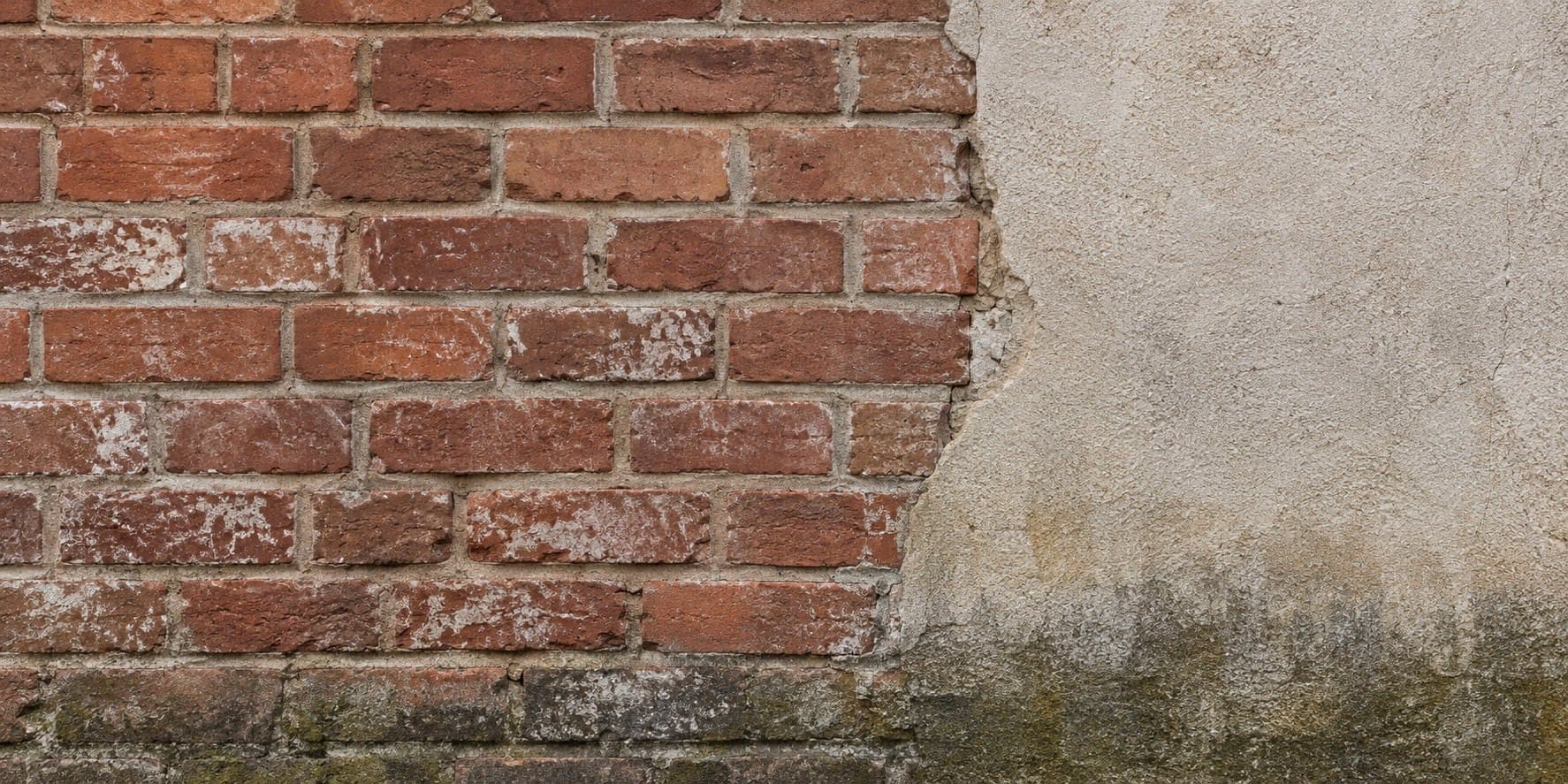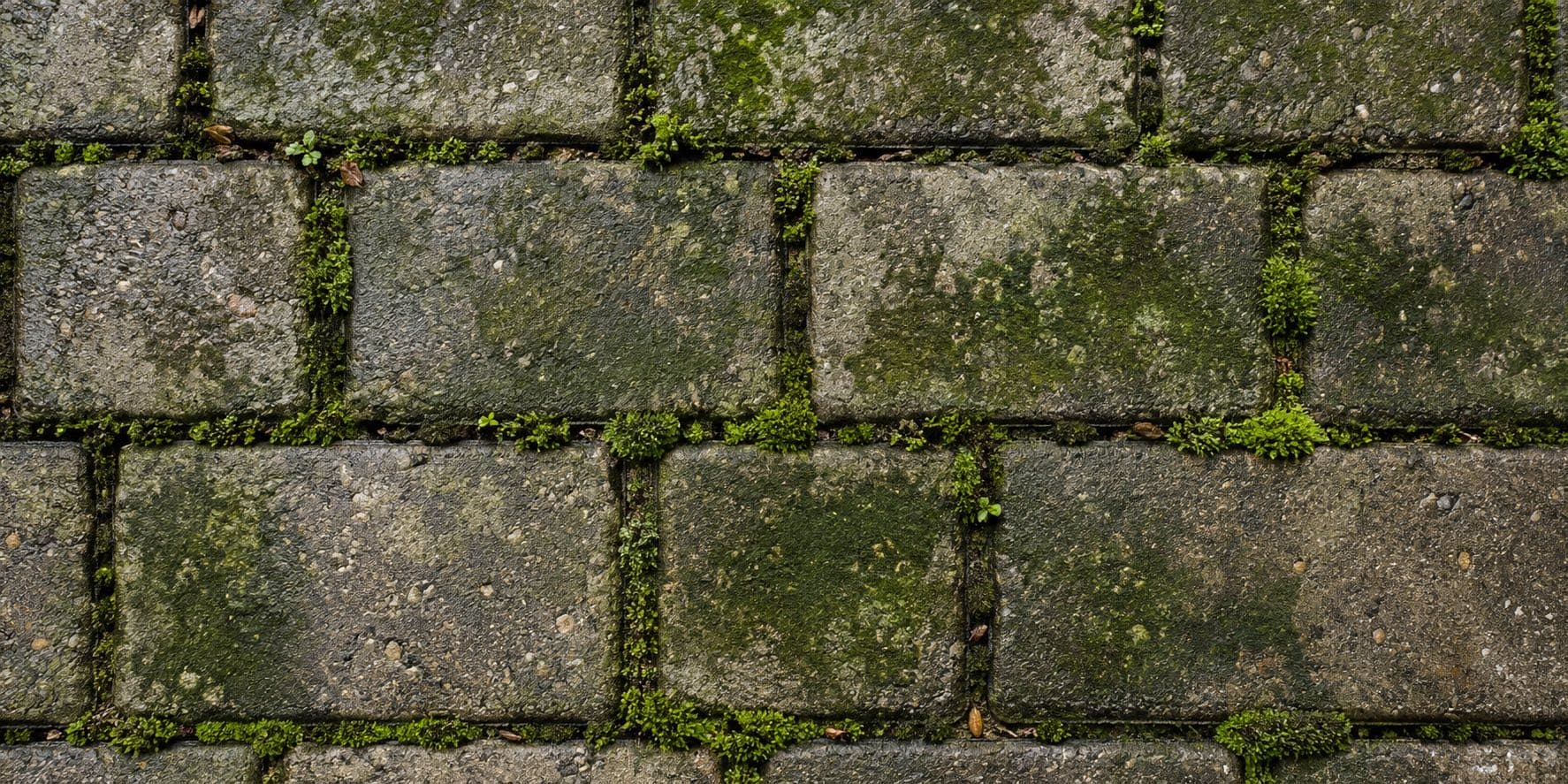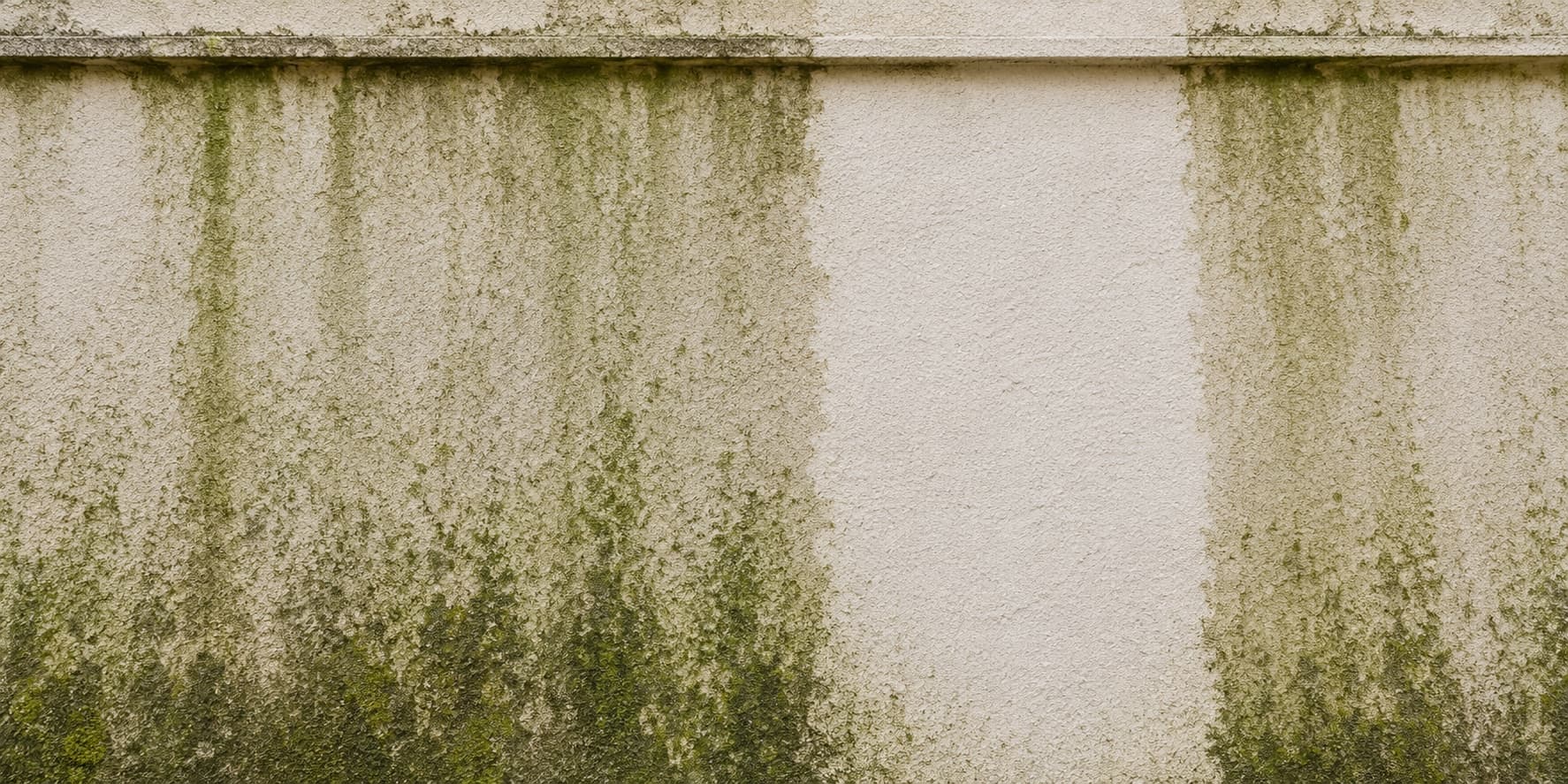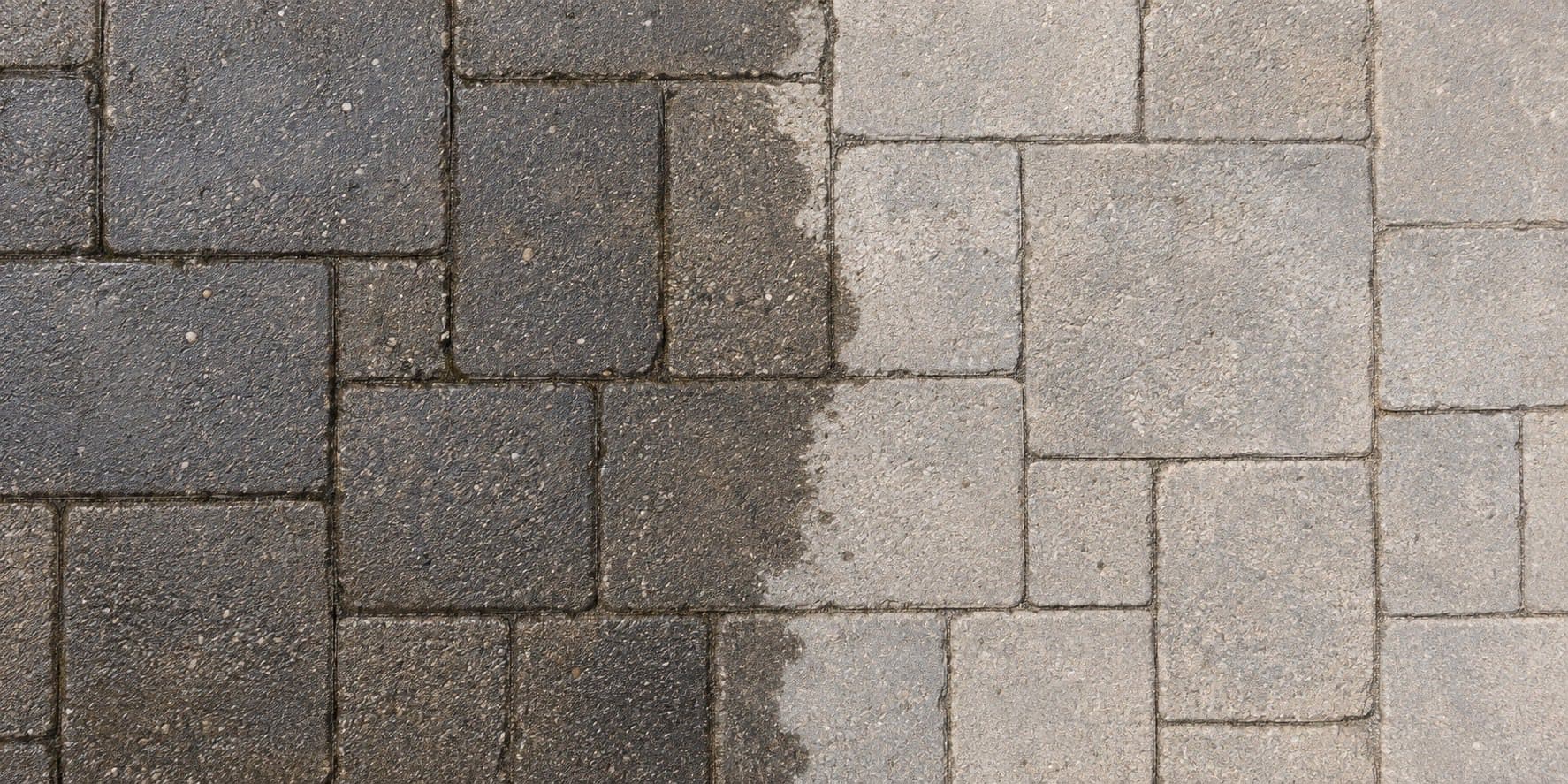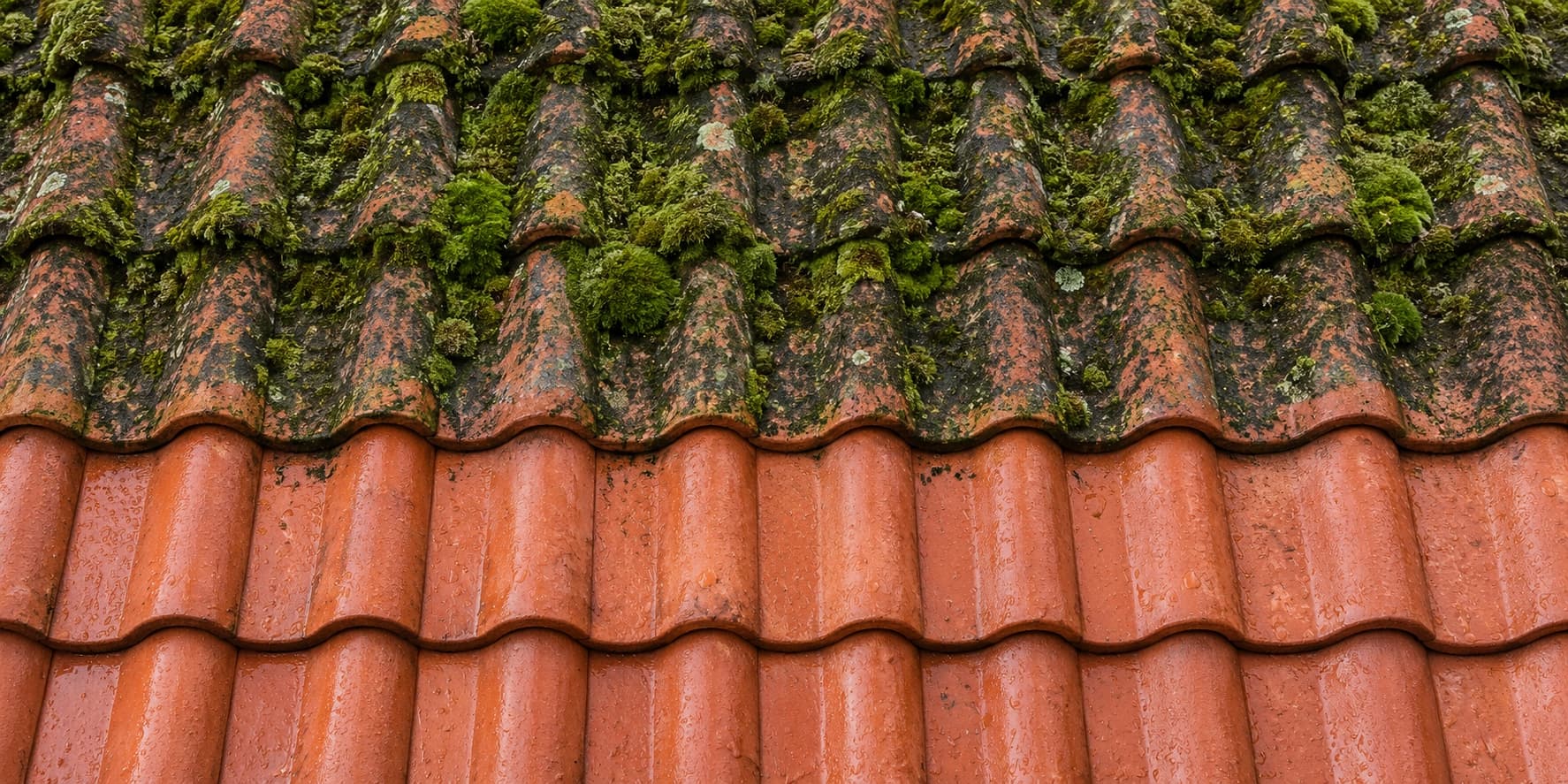
Cleaning moss off roof tiles takes two steps. First you scrape off the moss that has rooted into the joints and overlaps, then you wash the whole slope with a roof tile cleaner, give it time to work and rinse from the top down, following the way the tiles are laid. The cleaner does most of the work, so you do not have to blast the growth off with a strong jet, which on a roof easily ends up under the overlaps.
Below you will work out what is growing on your roof, choose the cleaner dilution and plan the job around the weather. If you are choosing products for a roof and a wall at the same time, also look at our overview of facade and roof sealers.
In short
Identify the growth first.
Moss, algae, soot and leaf marks look different, but a roof tile cleaner removes them all in one wash.
Scrape off rooted moss before washing.
The cleaner works on the surface and will not pull out moss grown into a joint or a damaged spot.
Always work from the top down.
A jet aimed under the overlaps drives water beneath the covering - with a pressure washer too.
Wash a cool roof, then clear the gutters.
Work in the morning or evening, and scoop the rinsed-off moss and sludge out of the gutters and valleys.
What is growing on your roof? Moss, algae, lichen and soot
Green cushions on the overlaps, in the joints and along the tile edges are moss. It holds water like a sponge and roots into every gap, which is why it has to be scraped off before washing. A flat green film that turns almost black over time and spreads across the whole slope is algae. It grows most readily on the north side and in the shade of trees, and makes the tiles slippery after rain.
A black, greasy deposit around the chimney is soot, and brown marks and a sticky film under trees are leaf residue and honeydew. All of this comes off with the C-11D roof tile cleaner: it removes algae, fungus and moss growth, soot, grease, wax, honeydew and leaf marks. Grey-green, yellow or orange patches stuck fast to the tile are lichen - they hold on harder than algae, so check the result of washing on a test patch first.
Where the growth appears tells you why it comes back: shade, slow drying or water running off a leaking flashing. What to change so that it grows back less often is covered in our guide to moss and green growth.
What you see on the roof and what to do about it
| What you see | What it is | What to do |
|---|---|---|
| Green cushions on the overlaps and in the joints | Moss | Scrape off, then wash with C-11D |
| A flat green or almost black film across the slope | Algae | Wash with C-11D and rinse from the top down |
| Grey-green, yellow or orange patches | Lichen | Scrape off by hand, then try C-11D on a test patch before the whole roof |
| A black, greasy deposit around the chimney | Soot | Wash with C-11D at the heavy-soiling dilution |
| Brown marks and a sticky film under trees | Leaves and honeydew | Wash with C-11D, then clear the gutters and valleys |
| Moss in a cracked or chipped tile | Damage to the covering | Remove the moss, repair the damage or replace the tile |
How to remove moss from a roof before washing
The cleaner works on the surface, so it will not pull out moss rooted in a joint or in a damaged spot on a tile. Scrape it off beforehand with a plastic scraper or a stiff-bristled brush, working from the top down, following the way the tiles are laid. Do not lever tiles up, and put the wire brush away: it scratches glazed and engobed tiles and damages the surface of concrete ones.
Pick up the scraped-off moss as you go, before it slides into the gutter. Repair any damaged spot it was growing in, and replace cracked tiles before you wash.
Vinegar, soda or washing-up liquid are often suggested as a home remedy for moss on a roof. On a small patch they sometimes help, but they are hard to control: the strength is hit and miss, there is no telling how long to leave them, and acid can damage the surface of concrete tiles. A roof tile cleaner comes with a set dilution, a dwell time and a list of the substrates it is made for.
What to wash roof tiles with: by hand or with a pressure washer
C-11D is an alkaline concentrate made only for clay and concrete roof tiles - you wash both kinds the same way, and the differences between them only matter when it comes to sealing. For washing by hand, you dilute C-11D to match the soiling: 30-50 ml per litre of water for light growth, 80-100 ml/l for moderate and 200-300 ml/l for heavy. At 50 ml per litre, one litre of C-11D concentrate makes 20 litres of working solution.
Apply it with a hand sprayer, a foam sprayer, a brush or a mop. Leave C-11D on for 15-20 minutes, then rinse with clean water, ideally under high pressure. Work in sections you can rinse before the product dries on the tiles.
You can also run C-11D through a pressure washer - it then needs only 10-20 ml per litre of water. Work from the top down, following the way the tiles are laid, and never aim the jet up under the overlaps, or you will drive water beneath the covering. Hold the nozzle far enough away that the jet washes the growth off rather than gouging the surface: old concrete tiles and engobe do not take kindly to a strong jet at close range. Test both the setting and the cleaner itself on an inconspicuous spot first. Do not use it on materials that are not resistant to alkalis.
When to wash a roof, and what to do afterwards
Wash cool tiles, in the morning or evening, never in full sun - the surface you wash must not be hot. Pick a day without rain or strong wind: rain rinses the cleaner off before it has done its job, and wind carries the spray onto windows, plants and the neighbour's property.
Before washing, cover the plants below the eaves and anything made of materials that are not alkali-resistant, and put mesh over the downpipe outlets to catch the washed-off moss. Afterwards, scoop the sludge and leftover moss out of the gutters and roof valleys, flush the downpipes, and rinse the plants and anything the working solution landed on with clean water.
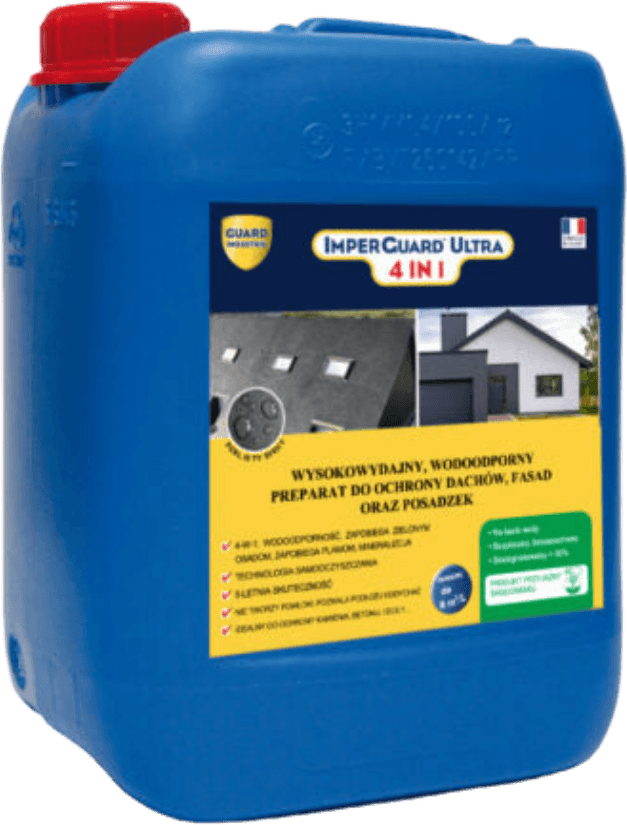
A washed roof has to dry out not just on the surface but in the pores too - how to check is shown in our guide to preparing the substrate before sealing. A dry, clean roof is the best moment to protect it: choosing the product, the order of work and how to apply it are covered in our guide to sealing clay and concrete roof tiles. Both kinds of tile take the VD-1 sealer, and if the same product should also cover the facade and the paving, go for ImperGuard Ultra 4 in 1. A sealed tile absorbs less water and dries faster, and a dry surface is a less welcoming place for moss and algae.
Washing a roof yourself or hiring a firm?
Wet, overgrown tiles are very slippery, and water with cleaner in it makes them worse. If you are doing it yourself, use fall protection, keep off a wet slope, walk on a roof ladder or roof walkways rather than on the tiles, and wear gloves and safety glasses - C-11D is an alkaline solution.
Hire a roofer or a firm with a platform lift when the roof is steep or high and you do not have fall-arrest equipment. If you are not sure whether your roof can take a pressure washer, write to us - we reply within 24 hours.
For washing roof tiles and protecting them afterwards
A cleaner for clay and concrete roof tiles, and sealers that protect the roof once it is washed.
Common questions
What is the best thing to clean moss off roof tiles with?
A roof tile cleaner. C-11D removes algae, fungus and moss growth, soot, grease and leaf marks from clay and concrete tiles. Scrape off moss rooted in the joints before washing, because the cleaner works on the surface.
Can I wash a roof with a pressure washer?
Yes. You can run C-11D through a pressure washer at 10-20 ml per litre of water, or apply it by hand and rinse under pressure. Work from the top down and never aim the jet up under the tile overlaps.
Is C-11D suitable for metal roofing or shingles?
No. C-11D is made only for clay and concrete roof tiles. Bitumen shingles and other bitumen coverings can be renovated with EI-25, which restores an even colour.
How often does a roof need washing?
As often as the growth comes back, which depends on shade and damp. A north-facing slope under trees grows over faster than a sunny one. A sealed tile absorbs less water and is easier to clean.
Do roof tiles have to be sealed after washing?
There is no obligation, but a washed, dry roof is the best time to do it, because you do not have to wash it twice. The VD-1 sealer limits how much water the tiles absorb and makes them more resistant to dirt, without closing the roof off to water vapour.