Algae comes off a facade with an alkaline facade cleaner: you apply it to the whole wall, let it work and rinse it off with water from top to bottom - with a soft jet, not a hard one. The growth comes away with the cleaner, so there is no need to strip it with pressure, which on render, and on an insulated wall in particular, does more harm than good.
You can wash most houses yourself if you can reach the wall from the ground or a ladder and the render is sound. Below you will find how to match the dilution to the level of soiling, how to use a pressure washer safely and how to make the wall less hospitable to growth once it is clean.
In short
The cleaner removes the growth, water rinses it off.
A gentle jet is enough - no need to scour the render with pressure.
Wash the whole wall, not just the patch.
A clean section against the rest stays visible as a lighter patch.
Insulated walls need a light touch.
A hard jet can damage thin render on polystyrene and drive water into cracks.
Seal only clean, dry masonry.
A wall that absorbs less and dries faster is less hospitable to growth.
Where green growth on a facade comes from - and is it really algae
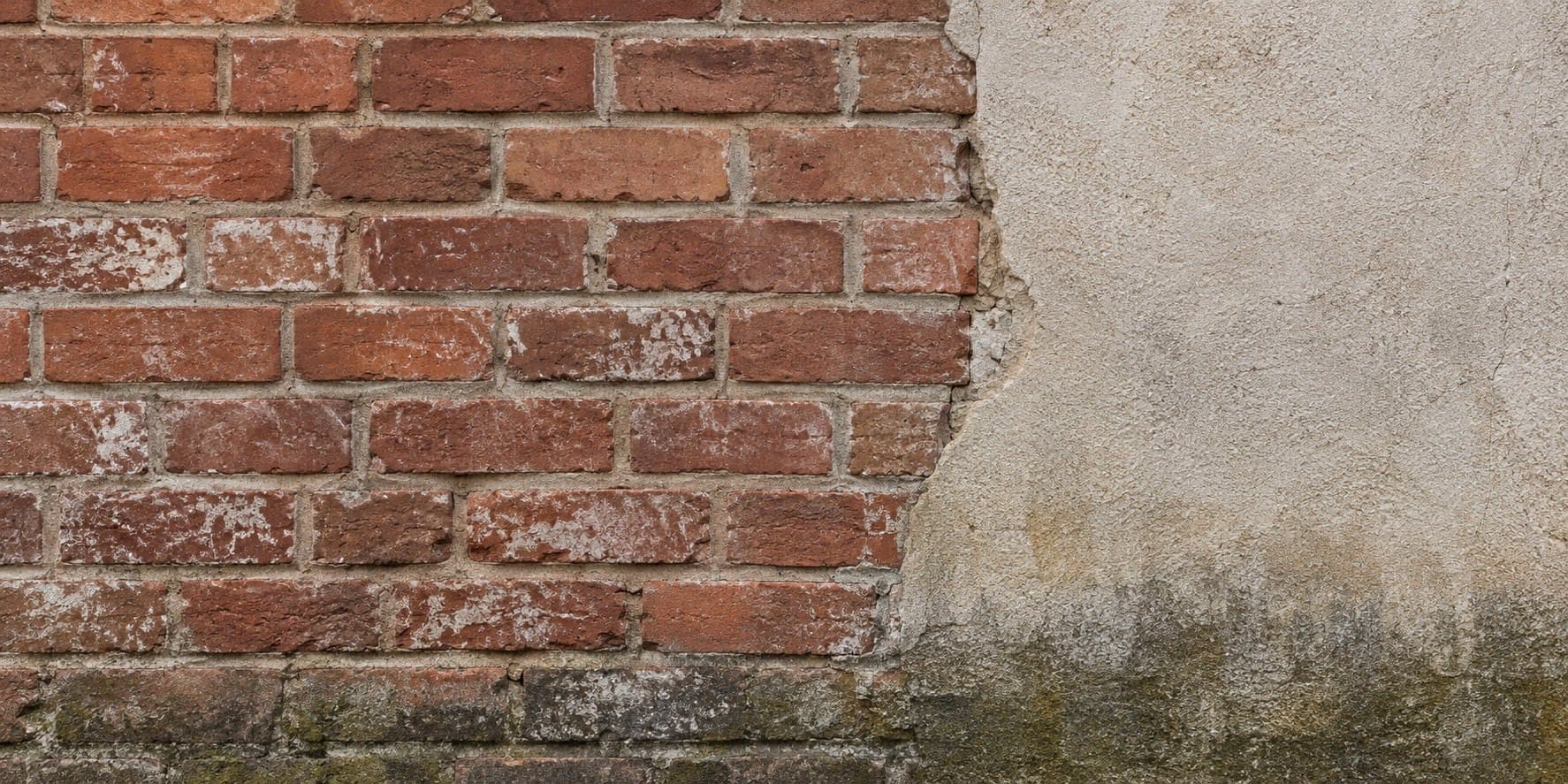
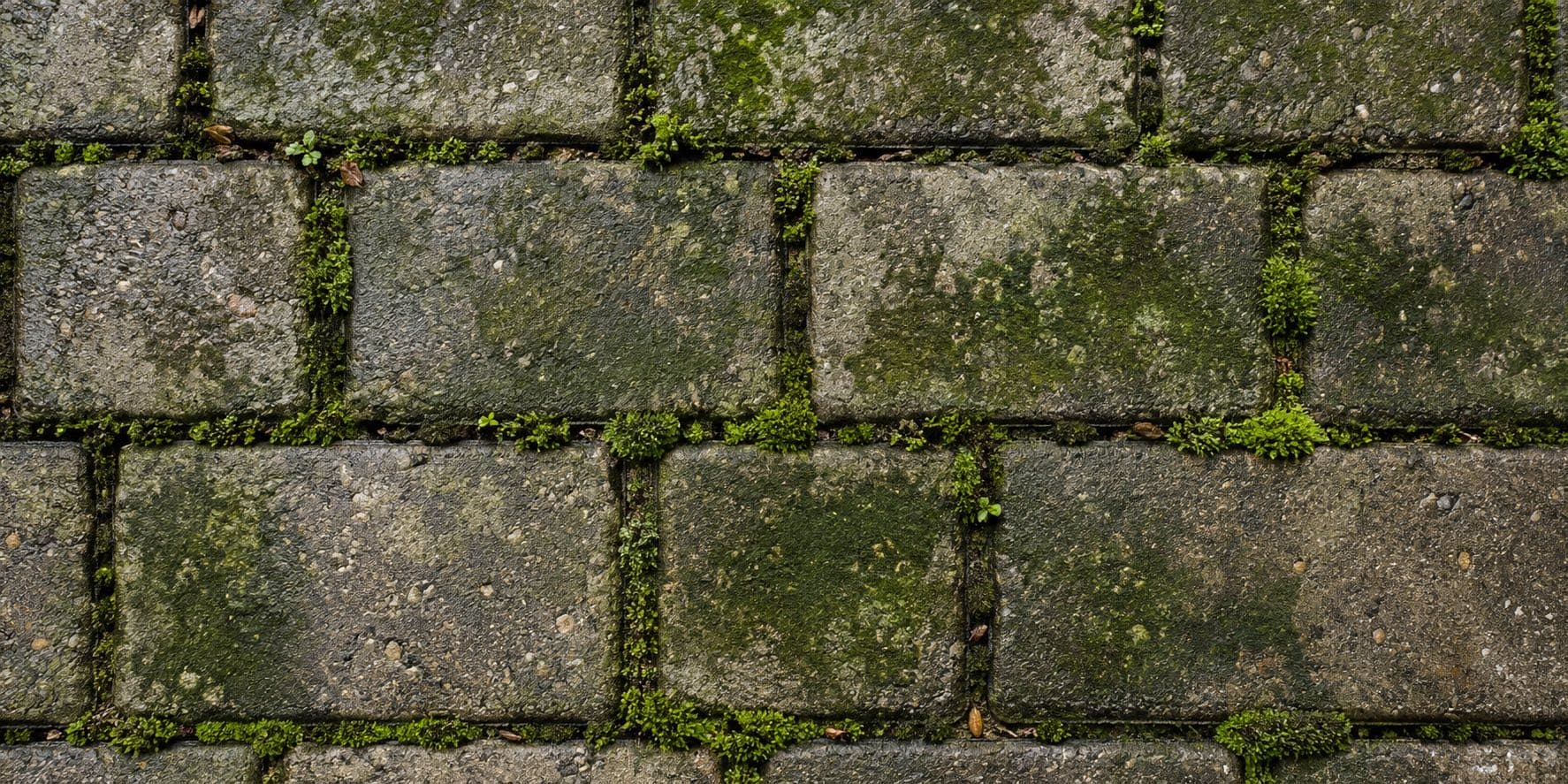
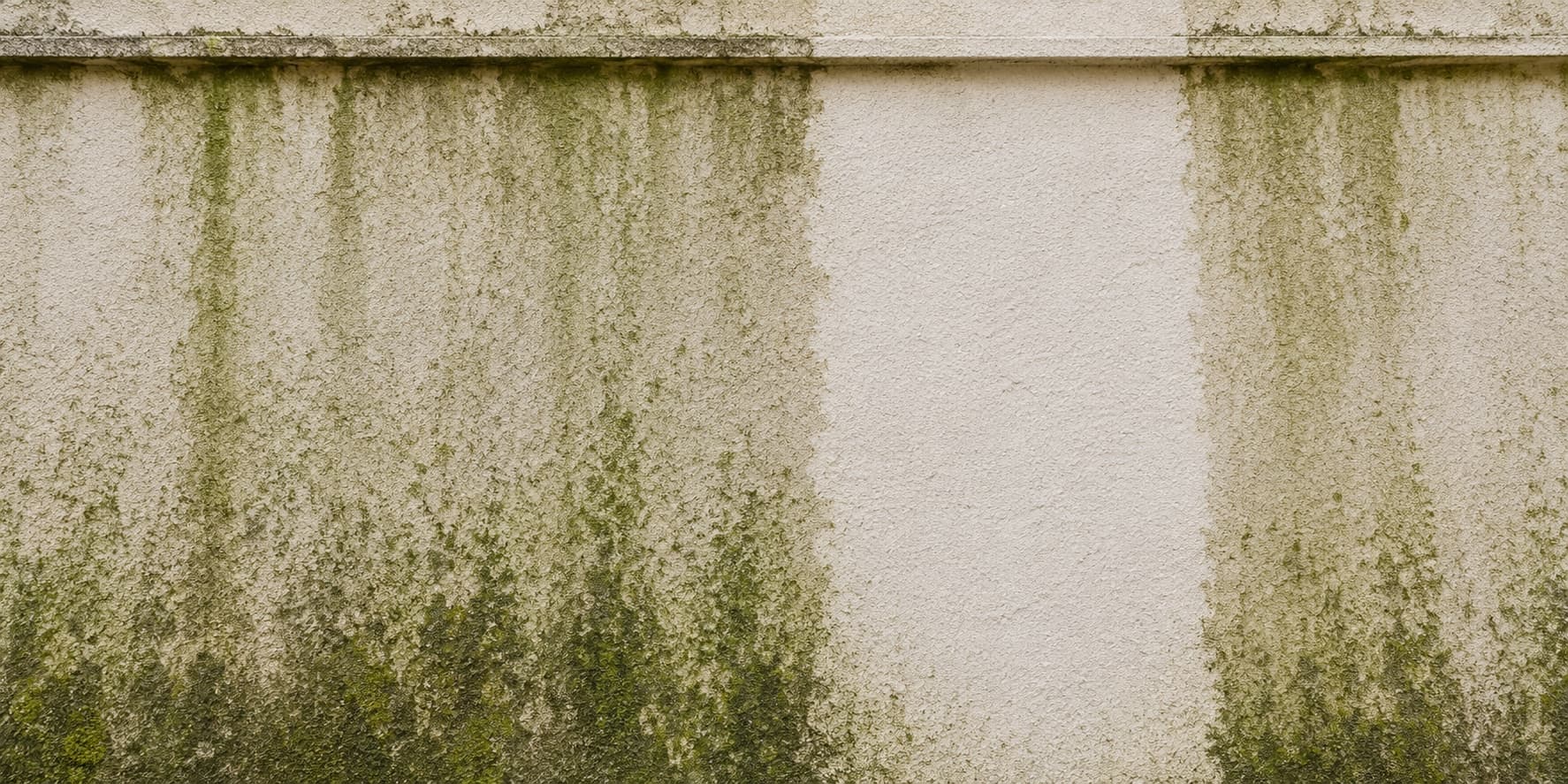
Green growth on a wall is algae, sometimes mixed with moss near the plinth. It grows wherever the masonry stays damp for long: on the north side of the house, in the shade of trees, under a leaking gutter or sill, and just above the ground, where rain splashes back off the soil. On insulated houses it usually appears sooner, because render on a layer of insulation is cut off from the warmth indoors and takes longer to dry after a cold night or rain. We cover the causes and how to reduce them in the guide to moss and green growth.
Before you buy anything, check the colour. Grey and black streaks are usually atmospheric dirt - a facade cleaner removes them along with the algae. A white, crystalline deposit is salt efflorescence from the masonry - a different problem with a different product, and we explain where it comes from in the guide to efflorescence.
Do it yourself or hire a firm?
You can manage on your own if you reach the wall from the ground or a ladder, the render is sound with no cracks or debonding, and a sprayer, a soft brush and a hose are all the kit you need. That is the typical case with a bungalow, a plinth, a garden wall or a fence.
Hire someone when the job needs scaffolding or a lift, when the render on an insulated wall is cracked or sounds hollow when tapped, or when you have a large, tall facade to wash. Working at height is a risk of its own, and a firm will bring its own equipment. Ask them what product and what pressure they will use on the wall - on insulated render that matters more than speed.
What to clean a facade with, and how
For a facade, choose a cleaner made for facades rather than one for paving. C-11E facade cleaner is an alkaline concentrate that removes green algae, other organic growth and atmospheric dirt from render, brick and concrete. You apply it with a hand sprayer, a foam sprayer, a brush or a mop.
C-11E is diluted to match the soiling: for hand washing, 30-50 ml per litre of water for light growth, 100-200 ml/l for moderate and 300-400 ml/l for heavy. You work with it between +5 and +30 °C, ideally on an overcast day or while the wall is in shade.
Test. Wash a small area somewhere inconspicuous and judge it once dry. On a facade, the change in shade after washing can be as noticeable as the dirt itself.
Cover up. Cover the plants by the wall and close the windows, and rinse the plants with clean water when you finish.
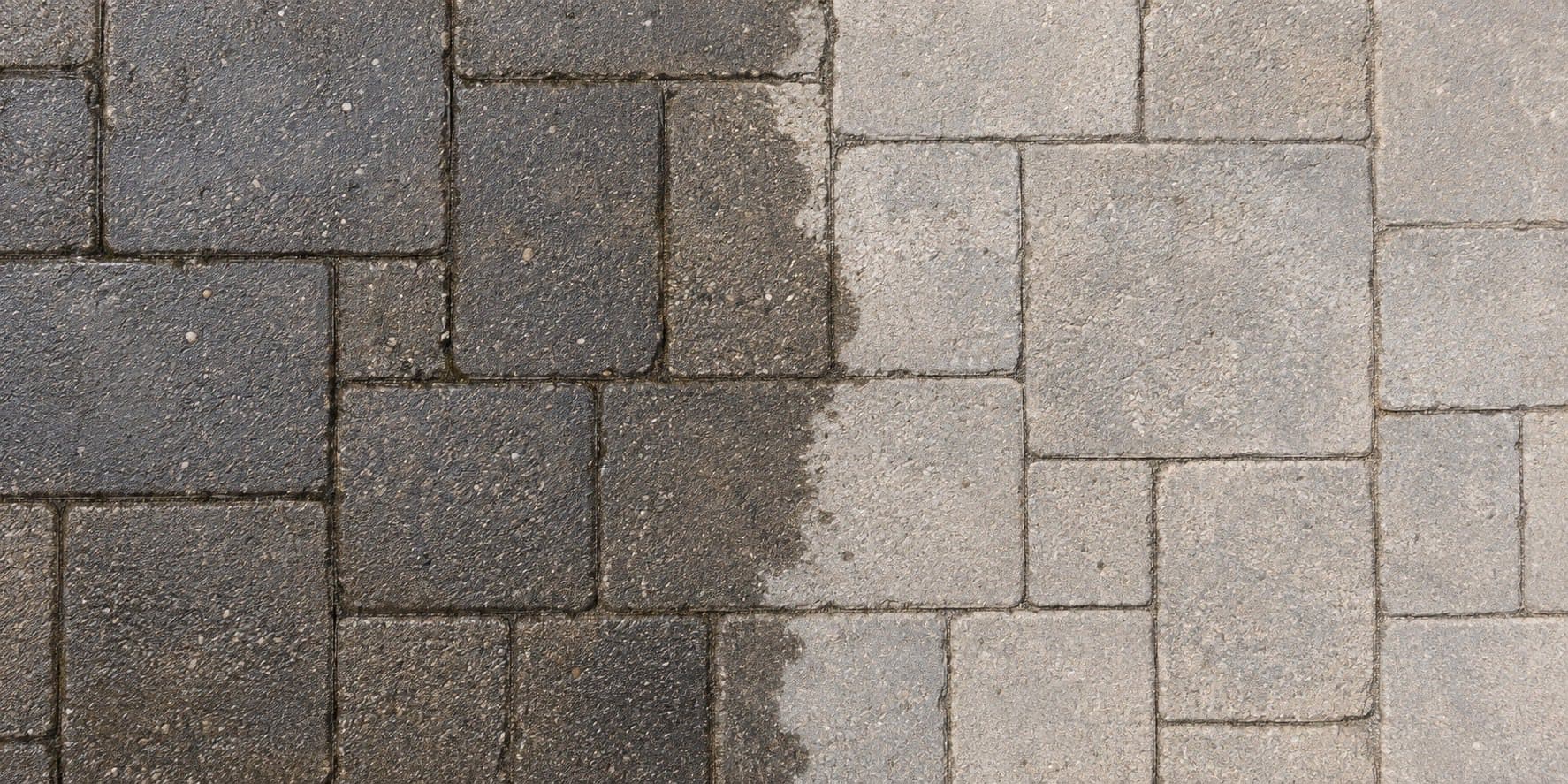
The whole wall. Apply the cleaner from corner to corner, not just to the green patch. A washed section against an unwashed one stays visible as a lighter patch.
Dwell and rinse. Wet the wall with clean water, apply the cleaner and after 2-3 minutes rinse it with plenty of water from top to bottom, going over heavier growth with a soft brush.
Drying. Let the masonry dry right through before you put anything on it.
With home remedies - vinegar, soda, washing-up liquid - the strength is guesswork, and any unevenness stays on the facade as a streak or a patch. A ready-made cleaner comes with a set dilution and gives an even result across the whole wall.
Can you clean a facade with a pressure washer?
You can, as long as the washer rinses rather than strips. The cleaner removes the growth; the jet only has to carry away what the cleaner has loosened. A hard jet washes out brick joints and wears away the surface of render, and on an insulated wall it can damage the thin render and drive water into cracks and behind window trims.
So work at the lowest pressure that rinses the growth off, with a wide flat nozzle and from a distance. Move the jet from top to bottom and at an angle to the wall, never straight into joints, corners or window edges, and put the rotary nozzle away. Before you move on to the whole facade, check on a small section how your render copes with the jet - if the pressure damages it, wash that wall by hand.
You can feed C-11E through the washer's detergent inlet - 10-20 ml per litre of water is then enough. Firms call this approach of cleaner plus gentle rinse a soft wash.
Facade substrate: washing and protection
| Wall | How to wash | What to protect it with once dry |
|---|---|---|
| Mineral or cement render | C-11E by hand or with a washer at low pressure | EH-16 if you want a deeper colour, or the colourless ImperGuard Ultra 4 in 1 |
| Thin-coat render on insulation | C-11E with a sprayer, gentle rinse, no rotary nozzle | A product that lists your type of render among its substrates |
| Brick and engineering brick | C-11E, rinse joints with a gentle jet | Colourless VC-1 or colour-deepening EH-16 |
| Sandstone | C-11E after a test somewhere inconspicuous | VP-1 |
| Other facing stone | C-11E after a test somewhere inconspicuous | EH-16 or ImperGuard Ultra 4 in 1 |
For washing a facade and protecting it afterwards
A cleaner for algae and dirt on facades, plus vapour-permeable sealers for render, brick and stone.
 Standard
Sandstone wall and facade sealer VP-1 CTS Chemistry
45,40 zł
36,18 zł/L
 Standard
Brick and engineering brick sealer VC-1 CTS Chemistry
42,50 zł
33,90 zł/L
 Standard
Facade and render cleaner C-11E CTS Chemistry
20,66 zł
19,43 zł/L
 Standard
Silane facade sealer that deepens colour EH-16 EKSIL
145,00 zł
25,75 zł/L
 Entry
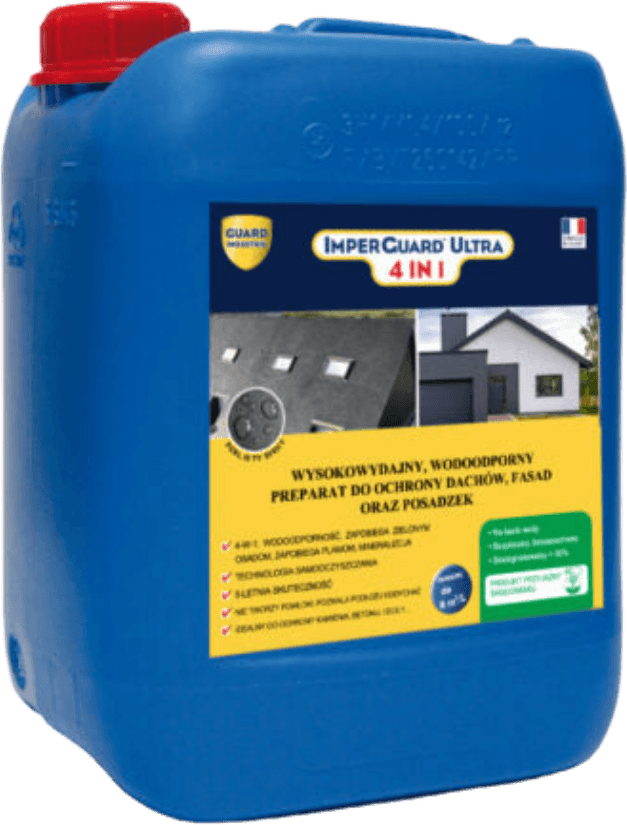
EntryWater-repellent sealer for facades, roofs and paving - ImperGuard Ultra 4 in 1
269,00 zł
53,80 zł/L≈ 6,73 zł/m²
After washing: dry and protect the masonry
Sealing is not compulsory, but straight after washing is the best time for it: the wall is clean and you will not have to wash it twice. Wait until the masonry is dry not just on the surface but in the pores too. You will find the full list of conditions in the guide to preparing the substrate before sealing.
On a facade, a sealer has to leave the masonry vapour-permeable: it limits water getting in from outside while the wall still gives up moisture. For brick and engineering brick, the colourless VC-1 is an excellent choice, and for a sandstone wall, VP-1. If you want to refresh the colour of old render, brick or stone, choose EH-16, which gently deepens the colour, and if you prefer one colourless product for render, brick and concrete, go for ImperGuard Ultra 4 in 1. You will find every product for walls and roofs in the Facades and roofs category.
On thin-coat render over insulation, choose a product that lists your type of render among its substrates. If you are not sure what render you have, write to us - we reply within 24 hours. We go into choosing a sealer for each substrate in the guide to facade and roof sealers.
A wall that absorbs less and dries faster is less hospitable to growth. A sealer is no substitute for fixing a gutter or cutting back a tree, though: if the cause stays, the growth will come back in time and the wall will need washing again.
Common questions
How often should a facade be cleaned of algae?
Whenever the growth comes back - conditions set the pace, not the calendar. On a wall in permanent shade, under a tree or by a leaking gutter, it happens sooner than on a sunny one. Removing the cause and sealing after washing help stretch that interval.
Will the cleaner harm the plants by the wall?
The C-11E working solution has a pH of around 9-10, so cover the plants before you start and rinse them with clean water when you finish.
How much cleaner will I need for a facade?
That depends on the dilution you choose for the growth. With C-11E, work it out like this: 50 ml per litre of water gives 20 litres of working solution from one litre of concentrate. Do a test, see how much solution a section of wall takes and scale it up to the whole facade.
Will a sealer trap moisture in the wall?
Not if it is vapour-permeable: it limits water getting in from outside but leaves the pores open, so the masonry still gives up moisture. Nor will it improve the wall's insulation - it works on how absorbent the surface is, not on heat passing through the wall.
Can I wash a facade in autumn?
Yes, as long as it is warmer than +5 °C - C-11E is used between +5 and +30 °C. If you plan to seal after washing, allow yourself a few dry days so the masonry has time to dry out.